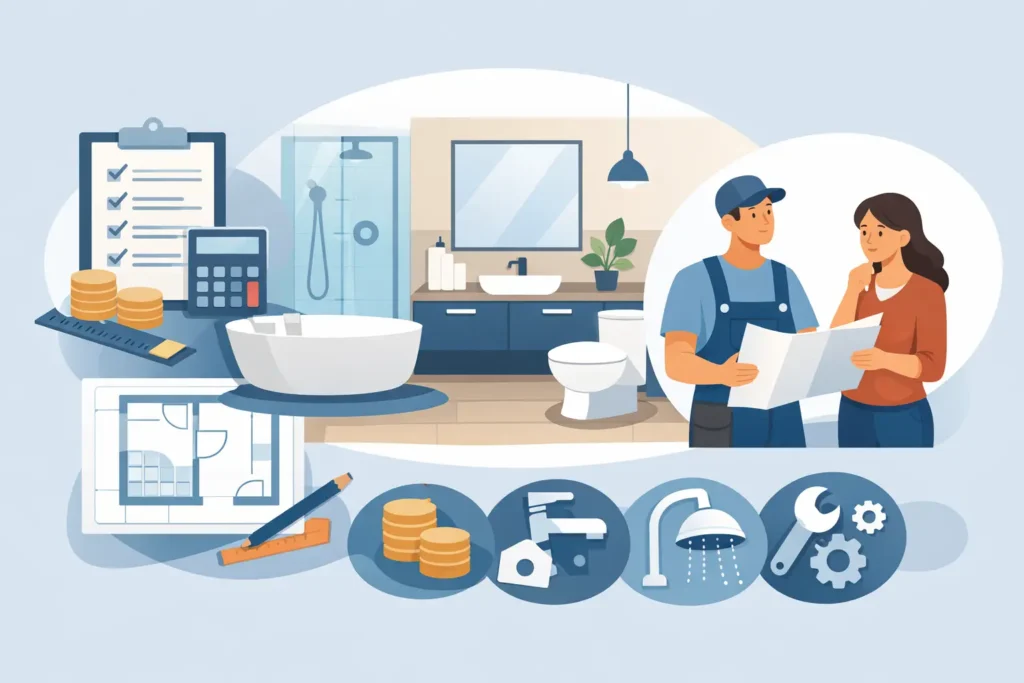
A bathroom can look straightforward on paper, then quickly become one of the most detailed rooms in the house once work begins. When homeowners ask about bathroom design and installation cost, the honest answer is that the final figure depends on far more than the suite itself. Layout, building work, pipe routes, tiling choices, storage, ventilation and the quality of installation all have a direct effect on price.
For most people, the real question is not simply what a bathroom costs, but what they are paying for and whether that investment will hold up over time. A well-planned bathroom should work properly every day, suit the people using it and still feel right years later. That is why design, product choice and installation quality need to be considered together rather than as separate decisions.
What shapes bathroom design and installation cost?
The biggest factor is scope. Replacing like for like in the same positions is usually more cost-effective than reworking the whole room. As soon as you move a WC, reposition a shower, build out walls or alter flooring levels, labour and specialist trades increase.
The condition of the existing room matters too. Older properties can reveal uneven walls, tired pipework, outdated electrics or hidden water damage once the old bathroom is removed. None of those issues are unusual, but they do affect programme and budget. A professional survey at the start helps reduce surprises, although some only become visible once work is underway.
Then there is the level of finish. A compact family bathroom fitted with dependable, mid-range sanitaryware will sit in a very different bracket from a fully bespoke room with made-to-measure furniture, large-format porcelain tiles, recessed storage and premium brassware. Neither option is automatically right or wrong. It depends on the property, the household and how long you intend to stay.
Typical price ranges for a new bathroom
As a general guide, a modest bathroom refurbishment with sensible product choices and limited layout changes may start from around £8,000 to £12,000. A more design-led scheme with better specification, fitted furniture and extensive tiling often falls between £12,000 and £20,000. For larger spaces, premium products or more involved building work, costs can move beyond that.
These figures are broad for a reason. One room may need only straightforward plumbing connections and simple ceramics, while another may require floor strengthening, studwork adjustments, concealed cistern framing, bespoke storage and additional electrical work. Two bathrooms of the same size can end up with very different budgets depending on what is behind the walls and what standard of finish is expected.
If you are comparing quotes, make sure you are comparing the same level of work. A lower figure can sometimes mean certain items have been left out rather than genuinely priced more efficiently.
Design is not an extra – it protects your budget
Many homeowners think of design as the decorative part of the process, but good design is also practical cost control. It helps avoid expensive changes later, such as ordering furniture that does not suit the room, choosing tiles without allowing for awkward cuts, or selecting fittings that look good individually but do not work together in daily use.
A proper design stage should consider storage, lighting, circulation space, cleaning access and who uses the bathroom. A room used by a growing family will need different priorities from an en-suite designed for a downsizer or a guest shower room in a rental property. The most successful bathrooms are planned around real habits, not just display trends.
This is especially true in homes across Poole, Bournemouth and the wider Dorset area, where room shapes and property ages vary considerably. Bespoke planning can make better use of alcoves, sloping ceilings and awkward dimensions that off-the-shelf solutions often fail to address.
Where the money usually goes
When people think about bathroom cost, they often focus first on visible items such as the bath, basin or taps. In reality, a large share of the budget goes into labour, preparation and the hidden elements that make the room function reliably.
Strip-out and disposal come first, followed by first-fix plumbing and electrics. After that, there may be plastering, flooring preparation, waterproofing, tiling, second-fix installation, decoration and final finishing. If the project includes fitted furniture, mirror cabinets or custom joinery, that adds another layer of craftsmanship but can improve both appearance and storage.
Ventilation is one area worth treating seriously. Cutting corners here can lead to condensation and mould, particularly in busy households. Lighting is another. A bathroom needs task lighting in the right places, not just a single central fitting.
The trade-off between standard and bespoke
Standard bathroom ranges can be a sensible choice where budget is tight or where the room is uncomplicated. They are widely available, usually quick to source and can look very smart when selected carefully. The limitation is that they are made to standard sizes, so they may leave wasted space or require filler panels and compromises.
Bespoke fitted furniture costs more upfront, but it can transform how the room works. In smaller bathrooms, every centimetre matters. Tailored vanity units, built-in storage and made-to-measure solutions can create a cleaner finish and help the room feel less cluttered. That can be particularly valuable where you need to balance practical family storage with a calm, well-finished appearance.
There is also a durability point here. Well-made fitted elements and quality installation tend to age better than quick fixes. If you are investing for the long term, value should be judged by lifespan and performance as much as initial outlay.
Bathroom design and installation cost by room type
A cloakroom or compact en-suite is not always the cheapest project. Smaller rooms can be technically awkward, especially if trades are working in a tight footprint or products need to be carefully chosen to fit. Even a simple room still needs plumbing, electrics, ventilation and finishing.
A main family bathroom often carries a higher overall spend because it includes more products, more storage and larger tiled areas. It also tends to get the heaviest daily use, so material quality matters.
Principal en-suites are often more design-led. Homeowners may choose walk-in showers, statement brassware, recessed niches and furniture-led layouts. That can increase the bathroom design and installation cost, but for many households it is worthwhile because the room is used every day and has a strong effect on how the home feels.
How to budget without losing quality
The best approach is to separate must-haves from nice-to-haves early on. If underfloor heating, fitted storage or a walk-in shower are central to how you want the room to function, those items should be protected in the budget. Decorative upgrades that can be swapped later, such as some accessories or mirror styles, can be more flexible.
It also helps to keep a contingency. Even with careful planning, bathroom projects can reveal issues once the old room is removed. A sensible allowance gives you room to deal with the unexpected without derailing the whole scheme.
Most importantly, choose a team that can manage the process properly. Coordinating multiple trades is often where delays, confusion and cost creep begin. A full-service approach, with design, product supply and installation handled under one roof, usually brings better accountability and a smoother result. For homeowners who want clear responsibility from first survey to final fitting, that joined-up service can be just as valuable as any product choice.
Getting real value from your investment
The cheapest bathroom is rarely the one that offers the best value. If it is poorly planned, badly ventilated or fitted without proper care, you may end up paying again in repairs, replacements or day-to-day frustration. By contrast, a thoughtfully designed bathroom that uses the space well and is installed to a high standard earns its keep every morning and every evening.
That is why an experienced local company matters. A business with its own design knowledge, installation capability and a clear reputation to protect is more likely to give honest guidance about what is worth spending on and where you can sensibly save. For homeowners considering a bathroom project, Hale & Murray takes that practical view from the outset.
If you are weighing up options, start with the room you actually need rather than the one you have seen in a brochure. A bathroom should suit your home, your routine and your budget – and when those three things are aligned, the cost makes far more sense.