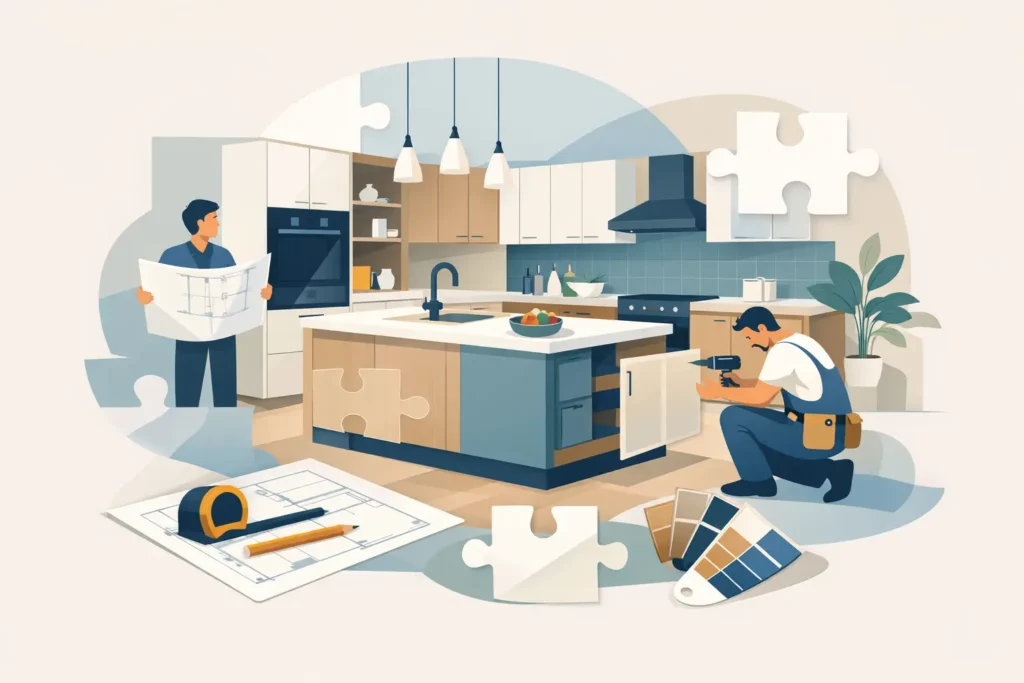
A kitchen can look impressive in a brochure and still feel awkward the moment you start using it. Doors clash in tight corners, drawers stop short of where you need them, and wasted gaps collect dust instead of serving a purpose. That is why bespoke fitted kitchens continue to appeal to homeowners who want more than a standard run of units. When a kitchen is made around your room, your routines and the way you live, it works harder from day one.
For many homes in Poole, Bournemouth and across Dorset, that matters more than ever. Period properties often come with uneven walls, alcoves and dimensions that do not suit off-the-shelf cabinetry. Newer homes can bring a different challenge, with open-plan layouts that need a kitchen to blend into the wider living space rather than stand apart from it. In both cases, a genuinely tailored approach gives you more control over how the room looks, feels and performs.
What makes bespoke fitted kitchens different?
The word bespoke is used loosely in the interiors world, so it is worth being clear about what it should mean. A bespoke kitchen is not simply a choice of pre-set cabinet colours with a few optional extras. It is a kitchen designed around the exact measurements of your room and manufactured to suit those dimensions, storage needs and finish preferences.
That difference shows up in practical ways. Cabinet heights can be adjusted to improve ergonomics. Tall housings can be built to sit neatly beneath sloping ceilings. Corner storage can be planned around how you actually cook, rather than around a standard catalogue. Even small details such as filler panels, end panels and worktop proportions can be handled with more care, which gives the whole room a more considered finish.
A fitted kitchen should also feel integrated rather than assembled. Appliances, lighting, storage and circulation need to work together. The best results come when design, manufacture and installation are treated as one joined-up process instead of separate stages passed between different suppliers.
Why bespoke fitted kitchens often make better use of space
Most people notice the style of a kitchen first, but what usually wins them over long term is how well it uses space. A bespoke layout can recover areas that standard units often waste. That might mean turning a narrow recess into full-height pantry storage, fitting cabinetry wall to wall for a cleaner look, or building an island that improves workflow without making the room feel crowded.
This is especially valuable in homes where every centimetre counts. In compact kitchens, careful planning can create more drawer storage, better appliance placement and wider usable work surfaces. In larger rooms, bespoke design helps avoid the opposite problem, where too much empty space leaves the kitchen feeling disjointed and less welcoming.
There are trade-offs, of course. Bespoke work is not about adding cabinetry everywhere possible. Too many units can make a room feel heavy. Very deep cupboards may hold more, but they can also make daily access less convenient. Good kitchen design is about balance – enough storage, enough workspace and enough room to move comfortably.
The value of designing around real life
A kitchen should suit the people using it, not an imaginary ideal. That sounds obvious, yet many layouts are still chosen on appearance alone. A family with school-age children will use the room differently from a couple who entertain regularly. Someone who cooks from scratch every evening needs a different arrangement from someone who values quick breakfasts and a tidy coffee station.
This is where a detailed design process makes all the difference. The right questions tend to be practical. Where do groceries land when you come in? Do you prefer drawers or cupboards for pans? Do you want crockery near the dishwasher or near the dining area? Would a bank of tall units make the room feel more organised, or too enclosed?
When those decisions are made early, the finished kitchen feels easier to live with. It is not just attractive on installation day. It continues to make sense six months and six years later.
Materials, finishes and what lasts well
One of the strengths of bespoke fitted kitchens is the freedom to choose materials and finishes that suit both the property and the level of use the room will get. Painted doors, timber finishes, matt surfaces and modern textured materials all have their place, but no finish is right for every household.
Painted kitchens, for example, remain a popular choice because they offer warmth and flexibility. They can work beautifully in traditional and contemporary homes alike. However, they may require more care than some manufactured finishes, particularly in very busy households. Textured or matt finishes can be practical and understated, though some show marks more readily than others. Natural materials often age well, but they need proper consideration around moisture, heat and maintenance.
Worktops deserve the same level of thought. A surface that looks striking may not suit how you use the kitchen day to day. If you bake often, one material may prove more comfortable to work on than another. If durability is the top priority, your decision may go a different way. There is no single best option – only the right fit for your budget, habits and expectations.
Why local manufacture changes the result
There is a clear advantage in dealing with a company that both designs and makes furniture in-house. It gives greater control over dimensions, finish quality and lead times, and it reduces the compromises that can happen when products are ordered from third-party ranges with fixed limitations.
It also allows for a more responsive service. If a design needs refining during the planning stage, that can often be addressed with far more flexibility. If an older kitchen needs updating rather than replacing in full, options such as replacement doors or worktops become more realistic. For some homeowners, that opens the door to a phased improvement rather than a full renovation in one go.
For trade customers and capable DIY buyers, supply-only can also be a sensible route. The important point is that bespoke should still mean made to measure, not simply delivered flat-packed with a premium label attached.
Installation matters as much as design
A beautifully designed kitchen can be let down by poor installation. This is one reason many homeowners prefer a full-service approach. Kitchens often involve far more than cabinets and worktops. Electrical work, plumbing, tiling, flooring, plastering and building alterations may all need to be coordinated.
When that responsibility sits with one accountable team, the process is usually smoother and easier to manage. It reduces the risk of delays between trades and helps maintain consistency from the initial design through to the final fitting. That matters not only for convenience, but also for confidence. If questions arise, you know who is responsible for sorting them out.
For a family business with established local roots, this level of ownership is part of the service. It is not just about selling furniture. It is about seeing a project through properly and standing behind the result.
How to judge quality before you commit
If you are comparing providers of bespoke fitted kitchens, look beyond images alone. A good showroom helps, because it allows you to inspect the finish, feel the weight of doors and drawers, and ask detailed questions about construction. Just as important is whether the company can explain how the furniture is made, how the installation is managed and who will be responsible at each stage.
Accreditations and independent endorsements can add reassurance, particularly for customers making a significant investment. Long trading history matters too. It suggests stability, experience and a track record of delivering fitted interiors over many years rather than chasing short-term trends.
It is also worth paying attention to how the design conversation feels. Are you being pushed towards a standard layout, or listened to properly? Does the company ask sensible questions about the room and how you use it? The right kitchen firm should bring ideas, but also take time to understand what will genuinely work in your home.
At Hale & Murray, that practical, personal approach has remained central for decades. It is one reason many customers still choose a local specialist over a national chain.
A kitchen that earns its place
The best bespoke fitted kitchens do not rely on fashion to justify themselves. They earn their place through daily use – by storing more intelligently, moving more comfortably and fitting the room as though they were always meant to be there. If you are planning a new kitchen, it is worth looking past the headline style and asking a simpler question: will this kitchen still feel right when real life starts happening in it? That is usually where the best decisions begin.