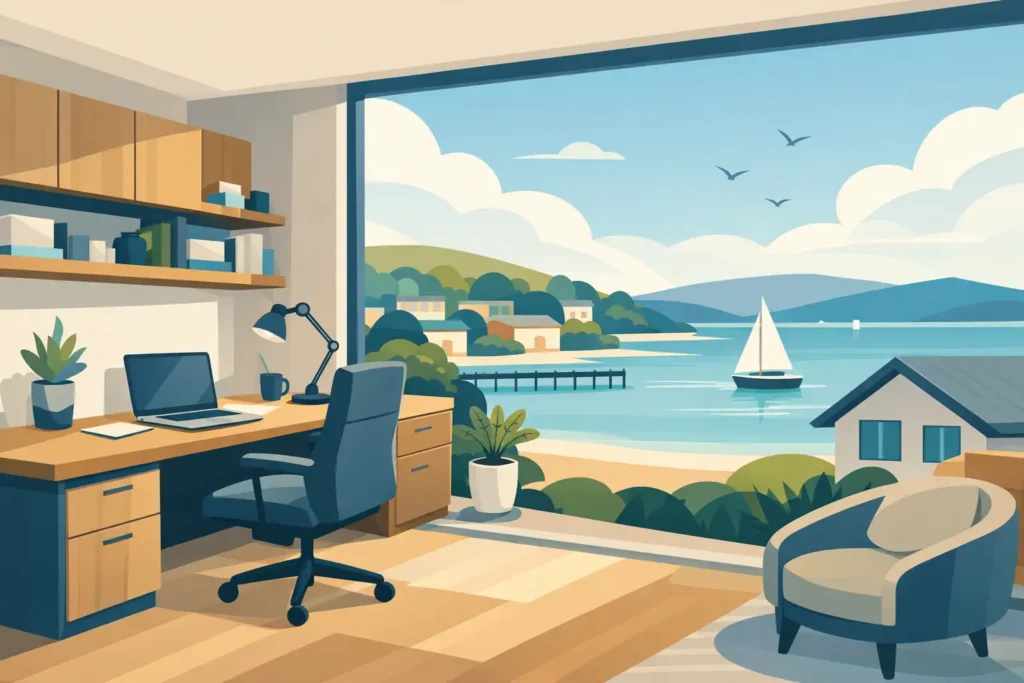
A spare bedroom with a desk pushed against the wall rarely stays practical for long. Papers spread, cables gather, storage runs out and the room starts doing three jobs badly instead of one well. That is why bespoke home offices Poole homeowners invest in tend to begin with a simple aim – make working from home feel organised, comfortable and properly considered.
For some households, that means a dedicated office used every day. For others, it is a fitted workspace in a guest room, lounge corner or loft conversion that needs to look tidy when the working day ends. The right solution is rarely off the shelf, because every room has its own limits and every family has its own routine.
Why bespoke home offices in Poole make sense
Homes across Poole and the wider Dorset area vary enormously. Period properties can bring uneven walls, alcoves and awkward chimney breasts. Newer homes may offer cleaner lines but often have more compact rooms where every centimetre matters. In both cases, standard office furniture tends to leave wasted gaps, poor cable routes and a layout that never quite feels settled.
A bespoke design changes that. Instead of forcing the room to fit the furniture, the furniture is designed around the room. Full-height cabinetry can turn dead space into useful storage. A made-to-measure desk can run neatly wall to wall. Shelving can be set at the right depth for files, books, printers or decorative pieces, so the room works hard without looking crowded.
There is also the question of appearance. A home office should help you work efficiently, but it also needs to belong in the house. That matters even more when the office sits within a shared living space. Bespoke fitted furniture gives you control over finishes, colours, handles and proportions, so the room feels like part of the home rather than an afterthought.
What a well-designed home office needs to do
The best home offices are not defined by square footage alone. They are defined by whether the design reflects how the room will actually be used.
If your day involves two monitors, paperwork and frequent video calls, the priorities will be different from someone who needs a quiet corner for occasional admin. A family home may need a workspace that can be closed away in the evening. A business owner might need more visible storage, better filing and a layout that supports long hours at the desk.
Good design starts with practical questions. How much desk space do you need? What needs to be hidden, and what should stay within easy reach? Do you need open shelving, enclosed cupboards or a combination of both? Is natural light helping the layout, or working against your screen position? These decisions shape whether the finished office feels effortless to use or quietly frustrating.
Comfort matters as much as storage. Desk height, knee space, reach distances and lighting all affect how the room performs day after day. A bespoke office should not simply look fitted. It should feel right to work in.
Bespoke home offices Poole families can adapt to real life
One of the main strengths of fitted furniture is flexibility. Many homes do not have the luxury of a room used for one purpose only, so a home office often needs to do more than provide a desk.
A box room can become a study with built-in storage and a compact workstation that still leaves enough floor area to move comfortably. A guest room can combine wardrobes, a concealed desk and shelving so it remains useful every week, not just when visitors stay over. An underused landing or alcove can be transformed into a tidy fitted work zone that feels intentional rather than improvised.
This is where truly made-to-measure furniture earns its value. It allows a design to respond to sloping ceilings, recessed spaces, low windows or difficult corners instead of ignoring them. It also gives you more control over the balance between open and closed storage, which is often what determines whether a room looks calm or cluttered.
There are trade-offs, of course. A highly tailored layout gives the best fit, but it should still allow for future changes. Children grow up, working patterns shift and technology changes. A thoughtful design accounts for that by building in adaptability where it makes sense, whether through adjustable shelving, flexible storage zones or generous cable access.
The value of local design, manufacture and installation
When you are investing in fitted furniture, the process matters almost as much as the product. A home office project involves measuring accurately, planning carefully and fitting cleanly. If any of those stages are rushed, the finished result usually shows it.
Working with a local specialist gives you a clearer line of responsibility from the first design conversation through to installation. There is real benefit in dealing with a team that visits your home, understands the room in person and manufactures to those exact dimensions rather than adapting standard components.
That approach also tends to produce better detail. Scribes against uneven walls, cleaner junctions, more considered internals and a stronger overall finish are often what separate fitted furniture that merely fills a space from fitted furniture that improves it. For homeowners in Poole, there is reassurance in knowing the design and manufacturing are close to home and handled by people who can be accountable throughout the job.
Hale & Murray has built its reputation on exactly that sort of hands-on service – designing, making and installing fitted interiors for local homes with the support of an experienced in-house team.
Choosing materials and finishes for a lasting result
A home office should cope with daily use without losing its appearance after a short time. That is why material choice deserves careful thought.
For some clients, a painted finish suits the rest of the house and creates a softer, more furniture-led look. For others, woodgrain or contemporary textured finishes bring warmth and durability with less day-to-day maintenance. Worktops need similar consideration. A generous desktop is not just a visual feature; it is a working surface that should stand up to heat, movement and constant use.
The right finish often depends on the room and the user. Darker tones can feel smart and grounded, but in a small office they may make the space feel tighter unless balanced well. Lighter finishes can help a compact room feel more open, though they may show marks more readily. The best choice is usually the one that suits both the space and the way you live with it.
Storage details should be treated with the same care. Deep cupboards are useful, but only if the contents remain accessible. Open shelving looks attractive, but it can become visual clutter if there is too much of it. Handles, hinges, drawer runners and internal dividers may seem secondary during the planning stage, yet they have a big effect on how the furniture performs over time.
Getting the layout right from the start
A successful office is rarely about fitting in as much furniture as possible. It is about giving the room the right balance of workspace, storage and breathing space.
Positioning the desk is usually the key decision. Facing a window works for some people and not for others, depending on glare, privacy and concentration. A side-lit desk can be easier for screen work, while a built-in arrangement across one wall often creates the cleanest visual line. In narrower rooms, shallow storage above the desk can increase capacity without making the area feel boxed in, but proportions matter. Too much overhead cabinetry can quickly feel heavy.
This is where an experienced designer adds real value. They can see where a layout will feel tight, where a cupboard door may clash, or where a room needs visual lightness rather than more units. On paper, many arrangements seem workable. In everyday use, only some of them are genuinely comfortable.
Investing in a room that earns its keep
A bespoke home office is not simply a desk upgrade. It is an investment in how your home supports your working life. Done well, it can improve concentration, reduce clutter, make better use of underperforming space and add a sense of order that lasts beyond the working day.
It is also a practical way to add value to the home itself. Buyers increasingly notice flexible fitted spaces, especially where home working has become part of normal life. That does not mean every office should be designed for resale, but it does mean quality, proportion and durability are worth getting right.
If you are considering bespoke home offices in Poole, the most useful first step is not choosing colours or handles. It is thinking honestly about how you work, what frustrates you in the current setup and what the room needs to do six months from now as well as today. Start there, and the finished space is far more likely to feel settled from the moment it is fitted.