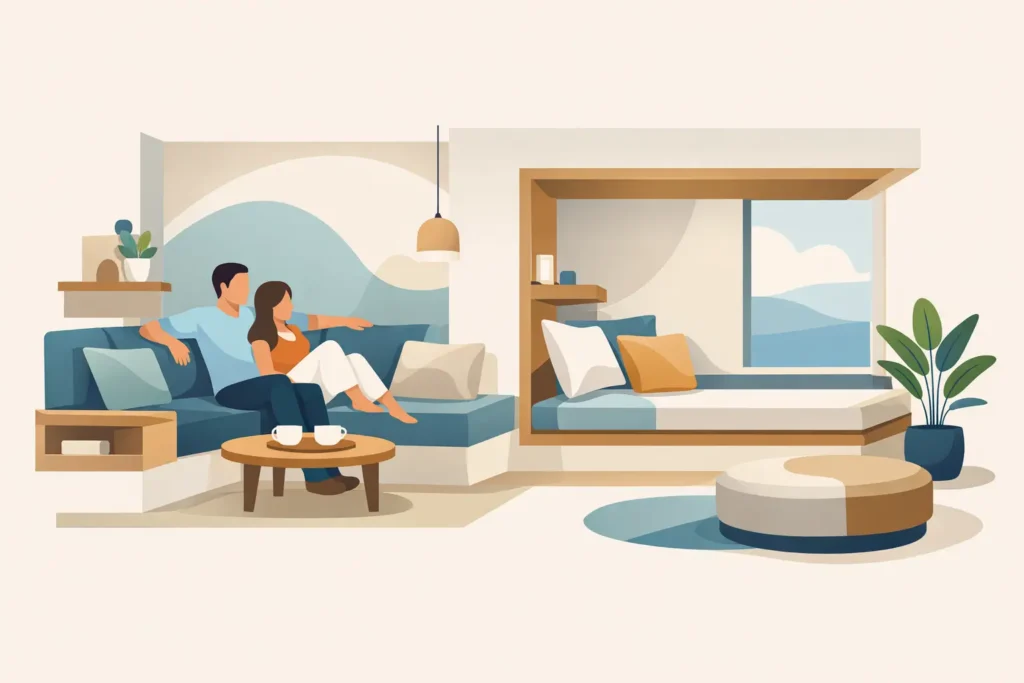
A lounge rarely behaves like a blank box. There is usually an alcove that is not quite square, a chimney breast that interrupts the layout, or a wall where freestanding pieces never seem to sit neatly. That is where built-in lounge furniture earns its keep. Instead of working around the room’s compromises, it is designed to make use of them.
For many homeowners, the appeal is not just appearance. A fitted media unit, display cabinet or full wall of storage can reduce clutter, improve flow and give the room a more settled feel. When furniture is made for the space rather than bought to approximate it, the whole lounge tends to work harder and look calmer.
Why built-in lounge furniture works so well
The main advantage is simple. Every part is sized to the room you actually have, not the room a furniture retailer assumes you have. In period homes around Poole and Bournemouth, that often means dealing with alcoves, uneven walls and older features that standard units do not accommodate particularly well.
Built-in furniture also gives you better control over proportions. A tall cabinet can draw the eye up without overwhelming the room. Low storage can keep a wall light and open while still handling the practical burden of toys, technology, books or board games. Even a modest lounge can feel more generous when storage is planned into the structure of the room rather than added in pieces over time.
There is a long-term value to that as well. Freestanding furniture often gets replaced because it no longer suits a new television, a new layout or a new phase of family life. Bespoke fitted pieces are easier to plan around from the start, so they tend to stay useful for longer.
Built-in lounge furniture for different ways of living
Not every lounge needs the same answer, and that is where a bespoke approach matters. Some households want a media wall with concealed cabling and room for a soundbar, gaming console and discreet ventilation. Others want classic alcove cupboards with shelving above, keeping the television elsewhere and using the room more for conversation, reading or entertaining.
For family homes, enclosed storage is often the difference between a smart room and one that constantly feels half-tidy. Toys, chargers, paperwork and spare throws all need somewhere to go. Open shelving looks attractive, but it does ask for discipline. In a busy house, a mix of closed cupboards below and lighter display shelving above usually proves the more practical balance.
Downsizers often look at it differently. They may want the lounge to feel elegant and unfussy, with enough storage to reduce visible clutter without filling the room with bulky furniture. Here, carefully proportioned fitted cabinetry can replace several separate pieces and leave more usable floor space.
For open-plan rooms, built-in furniture can help define zones without making the space feel chopped up. A fitted run along one wall can anchor the lounge area and keep the rest of the room free for dining or kitchen circulation.
What to think about before you design
The best schemes start with habits, not finishes. It sounds obvious, but it is surprising how often people begin with paint colours or door styles before deciding what the furniture must actually do.
If the lounge centres around television, plan the screen size first and allow properly for viewing height, speaker placement and cable management. If books are a priority, consider shelf depth and whether adjustable shelving will be useful over time. If you want to display ceramics, framed photographs or collected pieces, think about lighting and how much open shelving you genuinely want to maintain.
Heat sources matter too. Radiators, fireplaces and media equipment all need careful treatment. A well-made fitted unit should not just look neat on installation day. It should perform properly in daily use, with sensible allowances for airflow, access and maintenance.
It is also worth being honest about what you want hidden. Many people like the idea of open shelving until they picture routers, remotes, children’s games and the assorted practical bits that gather in a real lounge. A strong design is usually the one that reflects actual living rather than an idealised photo.
Style should suit the house, not fight it
Good lounge furniture does not need to dominate the room to improve it. In some homes, painted shaker-style cabinetry around a chimney breast feels entirely natural and gives a timeless, settled look. In others, cleaner slab doors and minimal detailing may suit a more contemporary interior.
The right choice depends on the property, the existing joinery and the mood you want the room to have. Older houses often benefit from fitted furniture that respects original features rather than trying to compete with them. Newer homes can sometimes handle a bolder, more architectural approach.
Colour is part of this, but so is texture and finish. Matt painted surfaces tend to feel calm and understated. Woodgrain interiors can add warmth inside open shelves or glazed sections. Handle choice, shadow gaps and moulding details all have a bearing on whether the furniture feels classic, modern or somewhere comfortably in between.
A showroom visit is often helpful at this stage because finishes that look similar on a screen can feel quite different in person.
The practical difference bespoke manufacture makes
This is often where fitted furniture separates itself from an off-the-shelf look. True bespoke manufacture means the dimensions, internal layout and finish are built around the room and the brief, rather than adapted from a fixed product range.
That matters in awkward spaces. Alcoves are rarely identical. Floors and ceilings are not always level. Existing skirting, sockets and coving all need thought. A made-to-measure approach allows those details to be resolved properly, giving a cleaner fit and a more convincing end result.
It also matters for function. You may want deeper drawers for games, a specific cupboard width for audio equipment, integrated lighting in display shelves or doors designed to align neatly with surrounding architectural features. Those decisions are hard to get right when you are forcing a room to accept standard sizes.
For customers who want confidence from start to finish, there is also reassurance in dealing with one accountable specialist for design, manufacture and installation. It reduces the usual handover points where details get lost.
Installation is where the quality really shows
Even the best design can be let down by poor fitting. In lounge spaces, neat scribing, clean lines and good finishing are what make the furniture feel as though it belongs to the house.
This is particularly important when the furniture spans a full wall or frames a chimney breast. Small inconsistencies become more obvious in prominent rooms. Experienced installation teams know how to manage uneven walls, protect surrounding finishes and leave the room ready to use, not half-complete with snagging still to sort.
If electrical work, lighting or a wall-mounted television forms part of the scheme, coordination becomes even more important. A properly managed project avoids the common frustration of one trade waiting on another or arriving after surfaces have already been finished.
That joined-up approach has long been central to the way Hale & Murray works, combining design guidance with in-house manufacturing and installation support for customers who want the process handled properly.
Is built-in always the right choice?
Not always, and it is better to be straightforward about that. If you move house frequently, or you enjoy changing your layout every year or two, freestanding furniture may give you more flexibility. Built-in furniture is a longer-term decision.
Budget is another factor. Bespoke fitted work costs more than buying a ready-made unit, particularly when it includes careful design, quality materials and professional installation. The trade-off is fit, durability and a result that is far more tailored to the property.
There are also rooms where restraint is the better option. A very small lounge can be overdesigned if every wall is filled. Sometimes one well-planned media unit or pair of alcove cupboards is enough. Good design is not about adding as much furniture as possible. It is about solving the room in the right measure.
Making the next step easier
If you are considering built-in lounge furniture, start by looking at how the room frustrates you now. Is it clutter, wasted alcove space, poor television placement, lack of storage or simply a collection of pieces that never quite sit together? Those answers usually point towards the right design far more quickly than any trend board.
Bring rough dimensions, photographs and a sense of what you need the room to do. From there, the conversation becomes much more practical. You can weigh up style, storage, finishes and budget with a clear purpose in mind.
The best fitted lounge furniture does not shout for attention. It makes the room feel easier to live in, better organised and properly finished. When it is designed around the way you use your home, that improvement is something you notice every day.