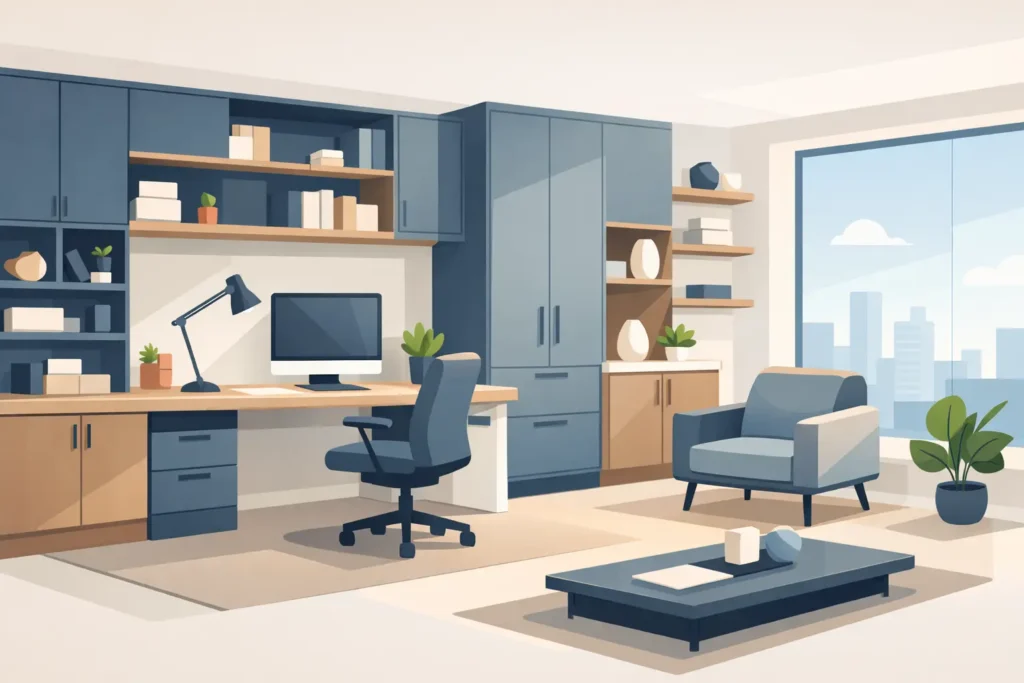
A spare bedroom with a desk pushed against the wall can get you by for a while. But once working from home becomes part of daily life, the cracks show quickly – cables spread across the floor, paperwork piles up, and the room starts doing three jobs badly instead of one job well. That is where home office fitted furniture earns its place. It is not simply about making a room look smarter. It is about building a workspace around how you actually work.
For many homeowners, the main frustration is not a lack of space but poor use of it. Alcoves sit empty, corners become dead areas, and off-the-shelf furniture leaves awkward gaps that collect clutter. A fitted solution changes that. It uses the full height, width and shape of the room, giving you purposeful storage, a desk at the right scale, and a finish that feels part of the home rather than dropped into it as an afterthought.
Why home office fitted furniture makes sense
A good home office has to do more than hold a laptop. It needs to support concentration, keep essentials close at hand and sit comfortably within the style of the house. Fitted furniture is especially useful when the room is not a perfect square, when it doubles as a guest room, or when more than one person needs to use it.
Because the furniture is made to measure, every element can be planned around the room and around your routine. That might mean a run of cabinetry across one wall, shelving built into an alcove, or a desk designed to accommodate dual monitors without overwhelming the space. In smaller rooms, bespoke joinery can be the difference between a cramped setup and a room that feels calm and efficient.
There is also a long-term value to getting it right. Freestanding desks and storage often solve one immediate problem but create another. They may not match, they rarely make the best use of the room, and replacing them over time can become expensive. Fitted furniture is a more considered investment. When designed and made properly, it gives the room structure, improves day-to-day practicality and tends to wear better over the years.
What to consider before designing your workspace
The best results usually come from asking practical questions first. How many hours a day will you spend there? Do you mostly work on a screen, handle paperwork, take video calls, or need room to spread out samples and files? The answers shape the design.
Desk depth, for example, matters more than many people expect. Too shallow and the workspace feels tight. Too deep and the room can feel crowded. Storage needs the same thought. Some clients want everything hidden behind doors for a clean appearance. Others prefer open shelving for books, reference folders or decorative pieces that soften the room.
Lighting should be part of the planning from the start. Natural light is ideal, but screen position, shelving layout and cupboard height all affect how usable the room feels throughout the day. Cable management is another detail that is easy to overlook until it becomes a nuisance. Built-in solutions allow for a neater result, with sockets, charging points and wire routes considered before installation rather than improvised afterwards.
Then there is the wider role of the room. A home office may also need to work as a dressing room, occasional bedroom or family study area. That is where bespoke design is especially useful. Furniture can be shaped around those competing demands instead of forcing the room into a single-purpose layout that does not suit the household.
Home office fitted furniture for awkward spaces
Not every home has a dedicated study, and in Dorset properties of all ages that is often the reality. Box rooms, loft conversions, garden rooms and underused landings are frequently asked to become productive workspaces. Standard furniture rarely handles these spaces well.
A sloping ceiling might rule out tall bookcases from a retailer, but it does not rule out made-to-measure cupboards and shelving that follow the line of the room. An alcove that would only take a narrow chest of drawers can become a valuable bank of filing storage. A landing office can be made to feel tidy and intentional with cabinetry that keeps everything contained.
This is one of the clearest advantages of a company that both designs and manufactures fitted furniture. Measurements are not being sent away to be interpreted by a third party. The practical details of construction, access and installation can be considered from the outset. That tends to lead to fewer compromises and a cleaner finish once the furniture is in place.
Style matters, but function comes first
There is no reason a home office should feel purely functional. In fact, when a workspace sits within the home, it should look as though it belongs there. Finishes, door styles, handles and colour choices all contribute to that. Some clients prefer a classic painted look with panelled doors and warm timber details. Others want a simpler, more contemporary finish that keeps the room visually quiet.
What matters is that the style supports the way the room is used. Gloss surfaces can reflect light well but may show marks more easily. Open shelving can create character but needs disciplined organisation. Dark finishes can feel rich and grounded, though they may suit larger rooms better than compact spaces. Lighter tones often help a small office feel more open.
This is where honest design advice has value. Not every attractive idea works equally well in daily use. A well-planned scheme balances appearance, durability and practicality so that the room still feels right after the novelty of a fresh installation has worn off.
The benefit of a full design-to-installation service
When homeowners choose home office fitted furniture, they are often trying to avoid a fragmented process. One supplier may sell the cabinets, another may fit them, and someone else may deal with electrics or decorating. That can leave too much room for delay, confusion and finger-pointing if anything does not line up.
A full-service approach is more straightforward. The design is developed around the room, the furniture is manufactured to suit, and installation is managed properly on site. If the project also involves other work, such as lighting alterations or making good around the finished furniture, that can be planned in a coordinated way.
For clients in Poole, Bournemouth and the surrounding area, there is reassurance in working with a local specialist that takes ownership of the whole job. Hale & Murray has been doing exactly that for decades, with in-house manufacturing and a practical understanding of what makes fitted interiors work in real homes. That experience shows in the details – how doors align, how storage is planned, and how the finished room feels to use every day.
Is fitted always the right choice?
Not always. If you move frequently, need a very temporary setup or have minimal storage requirements, a simple desk may be enough. Fitted furniture makes most sense when the room is a long-term part of the home and when better use of space would noticeably improve everyday life.
Budget is another fair consideration. Bespoke furniture is not the cheapest route, nor should it be compared like-for-like with flat-pack pieces. The question is whether you want a quick stopgap or a tailored solution built around your room and routine. For many homeowners, especially those renovating or investing in a permanent home office, the extra value is in the fit, finish and longevity.
It also depends on who is delivering the work. The quality of design, manufacturing and installation all matter. A fitted office only earns its keep when it is well planned and properly made.
A workspace that feels settled
The best home offices tend to feel settled almost immediately. Everything has a place, the room is easier to keep tidy, and work feels less improvised. That may sound like a small change, but over months and years it makes a real difference to comfort, focus and how the house functions as a whole.
If you are weighing up whether to improve your workspace, it is worth looking beyond the desk itself. Think about the room, the storage, the daily routine and the standard you want to live with. Good home office fitted furniture is not there to fill space. It is there to make the space work properly, every day.