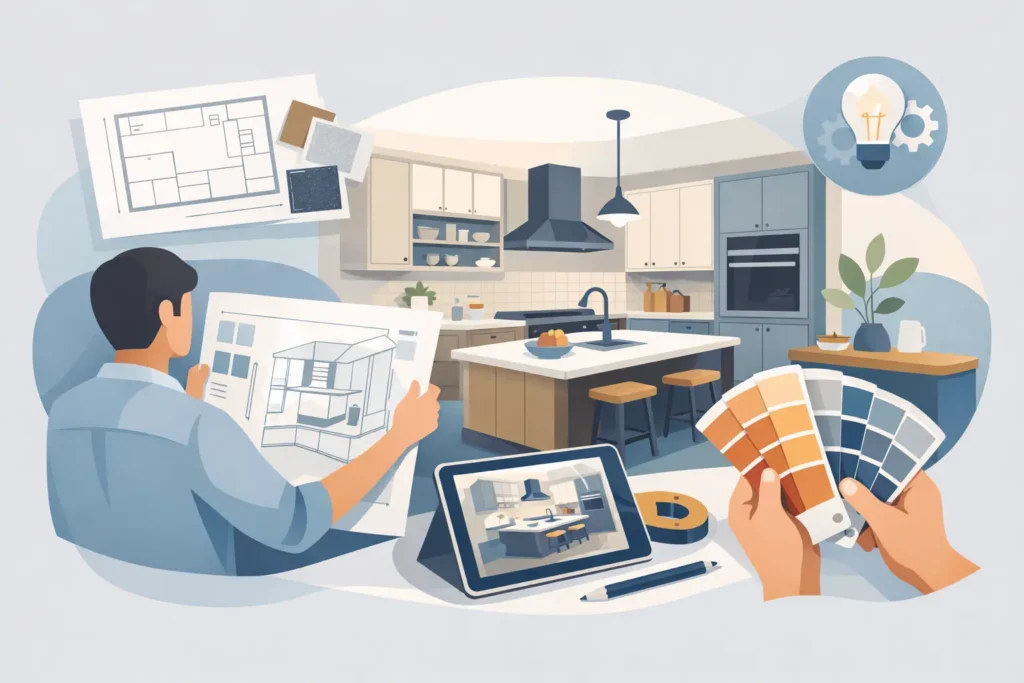
A kitchen can look impressive in a brochure yet feel awkward within a week of living with it. Cupboards clash with door swings, worktops lose useful prep space, and the room never quite supports the way the household actually cooks, eats and moves. That is exactly why homeowners often ask how bespoke kitchen design works – because they want a kitchen shaped around real life, not a standard plan adjusted at the margins.
At its best, bespoke design is not about adding unnecessary complexity or chasing luxury for its own sake. It is a practical process that starts with the room, the people using it and the details that off-the-shelf ranges often cannot resolve. When done properly, it gives you better use of space, more control over finishes and a result that feels considered from the first sketch to the final fitting.
How bespoke kitchen design works in practice
The process usually begins with a conversation rather than a catalogue. A good designer will want to understand how you use the room now, what frustrates you, what must stay, and what could change. Some households need a hardworking family kitchen with durable surfaces and generous storage. Others want a quieter, more architectural room with hidden appliances and clean lines. Both are valid, but they lead to different decisions.
That early stage also covers budget, timescales and scope. In some homes, the kitchen can be replaced within the existing footprint. In others, the design may involve electrical changes, plumbing work, flooring, tiling or building alterations. Being clear about that from the outset matters because the cabinetry is only one part of a successful finished room.
A site survey follows. This is where bespoke work immediately differs from a standard supply route. Instead of trying to make a room fit pre-set unit sizes, the design starts from accurate dimensions, structural details, ceiling heights, window positions, pipe runs and any quirks in the building. Older properties around Poole, Bournemouth and the wider Dorset area often have exactly those quirks – uneven walls, chimney breasts, alcoves or extensions that are not quite square. Bespoke manufacture allows those realities to be designed into the furniture rather than disguised badly afterwards.
The design stage is about function first
People often assume kitchen design begins with door styles and colours. In reality, the layout does most of the heavy lifting. The first priority is how the room will function day to day.
That means looking at the relationship between preparation, cooking, washing up and storage. It means deciding whether an island genuinely improves the room or simply takes up circulation space. It means considering appliance positions, bin storage, pantry access and whether children, guests or pets regularly move through the area. A kitchen that looks balanced on paper can still fail if it creates pinch points at busy times.
A bespoke designer will also think carefully about storage at a detailed level. Deep drawers may serve pans better than cupboards. Full-height cabinetry can make use of awkward vertical space. Breakfast cupboards, integrated recycling, tray storage and corner solutions all have their place, but only if they suit the household. There is no value in paying for clever internals you will never use.
This is one of the biggest trade-offs in bespoke design. More customisation gives more control, but it also requires firmer decisions. If you want a kitchen tailored to your routine, you need to be honest about that routine. The best outcome usually comes when practicality leads and style follows closely behind.
Materials, finishes and detail choices
Once the layout is established, the design develops through materials and finish choices. This is where a bespoke kitchen becomes personal in a more visible way. Cabinet construction, door style, paint colour, timber grain, handles, worktops, splashbacks and lighting all contribute to the final character of the room.
The advantage of bespoke manufacturing is flexibility. If a homeowner wants cabinetry to align perfectly with a window reveal, carry through into a utility area, or incorporate a home bar or dresser unit, it can be made to suit. If ceiling heights are unusual, cabinets can be produced to fit properly instead of being topped off with filler panels that always look like an afterthought.
That does not mean every kitchen should be elaborate. Some of the strongest schemes are the quietest. Simple painted doors, well-judged storage and durable surfaces often age better than trend-led choices made in haste. A dependable designer will help you weigh what is timeless for your property against what is fashionable right now.
Worktops are a good example of where preference, budget and lifestyle need to meet in the middle. Natural stone offers character, but it is not always the right fit for every household. Composite surfaces can be consistent and practical. Timber adds warmth, but it needs care. There is rarely one correct answer. The right choice depends on how you cook, how much maintenance you are willing to take on and the look you want to achieve.
Bespoke manufacture changes the result
This is the point where design moves from ideas to something tangible. With true bespoke work, furniture is manufactured to the agreed specification rather than selected from fixed stock sizes. That matters more than many people realise.
It allows the kitchen to make full use of the available space, often gaining storage where standard cabinetry would leave dead gaps. It can improve visual balance because widths, heights and alignments are worked out for the room itself. It also helps when blending kitchen furniture with other fitted elements nearby, such as utility rooms, dining storage or media cabinetry.
There is also an accountability benefit. When design, manufacture and installation are closely connected, problems are easier to identify and resolve. If an adjustment is needed, it can usually be dealt with far more directly than in a fragmented supply chain where one company sells, another measures and another fits.
For homeowners investing in a long-term kitchen, that joined-up approach often brings peace of mind. It is one reason companies such as Hale & Murray continue to build around showroom consultation, in-house production and managed installation rather than treating the job as a simple product sale.
Installation is where planning proves its worth
A bespoke kitchen is only as good as its fitting. Even an excellent design can be let down by poor installation, rushed finishing or weak coordination between trades.
By the time fitting begins, the detailed planning should already be doing its job. Cabinet positions, service points, appliance specifications and finishing details ought to have been resolved before work starts on site. That reduces avoidable delays and helps each stage progress in the right order.
Depending on the project, installation may involve more than fitting furniture. Plumbing, electrics, plastering, flooring, tiling and decorating may all need to be coordinated. For the customer, this is often where a full-service approach is most valuable. Instead of managing separate contractors yourself, the project is overseen as a whole.
There can still be variables. Older homes sometimes reveal surprises once existing units are removed. Walls may need more preparation than expected, floors may be uneven, or previous services may have been installed poorly. A realistic design-and-build process allows for that possibility rather than pretending every project will be identical.
Is bespoke always the right choice?
Not always. If a room is straightforward, the budget is tight and the priority is speed above all else, a standard kitchen range may be perfectly reasonable. Bespoke design tends to make the most sense when the space is unusual, the expectations are high, or the homeowner wants the room to work in a very specific way.
It is also worth saying that bespoke does not simply mean expensive. It means made for the space and the user. For some clients, that may involve a fully managed installation with custom features throughout. For others, it may mean choosing made-to-measure cabinetry in key areas where standard sizing would compromise the room.
The important question is not whether bespoke sounds appealing. It is whether the extra design freedom solves real problems or delivers worthwhile improvements in daily use.
What to expect from a good designer
A good kitchen designer should do more than produce attractive visuals. They should ask sensible questions, spot practical issues early and explain trade-offs clearly. If something will look good but function badly, they should say so. If a requested feature is possible but poor value, they should say that too.
You should also expect clear communication on lead times, costs, installation stages and what is included. Trust is built through detail. Long-established firms with recognised accreditations, a local reputation and visible aftercare support often stand apart here because they know the relationship does not end when the last handle is fitted.
For homeowners, that reassurance matters. A kitchen is used every day and expected to last. It deserves more than a quick sale and a generic plan.
The real value in understanding how bespoke kitchen design works is that it helps you ask better questions before the project begins. When the process is handled properly, the finished room does not just look right on installation day. It continues to feel right on ordinary mornings, busy evenings and all the years in between.