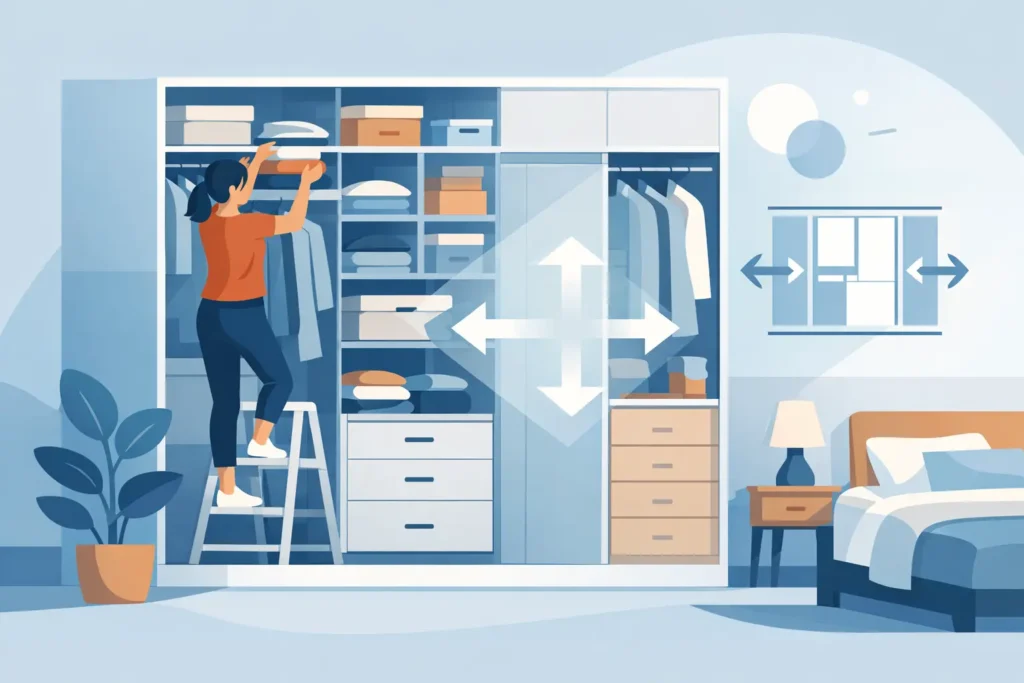
A bedroom can look generous on paper and still feel cramped once freestanding furniture is in place. That is usually where the frustration starts – dead corners, wasted height, doors that clash, and storage that never quite fits the way you live. When people ask how fitted wardrobes maximise space, the real answer is not simply that they are built in. It is that they are designed around the room, the architecture and the routines of the people using them.
How fitted wardrobes maximise space in real homes
Freestanding wardrobes are made to standard sizes. Bedrooms are not. In many homes across Poole, Bournemouth and the wider Dorset area, walls are rarely perfectly straight, chimney breasts interrupt layouts, and loft conversions come with sloping ceilings or reduced head height. A fitted wardrobe uses those awkward areas instead of surrendering them.
That changes the room in two ways. First, it creates more usable storage because the cabinetry can run floor to ceiling and wall to wall. Second, it often improves the sense of space because there are fewer gaps collecting clutter, less visual interruption and a layout that works with the room rather than fighting it.
A common example is the narrow strip above a standard wardrobe. In most bedrooms, that upper section becomes wasted air or a dust trap. With a fitted design, it becomes practical storage for seasonal bedding, luggage or less frequently used items. The same logic applies to alcoves either side of a chimney breast, corners that cannot take off-the-shelf furniture properly, and eaves where a standard unit would leave half the footprint unusable.
The value of using every millimetre
The biggest gain is precision. A bespoke fitted wardrobe is not selected from a warehouse and adjusted to suit. It is measured for the room, then planned around exact dimensions. That means no filler gaps you cannot use, no overhanging cornices wasting depth, and no compromise on height.
In practical terms, using every millimetre often means storing more without making the room feel fuller. That matters in smaller bedrooms, but it also matters in larger homes where clients want a calmer, cleaner look. If clothing, shoes, bags and linen all have a designated place, surfaces stay clearer and the whole room feels more settled.
There is a visual benefit too. Furniture that fits precisely tends to look quieter. Instead of several separate pieces competing for attention, you have one integrated run that can blend into the architecture. If the finish and door style are chosen carefully, fitted wardrobes can make a bedroom feel less crowded even while they hold far more.
Internal storage matters as much as the exterior
If you are considering how fitted wardrobes maximise space, it is worth looking beyond the doors. A wardrobe can occupy the full wall and still waste room internally if the layout is not planned properly.
Good internal design starts with how you actually use the wardrobe. Long hanging for dresses and coats takes more height but less width. Double hanging works well for shirts, blouses and trousers and can effectively double a section’s capacity. Drawers are better for smaller items that would otherwise get lost on shelves. Adjustable shelving helps if your storage needs change over time.
This is where bespoke furniture earns its place. One household may need more hanging space, another may need deep shelves for jumpers and spare duvets, and another may want a dressing table, fitted bedside units or integrated lighting worked into the same run. There is no single correct layout. It depends on the contents, the room and the daily routine.
That is also why copying a layout from a brochure does not always work. What looks neat on a display wall may not suit a real bedroom with limited width, uneven ceilings or a very specific storage requirement.
Awkward rooms benefit most
Some of the strongest results come from rooms that are hardest to furnish. Loft bedrooms, period properties and converted spaces often leave homeowners assuming they must put up with compromised storage. In reality, these are often the rooms where fitted wardrobes make the biggest difference.
A sloping ceiling, for instance, can rule out a standard wardrobe altogether or leave a large wedge of inaccessible space behind it. A fitted solution can step with the ceiling line or use the lower section for drawers and shelving. An alcove can become full-height storage instead of an underused recess. A room with a boxed-in pipe or chimney breast can be designed around rather than treated as a problem.
The result is not only better storage but a cleaner layout. Instead of trying to patch together furniture from different ranges and depths, the room feels intentional.
Choosing doors and finishes carefully
Space-saving is not only about what sits inside the wardrobe. Door style has a real effect on how comfortable a room feels to use.
Sliding doors are useful where there is limited clearance around the bed or in tighter floorplans, because they do not swing out into the room. Hinged doors, however, offer full access to the interior and can be better where you want to see everything at once. Neither is automatically better. The right choice depends on the room proportions and how the furniture is positioned.
Mirrored doors can help bounce light and make a room feel more open, especially where natural light is limited. That said, some homeowners prefer a more understated painted or wood-effect finish for a softer look. In premium bedroom design, the best choice is usually the one that balances practicality with the wider style of the home.
Why fitted wardrobes often reduce clutter
Clutter is not always caused by having too much stuff. More often, it is caused by poor storage. If shelves are too deep, items disappear at the back. If hanging sections are the wrong height, space is lost. If shoes, accessories and laundry do not have a proper home, they end up on the floor or draped over a chair.
A fitted wardrobe can address that by giving different items the right type of storage from the start. That may include shallow shelves for knitwear, dedicated shoe storage, internal drawers, pull-out rails or top boxes for occasional-use items. Once the wardrobe is working properly, the rest of the bedroom usually follows.
This is one reason fitted furniture appeals to downsizers and families alike. In both cases, the aim is often the same – keep the room feeling calm without compromising on storage.
The trade-off to understand
Fitted wardrobes are not the cheapest route, and they are not meant to be. They are a long-term investment in how a room functions and feels. If you move furniture around regularly or expect your needs to change dramatically within a year or two, freestanding pieces may offer more flexibility.
But for homeowners planning to stay put and wanting the room to work properly, bespoke fitted storage tends to be the more efficient answer. It uses the full envelope of the room, avoids wasted voids and can be designed around your lifestyle rather than forcing you to adapt to standard sizes.
That is particularly relevant when the furniture is made to order by a local specialist with control over design, manufacture and installation. The end result is usually better because the process is more accountable from the first measure to the final fit.
How fitted wardrobes maximise space without making a room feel fitted out
One concern some clients raise is whether fitted furniture will make a bedroom feel too built-in or heavy. Done badly, that can happen. Overly dark finishes, bulky framing or a layout that ignores natural light can make a room feel closed in.
Done well, the opposite is true. A fitted wardrobe should simplify the room visually, not dominate it. Proportions matter. So do colours, handles, panel styles and the way the run meets the ceiling and adjoining walls. In many cases, a lighter finish and clean lines will help the wardrobe recede, allowing the room itself to feel larger.
At Hale & Murray, that is why the design stage matters so much. The best storage solution is not simply the one with the most shelves. It is the one that makes the whole room work better.
If your current bedroom feels as though it is losing space to furniture rather than gaining storage from it, a fitted wardrobe is often the most sensible place to start. The right design does not ask you to settle for standard dimensions or wasted corners. It gives the room back to you, while making everyday life easier at the same time.