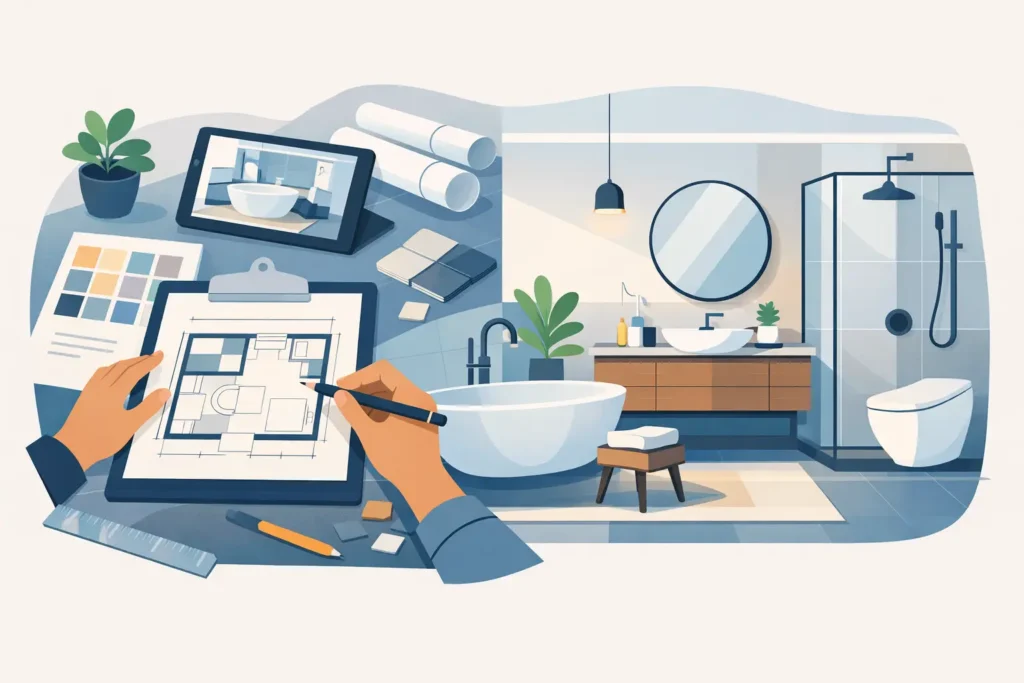
A new bathroom usually starts with a simple idea – more storage, a larger shower, a calmer look, or a room that finally works for busy mornings. The challenge is that good bathroom design is rarely about one feature on its own. If you are working out how to design a new bathroom, the best results come from looking at the whole room together: layout, plumbing, lighting, storage, finishes and how you actually use the space every day.
That is often where costly mistakes are avoided. A bathroom can look impressive on a mood board and still feel awkward in practice if the basin is too small, the storage is poor, or the lighting is harsh. A well-designed room should feel comfortable to use, easy to maintain and right for the property.
Start with how the room needs to work
Before choosing tiles or brassware, think about who will use the bathroom and when. A family bathroom has very different demands from an en suite or a downstairs cloakroom. Children, guests and older family members all bring practical considerations that should shape the design from the outset.
This is the stage where routines matter. If two people need to get ready at the same time, a double basin may be worth the space. If the room is used mainly for quick weekday showers, a large walk-in shower may be more useful than a bath. If this is the only bathroom in the house, keeping a bath can be a sensible decision for resale as well as day-to-day flexibility.
Good design is not about fitting in every desirable feature. It is about choosing the features that suit the room and the household best.
How to design a new bathroom around the layout
Layout is where the project is won or lost. In most bathrooms, there is a balance between what is possible, what is practical and what is worth the cost. Moving a toilet, for example, may open up the room but can also increase plumbing work significantly. In some homes it is straightforward. In others, it is not the best use of budget.
Start by looking at the fixed points. Windows, doors, ceiling height, soil pipes and existing waste positions will all influence the design. A strong layout makes movement around the room feel natural and gives each fitting enough space around it.
A walk-in shower often works best where there is sufficient width for a proper screen and drying area outside it. A vanity unit should not make the entrance feel tight. A bath under a window can be effective, but only if the proportions are right and the window treatment suits a wet room environment.
This is also where bespoke fitted furniture can make a real difference. In awkward rooms, sloping ceilings, alcoves and uneven walls often waste space if everything is chosen off the shelf. Made-to-measure furniture allows storage to be built around the room rather than forced into it.
Storage should be planned early, not added later
One of the most common problems in bathroom design is underestimating storage. Towels, toiletries, cleaning products, spare loo rolls, children’s bath items and everyday essentials all need a proper home. Without that, even a newly finished bathroom can quickly feel cluttered.
Vanity storage is usually the hardest working part of the room, but it should not do everything on its own. Tall cabinets, recessed shelving, mirrored storage and fitted units can all help, depending on the space available. The key is to think about what needs to be hidden away and what should stay close to hand.
There is also a balance between open and closed storage. Open shelves can soften the look of a bathroom, but they require tidiness. Closed storage keeps the room calmer and easier to maintain. For many households, a combination of both works best.
Choose materials that suit real life
Bathrooms deal with heat, moisture and regular cleaning, so materials need to do more than look attractive. This is especially important in family homes where surfaces need to stand up to daily use.
Porcelain tiles remain a reliable choice because they are hard-wearing and available in a wide range of finishes. Natural stone can look beautiful, but it may need more maintenance and sealing. Large-format tiles can make a smaller room feel less busy, though they are not always the simplest option in very compact or irregular spaces.
Furniture finishes need similar thought. Matt finishes can look contemporary, but some show marks more readily than others. Wood-effect finishes bring warmth without the maintenance concerns of real timber in a humid room. Worktops, basin surrounds and shower panels should all be chosen with cleaning and durability in mind, not just appearance.
If you want a bathroom that still feels right in ten years, it is often wise to keep permanent finishes more timeless and bring personality through mirrors, lighting and accessories.
Lighting changes everything
Bathroom lighting is often left too late, yet it has a huge effect on how the room feels. A single central fitting rarely does enough. You need practical light for shaving, make-up and cleaning, as well as softer light for a more relaxed atmosphere.
Layered lighting usually works best. Ceiling downlights provide overall illumination, task lighting around the mirror improves daily use, and subtle accent lighting can add warmth. In larger bathrooms, lighting inside alcoves or under vanity units can help the room feel more considered.
Always think about the mood at different times of day. Bright, cold light can make a bathroom feel clinical. Very warm light can be flattering but less useful for grooming. A balanced scheme tends to give the best result.
Ventilation and heating deserve proper attention
A bathroom that looks smart but steams up constantly or feels cold in winter will not be a success. Ventilation and heating are not the most exciting parts of the design, but they affect comfort and longevity.
Extractor fans should be chosen for the room size and positioned effectively. Poor ventilation can lead to condensation, mould and damage to finishes over time. Heating matters too. Underfloor heating brings comfort and frees up wall space, but it may not always be the most practical solution in every property or budget. Heated towel rails are popular, though they should be selected for heat output as well as appearance.
If you are renovating an older home, this is a good time to consider insulation and the condition of pipework as well. These details are less visible once the room is complete, but they can have a lasting impact.
Set the budget with priorities, not guesses
When people ask how to design a new bathroom, budget is often where uncertainty creeps in. Costs vary widely depending on room size, specification, structural work and whether the layout is staying much the same or changing significantly.
The most helpful approach is to decide early where quality matters most. For some homeowners, that is bespoke furniture and storage. For others, it is premium brassware, wall tiling or a frameless shower enclosure. Not every element needs to be top of the range, but key items should be chosen for reliability and long-term value.
It is also sensible to allow a contingency. Once an old bathroom is removed, hidden issues can appear, especially in older properties. Uneven walls, tired flooring, outdated plumbing or damaged plaster can all add work. Planning for that possibility makes decisions easier if it happens.
Use professional design input to avoid expensive compromises
A bathroom is one of the most technical rooms in the house. It brings together design, plumbing, electrics, heating, ventilation, tiling and installation detail in a relatively small space. That is why early design input is so valuable.
An experienced bathroom designer will look beyond the obvious choices and help you weigh the trade-offs. Is a larger shower worth losing storage? Will moving pipework improve the room enough to justify the extra cost? Is that fitted furniture finish suitable for the environment? These are the decisions that shape the final result.
For homeowners in Poole, Bournemouth and the surrounding Dorset area, working with a company that can design, manufacture and install as one joined-up service often makes the process smoother. Hale & Murray has seen first-hand that the best bathrooms come from careful planning, accurate measuring and practical advice before any installation begins.
Think about the finish, not just the fitting list
The bathrooms that feel calm and well made are usually the ones where the details have been considered properly. Tile lines that align neatly, storage that sits flush to the room, brassware that suits the overall style and colours that work with natural light all contribute more than people often expect.
That does not mean every bathroom needs to be minimal or neutral. It means the choices should feel consistent. A bathroom can be classic, contemporary or somewhere in between, but it should look intentional.
If you are planning a new bathroom, take your time at the design stage. Ask what will make the room easier to use in five years, not just what looks good this month. The best bathroom is not the one with the most features. It is the one that feels right every single day.