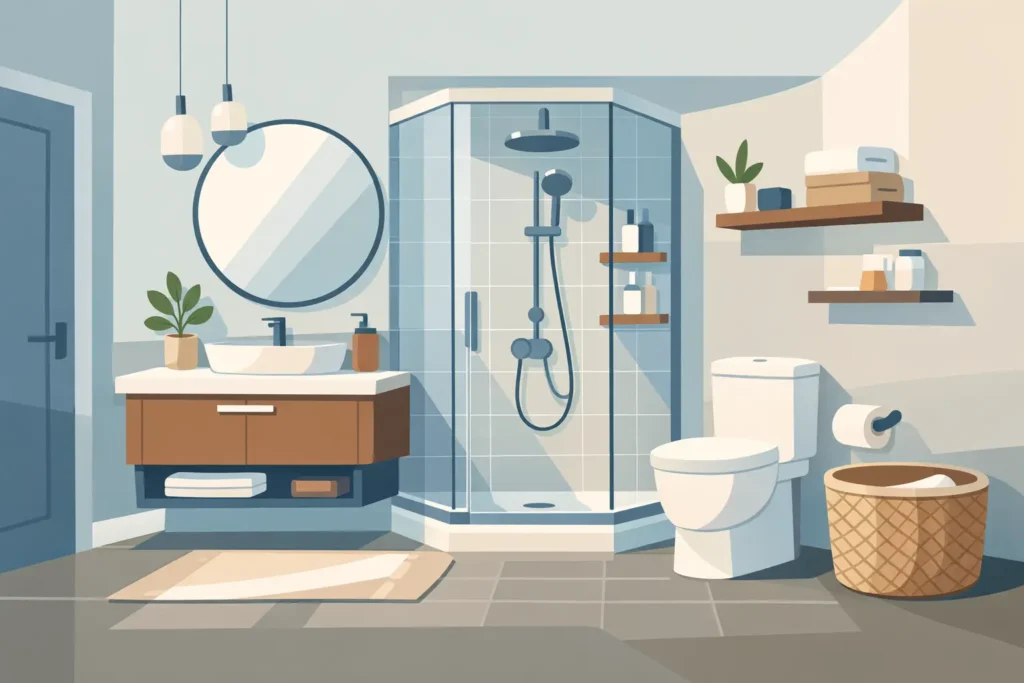
A small bathroom usually starts causing problems long before the work begins. The basin feels too close to the door, toiletries pile up on every ledge, and the room never quite feels calm. If you are wondering how to design a small bathroom, the answer is rarely about squeezing in more. It is about making better decisions with the space you already have.
In compact bathrooms, every choice has a visible effect. A bulky vanity can make the room feel crowded. A poor door position can interrupt the whole layout. Even tile size and lighting can change how spacious the room feels. That is why good small bathroom design needs more than nice finishes. It needs careful planning, practical storage and a layout that suits the way you actually use the room.
How to design a small bathroom starts with the layout
Before thinking about colours, brassware or wall tiles, start with the fixed points. Look at where the soil pipe sits, where the window opens, how the door swings and whether there is any unused wall depth that could work harder. These details shape what is realistic.
The biggest mistake in a small bathroom is trying to force in the same elements you would choose for a much larger room. A full-depth vanity, a wide bath and oversized fittings may all look appealing in isolation, but together they can leave little space to move comfortably. In a family home that gets daily use, that soon becomes frustrating.
Often, the best result comes from simplifying the plan. That may mean choosing a walk-in shower instead of a bath, a wall-hung WC to open up the floor visually, or a basin with properly designed storage rather than a decorative pedestal. If a bath is essential, its proportions matter. A compact bath can still feel comfortable, but it needs to be paired with fittings that do not crowd the room.
A good layout should give you clear movement from the door to each fitting. Nothing should feel like an obstacle course. If you have to twist awkwardly to reach the basin or squeeze past the WC, the plan needs refining.
Prioritise what the room needs to do
Not every small bathroom serves the same purpose, so the design should reflect that. A downstairs cloakroom has very different demands from a main family bathroom. An en suite for two adults may need efficient morning use and discreet storage, while a bathroom for a growing family needs durability and room for everyday clutter.
This is where tailored design matters. In a compact space, standard off-the-shelf furniture can leave awkward gaps or waste valuable corners. Bespoke cabinetry allows the room to work around pipe boxing, sloping ceilings, alcoves and uneven walls. It also means storage can be designed for what you actually keep there, rather than what a manufacturer assumes.
When deciding what matters most, be honest about your routine. If your bathroom is always busy, storage should come high on the list. If the room lacks natural light, then surfaces, colour and lighting will need more attention. If accessibility is a concern now or may be in future, that should influence the layout from the start rather than being treated as an afterthought.
Storage is what makes a small bathroom feel organised
A compact bathroom rarely feels too small because of square footage alone. More often, it feels too small because everyday items are left out with nowhere sensible to go.
That is why storage deserves proper attention. Recessed shelving in a shower area can remove the need for bottles balanced on trays and corners. Mirror cabinets can provide useful hidden storage above the basin without making the room feel heavy. Vanity units, if carefully sized, can keep cleaning products, spare toiletries and daily essentials out of sight.
The key is not to overfill the room with cabinetry. A run of deep cupboards may offer plenty of storage on paper, but if they dominate the floor plan, the room can feel boxed in. In smaller bathrooms, shallow fitted storage often works better than large freestanding pieces. It gives you enough practical space while keeping the room visually lighter.
This is one of the strongest arguments for made-to-measure furniture. A custom unit can fit the width, height and depth available precisely, making use of areas that would otherwise be lost.
Use light, scale and finish to your advantage
There is no single colour scheme that magically makes every small bathroom appear larger, but some choices are more forgiving than others. Pale tones tend to reflect light better and create a calmer feel, especially where natural daylight is limited. Soft neutrals, warm whites and gentle stone shades remain popular for good reason. They keep the room feeling open without becoming stark.
That said, small does not have to mean plain. A darker wall colour, patterned floor tile or timber effect finish can work beautifully if the layout is well judged and the lighting supports it. The trick is balance. Too many competing surfaces in a compact room can make it feel restless.
Tile scale also matters. Very small tiles with lots of grout lines can visually busy up the space, while larger format tiles often create a cleaner, quieter finish. This does depend on the room dimensions and the style you want, but in many cases, fewer lines help the eye travel more easily across the room.
Wall-hung furniture and WCs can help too. They expose more floor area, which makes the room feel less cramped. Combined with simple flooring and a clear route through the space, they can make a noticeable difference.
Lighting can change the room more than you expect
Bathrooms are often designed around fittings and finishes first, with lighting left until late in the process. In a small room, that is a missed opportunity.
Good lighting makes the bathroom easier to use and more pleasant to spend time in. It also helps define the room properly. One central ceiling fitting rarely does enough on its own. Layered lighting tends to work better, with practical task lighting around the mirror and softer ambient lighting to reduce shadows.
If the bathroom has little natural light, the colour temperature of your bulbs matters. A harsh cool white can make the room feel clinical, while a warmer, balanced light usually creates a more comfortable atmosphere for daily use. This is especially important around the mirror, where shaving, make-up and skincare all need clarity without glare.
Mirrors themselves can also help increase the sense of space, but size and placement need thought. A well-positioned mirror reflects light and opens the room visually. An oversized one can work well, particularly above the basin, as long as it suits the proportions of the wall.
Choose fittings that suit the room, not just the brochure
When people ask how to design a small bathroom, they are often focused on style. Style matters, but proportion matters more. Taps, basins, radiators and screens should suit the scale of the room.
A basin that looks elegant in a showroom may project too far in a tight space. A towel radiator may take up the only useful wall area. A framed shower enclosure can feel heavier than a cleaner glass panel. These are the practical decisions that shape how spacious the finished room feels.
It is also worth thinking about maintenance. In a busy home, easy-clean surfaces, quality brassware and durable cabinetry can make daily life simpler. Very trendy choices can date quickly, while well-made, well-proportioned fittings tend to last both practically and visually.
This is where experienced design input earns its keep. Seeing a room on plan is one thing. Understanding how each element will function once it is built is another.
Small bathroom design works best when the details are coordinated
Compact bathrooms do not leave much room for compromise between trades. If the tiling, plumbing, electrics and fitted furniture are not considered together, small problems become obvious very quickly. Gaps look larger, misalignments are more noticeable and storage can be lost to poor coordination.
That is why a joined-up approach usually delivers a better result. When the layout, furniture and installation are planned as one scheme, the room feels more resolved. Pipework can be concealed neatly, storage can be built around structural quirks, and the finished bathroom feels intentional rather than pieced together.
For homeowners in Poole, Bournemouth and the surrounding Dorset area, that level of planning often makes the difference between a bathroom that merely fits and one that genuinely works.
A small bathroom does not need to feel compromised. With the right layout, properly considered storage and furniture made for the room rather than forced into it, even a compact space can feel calm, practical and built to last. If you start with how the room needs to work, the style choices tend to become much easier.