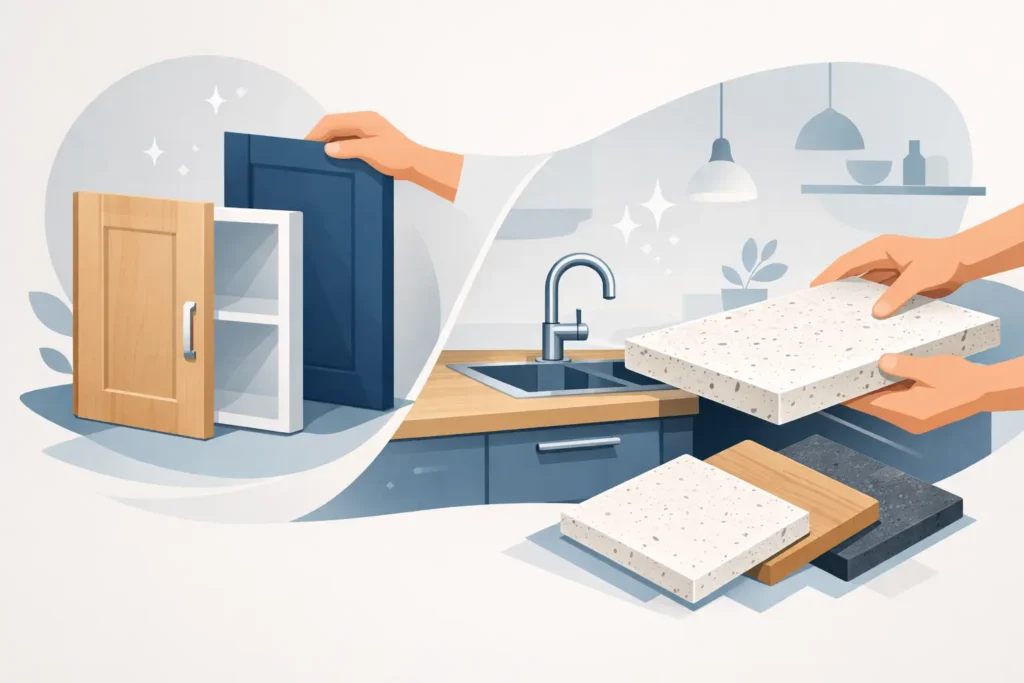
A kitchen can start to feel dated long before it stops working. Cabinets may still be sound, the layout may still suit your routine, yet worn doors, chipped edges and tired work surfaces can make the whole room feel past its best. That is why replacement kitchen doors and worktops are often a sensible middle ground – a practical way to improve the look, feel and everyday use of the room without committing to a complete renovation.
For many homeowners, the question is not whether the kitchen needs attention, but how much change is actually worthwhile. A full replacement can be the right answer if the room no longer functions, storage is poor or the cabinetry has deteriorated. But when the structure is solid and the bones of the kitchen are still doing their job, replacing the visible elements can deliver a striking difference for less upheaval.
When replacement kitchen doors and worktops make sense
This approach works best when the cabinet carcases are in good condition, correctly fitted and still aligned. If doors are hanging badly because units have shifted, or the cabinets have swollen from long-term water damage, new fronts alone will not solve the underlying problem. The same applies if your worktops have failed because of poor support or an uneven fit.
Where the existing kitchen is fundamentally sound, replacing doors and worktops can be a very effective upgrade. It allows you to modernise the style, improve durability and change the overall character of the room while keeping the layout you already know works. That can be especially appealing if you have recently redecorated, changed flooring or want the kitchen to sit better with the rest of the home.
There is also a practical advantage in avoiding unnecessary disruption. A full kitchen project often involves several trades, more time without full use of the room and a larger budget. By comparison, a well-planned replacement scheme can be quicker and more straightforward, provided measurements are accurate and the new components are made to suit the existing setup.
What changes most with new doors and worktops
Doors set the visual tone of the kitchen. They influence whether the room feels classic or contemporary, understated or bold, lighter or more grounded. Worktops do something slightly different. They shape how the kitchen performs day to day, from food preparation and cleaning to heat resistance and long-term wear.
Changing both at the same time tends to produce the strongest result because each element supports the other. New doors with old, damaged worktops can leave the room feeling only half finished. Equally, replacing worktops alone may highlight just how tired the doors have become. Treated as a pair, they give the kitchen a more cohesive finish.
There is also scope to improve details that are often overlooked. Handles, end panels, plinths, splashbacks and trim can all be updated to match. These finishing touches matter because they stop the kitchen looking like a patchwork of old and new.
Choosing the right door style
Door choice should suit both the property and the way you live. A sleek slab door creates a clean, contemporary look and is generally easy to wipe down, which can be useful in busy family kitchens. A shaker style has more detail and can sit comfortably in both traditional and modern homes depending on colour and finish.
Matt finishes remain popular because they feel calm and understated, while gloss can reflect more light and help a compact room feel brighter. Painted timber or timber-look finishes bring warmth, though the best choice depends on how much natural light the kitchen receives and what other materials are already in the space.
This is where bespoke manufacture can make a real difference. Standard sizes do not always suit older properties, unusual layouts or kitchens that have been altered over time. Made-to-measure doors help avoid awkward gaps, inconsistent lines and the compromises that often come with off-the-shelf replacements.
Worktops are not just a design decision
A worktop has to look right, but it also needs to stand up to everyday life. Laminate remains a practical option for many households because it is cost-effective, available in a wide range of finishes and straightforward to maintain. Modern laminates can mimic stone or wood convincingly, though they do not offer the same lifespan or heat resistance as premium materials.
Solid surface and quartz are often chosen where customers want a more refined finish and stronger long-term durability. They can give the kitchen a cleaner, more substantial feel, and in many cases they cope better with heavy use. Timber worktops bring character and softness, but they do ask more of the owner in terms of care and regular maintenance.
There is no single best material. A family kitchen used heavily every day has different demands from a compact kitchen in a downsizing move or a rental property where value and resilience may matter most. Good advice should take account of budget, cooking habits, maintenance expectations and the style of the room as a whole.
The hidden value of proper measuring and fitting
Replacement work can look simple from the outside, but success depends on detail. Existing kitchens are rarely perfectly square, and even small measuring errors can lead to poor joins, uneven overhangs or doors that do not sit consistently. If appliances are being retained, dimensions need to be checked carefully so clearances, hinges and service points still work as they should.
That is why a survey matters. It allows any issues with worn units, uneven walls or previous alterations to be spotted before manufacturing begins. It also gives you the chance to address practical improvements, such as adjusting storage, changing handle positions or incorporating updated end panels and trims.
Professional installation matters just as much. A worktop cut well but fitted badly will not perform properly, and replacement doors need precise alignment to achieve a tidy, quality finish. The aim is not only to make the kitchen look newer, but to ensure it feels solid and reliable in everyday use.
Replacement is not always the cheaper option for every kitchen
It is easy to assume that replacing fronts and surfaces will always save money, but that depends on the condition of what sits underneath. If cabinets are poor quality, structurally weak or badly laid out, investing in premium new doors and worktops can become a false economy. You may improve the appearance, but still be left with a kitchen that falls short on storage and usability.
This is where honest guidance is important. Sometimes a replacement scheme is exactly the right level of work. Sometimes a partial redesign or complete refit offers better long-term value. The right decision should be based on the kitchen itself, not on a one-size-fits-all sales approach.
For homeowners in Poole, Bournemouth and across the wider Dorset area, that often means looking for a company that can assess the existing room properly, manufacture to suit and manage installation with care. A local specialist with its own workshop is usually in a stronger position to tailor sizes, finishes and details than businesses limited to standard ranges.
Why bespoke replacement kitchen doors and worktops stand out
The biggest difference between a generic replacement service and a bespoke one is fit. Kitchens vary more than many people realise, particularly in older homes and properties that have been improved in stages. When doors and panels are made to suit the room rather than forced into preset sizes, the finished result is cleaner and more convincing.
It also gives you more freedom in design. You are not limited to a narrow choice of dimensions, edge details or finishes. If you want to update the kitchen without losing features that already work well, bespoke manufacture makes that easier. It can also shorten the path between design decision and installation, because adjustments can be handled directly rather than passed through several suppliers.
For a long-established business such as Hale & Murray, that workshop-led approach is central to the service. It gives customers a more accountable process, with design, manufacture and fitting joined up rather than fragmented.
What to expect from the process
A good replacement project should begin with a proper conversation about what is staying, what is changing and why. That includes assessing the existing cabinetry, discussing style and material options, and being realistic about budget and timescales. From there, accurate measuring and detailed planning help prevent costly surprises later.
Once choices have been made, manufacture and fitting should be handled with the same attention as a full installation. Even though the scope is smaller, the expectations are not. Customers still want neat lines, reliable workmanship and clear communication throughout.
The best outcome is a kitchen that feels genuinely renewed rather than superficially altered. New doors and worktops should not look like an afterthought. They should make the room feel considered, balanced and ready for the next stage of family life.
If your kitchen still works but no longer feels like it belongs in your home, replacement can be a very smart move – provided it is done properly, measured carefully and chosen with the way you live in mind.