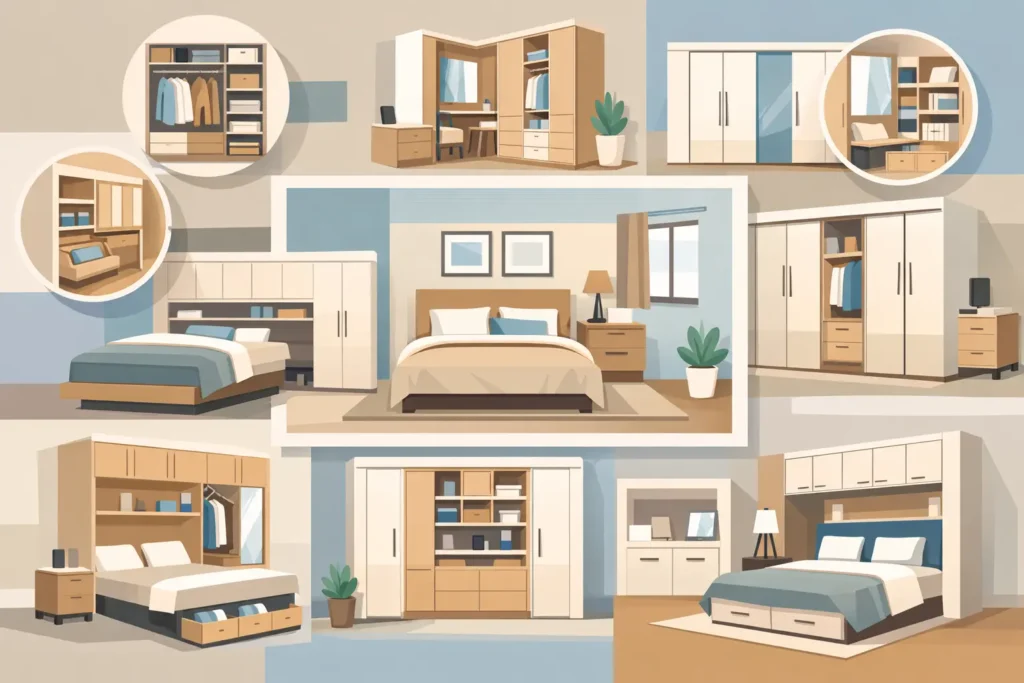
When a bedroom is short on floor space, every centimetre has to work harder. The best small bedroom fitted wardrobe ideas do more than add storage – they make the room feel calmer, easier to use and far less cramped from the moment you walk in.
A freestanding wardrobe often leaves awkward gaps at the sides, wasted space above and dead corners that collect clutter. In a small room, that is space you cannot afford to lose. Fitted furniture changes the equation because it is designed around the room you actually have, including sloping ceilings, alcoves, chimney breasts and those uneven walls older homes are known for.
Why fitted wardrobes work so well in small bedrooms
The biggest advantage is precision. A wardrobe built wall to wall and floor to ceiling gives you more usable storage than a standard unit with the same footprint. You are not paying for air above the top or trying to clean around side gaps. That extra capacity matters in smaller bedrooms, where bulky chests of drawers and overflow clothing rails can quickly make the room feel busy.
There is also a visual benefit. When furniture fits properly, the room reads as more organised. Clean lines, doors that sit flush and a layout planned around the bed and windows can make a compact bedroom feel more balanced. It is not just about getting more in. It is about reducing visual noise.
That said, fitted wardrobes are not one-size-fits-all. The right design depends on ceiling height, natural light, where the bed sits, how much hanging space you need and whether the room doubles as a dressing space, guest room or child’s bedroom.
Small bedroom fitted wardrobe ideas that make space feel bigger
1. Go full height to reclaim wasted space
In small bedrooms, the area above a standard wardrobe is often the least useful part of the room. Full-height fitted wardrobes turn that dead space into practical storage for spare bedding, suitcases or out-of-season clothing.
The trade-off is access. Top cupboards are ideal for occasional-use items rather than everyday essentials. If the room has a lower ceiling, the design needs to feel proportional. Slim frames and simple door styles usually help keep the look light.
2. Choose sliding doors where clearance is tight
If the bed sits close to the wardrobe, hinged doors can be awkward. Sliding doors avoid the need for opening space, which can make a narrow bedroom much easier to move around.
They suit contemporary schemes particularly well, and mirrored sliding doors can bounce light around the room. The compromise is internal access – with sliding doors, one section is always covered. Good interior planning matters more here, so frequently used storage needs to be arranged carefully.
3. Use light finishes, but not always plain white
Light colours generally help a small room feel more open, especially when the bedroom does not get strong natural light. Soft whites, warm neutrals and pale grey tones can all work well.
But pure white is not the answer in every home. In some bedrooms, especially those with cooler north-facing light, it can feel stark. Warmer painted shades or wood-effect finishes often give a softer result while still keeping the room bright.
4. Build around alcoves and chimney breasts
Older properties across Poole, Bournemouth and the wider Dorset area often come with alcoves that standard furniture cannot use properly. Bespoke fitted wardrobes can turn these awkward recesses into proper storage while keeping the central part of the wall visually neat.
This approach works particularly well when you need wardrobes on either side of a chimney breast. It can create symmetry and leave the centre free for a headboard, shelving or a low chest. In a small room, that sense of order makes a real difference.
5. Add overhead bridge units around the bed
If floor space is limited, the wall around the bed can offer useful storage potential. Wardrobes placed either side of the bed with cupboards across the top create a built-in look and free up the need for extra bedroom furniture elsewhere.
This idea works best when designed carefully. If the units are too deep, they can feel imposing. Keeping the bridge section shallower than the wardrobes or using open niches for bedside items can stop the room feeling boxed in.
6. Include fitted drawers inside rather than more furniture outside
Many small bedrooms become crowded because storage is split across too many pieces – wardrobe, chest of drawers, bedside tables and sometimes underbed boxes as well. Bringing more of that storage inside the wardrobe can simplify the room.
Internal drawers, pull-out shelves and divided compartments help keep clothing organised without adding bulk elsewhere. It is often a better use of space than trying to squeeze in a separate chest where circulation is already tight.
7. Make use of corners with an L-shaped layout
Corners are easy to waste, particularly in box rooms. An L-shaped fitted wardrobe can turn an underused corner into valuable storage, whether that means hanging rails, shelves or a combination of both.
The key is getting the internal layout right. Corner sections can become awkward if access is poor, so this is where bespoke design really earns its keep. A well-planned corner wardrobe should feel easy to use, not like a place where things disappear.
8. Consider mirrored panels carefully
Mirrors are a classic trick in small spaces because they reflect both daylight and the room itself, making the bedroom feel larger. Used on wardrobe doors, they can also save space by removing the need for a separate full-length mirror.
Still, it depends on the room. In some bedrooms, full mirrored fronts can dominate the scheme or reflect clutter back at you. Sometimes one or two mirrored panels are enough. Sometimes a softer painted finish is the better choice.
9. Keep handles and detailing simple
In compact rooms, fussy design can make wardrobes feel heavier than they are. Simple handles, clean door styles and restrained detailing usually help the furniture blend into the architecture rather than fight it.
That does not mean plain has to mean characterless. Shaker-style doors, woodgrain textures and well-chosen colours can still add warmth. The main point is to avoid overcrowding a small room with too many visual elements.
10. Plan the inside as carefully as the outside
A wardrobe that looks good but does not match your routine will never feel like enough storage. Long hanging for dresses and coats, double hanging for shirts and trousers, shelves for knitwear and drawers for smaller items all need thinking through before manufacture begins.
This is especially important in a small bedroom because there is less room for mistakes. If the wardrobe is taking the place of other furniture, it has to work hard. Good fitted design starts with how you live, not just how the doors look.
Layout tips that matter just as much as the wardrobe itself
The wardrobe should support the room layout, not dominate it. In many small bedrooms, the best place for fitted wardrobes is the wall opposite the bed or the wall beside it, depending on door positions and window placement. If the wardrobe makes the room feel narrow when you enter, a shallower design may be the smarter choice.
Depth is one of the most overlooked decisions. Standard hanging storage often needs around 600mm, but not every section has to be that deep. Areas designed for shelving or folded clothes can sometimes be made shallower, helping the whole room feel less compressed.
Lighting also deserves attention. Dark wardrobes in a dim room can make the space feel smaller, while thoughtful internal lighting can make storage easier to use. It is a detail many people do not think about until later, but it can improve the everyday experience significantly.
When bespoke is worth it in a small bedroom
Small bedrooms expose the limits of off-the-shelf furniture very quickly. A few centimetres lost to an uneven wall or low ceiling can leave you with less storage and a more awkward finish than you expected. That is where bespoke fitted furniture tends to prove its value.
A made-to-measure solution allows for the realities of the room – ceiling slope, skirting boards, sockets, radiators and all. It also gives you more control over the balance between storage, style and movement space. For homeowners investing in a bedroom they want to work properly for years, that level of planning is often worth far more than simply choosing a standard unit that is almost right.
At Hale & Murray, we see this most often in homes where clients assume the room is too small to do much with. In practice, it is often the rooms with the most restrictions that benefit most from careful fitted design, because every detail is working with the space rather than against it.
A small bedroom does not need more furniture. It needs better decisions about the furniture that belongs there. Get the wardrobe right and the whole room starts to feel easier to live in.