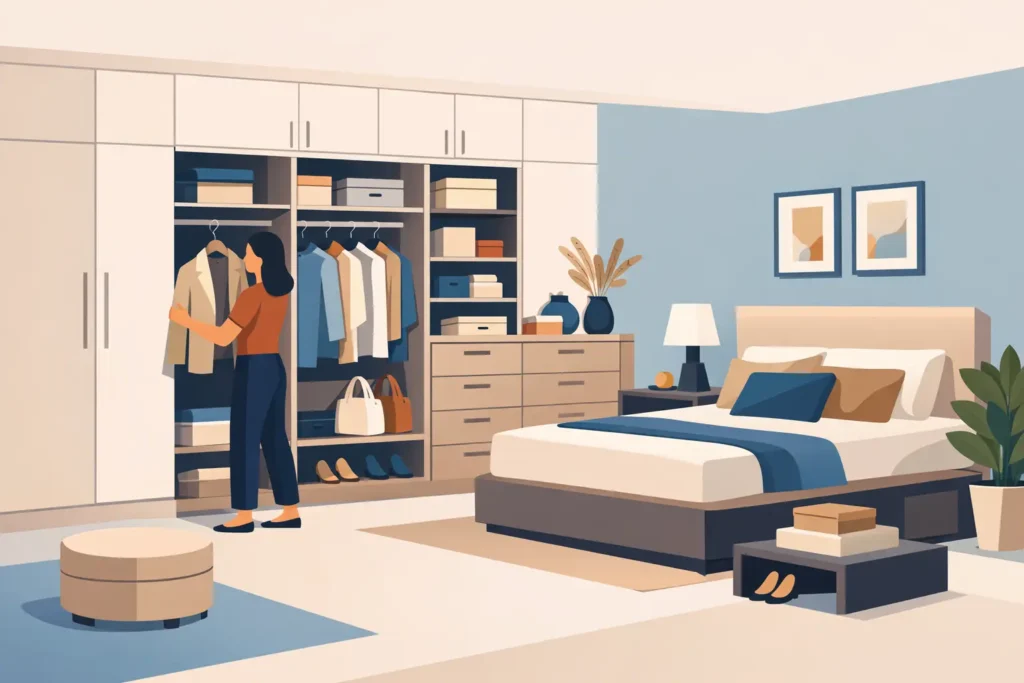
A wardrobe that almost fits is usually the start of daily irritation. You lose the awkward corner at one end, dust gathers in the gap above, and no shelf seems quite right for the way you actually live. Bespoke fitted wardrobes solve that problem properly by being designed around the room, the architecture and the people using them.
For many homeowners, the appeal is obvious. Bedrooms are rarely perfect rectangles, and storage needs are never as simple as a hanging rail and a couple of drawers. Period homes bring chimney breasts and uneven walls. Newer properties can have compact bedrooms where every centimetre matters. Loft rooms come with sloping ceilings and reduced head height. In all of these cases, fitted furniture earns its keep because it is made for the space rather than forced into it.
What makes bespoke fitted wardrobes different?
The word bespoke is often used loosely, but there is a real difference between genuinely made-to-measure furniture and modular units adjusted to fit. True bespoke fitted wardrobes are designed from scratch. That means the width, height, depth, internal layout, finishes and door styles are chosen to suit the room and the household, not pulled from a standard range and trimmed at the edges.
That difference matters in practice. A made-to-measure design can run wall to wall and floor to ceiling without leaving dead space. Internally, it can be arranged around longer dresses, bulky knitwear, suitcases, shoes, laundry baskets or a television if that is part of the brief. It can also accommodate practical details that are often overlooked, such as sockets, access panels and awkward boxing-in.
There is also an aesthetic benefit. When wardrobes are proportioned to the room, they tend to look calmer and more intentional. The cabinetry sits comfortably within the architecture rather than appearing as an afterthought. In a main bedroom, that can make the whole room feel larger and better organised.
Bespoke fitted wardrobes and better use of space
Space is usually the main reason people choose fitted wardrobes, but it is not only about squeezing more in. It is about using the available room properly.
Freestanding wardrobes waste the areas beside them, above them and often behind them as well. In a smaller bedroom, that can be the difference between a room that feels cramped and one that feels easy to move around in. Fitted wardrobes reclaim those lost areas, especially where the layout is challenging.
A good design also improves the quality of storage. Deep shelves sound useful until clothes disappear into the back and become forgotten. Too few drawers lead to clutter elsewhere. Hanging sections that are all one height leave unused space below shorter garments. Bespoke furniture gives you the chance to balance hanging, shelving and drawers in a way that reflects how you store things day to day.
That is where the design stage is so important. The best results come from looking at the room and asking practical questions early. Who is using the wardrobe? Do they need more long hanging or double hanging? Are shoes better stored on angled shelves or in drawers? Is there enough room to open hinged doors comfortably, or would sliding doors work better? These are not cosmetic choices. They shape how useful the finished wardrobe will be.
Style matters, but so does routine
It is easy to focus on finishes first – painted doors, mirrored panels, timber grain, classic shaker styles or a more contemporary flat-fronted look. Appearance does matter, because wardrobes take up a large part of the visual space in a bedroom. But the internal arrangement is what determines whether you will still be pleased with them in five years’ time.
A well-designed wardrobe should make everyday routines easier. That might mean soft-close drawers for smaller items, split hanging for shirts and jackets, full-height sections for dresses and coats, or overhead storage for less frequently used belongings. Some households want integrated bedside units or a dressing table built into the same run of furniture. Others prefer a simpler scheme that keeps the room feeling open.
There is no single right answer, and that is the point. Bespoke design works because it responds to the household rather than asking the household to adapt.
The trade-offs to think about
Bespoke fitted wardrobes are a long-term purchase, so it is worth being clear about the trade-offs. They usually cost more upfront than off-the-shelf furniture, particularly when they are properly manufactured and professionally installed. They are also less movable. If you enjoy changing the layout of a room every year, fitted furniture may feel more permanent than you would like.
That said, permanence is often part of the value. A well-made fitted wardrobe can outlast several rounds of cheaper furniture, while giving a better result every day in between. It can also make decorating simpler, because the furniture becomes part of the room rather than a bulky separate item to work around.
The key is to invest where it counts. Quality materials, accurate surveying, thoughtful internal planning and skilled installation all make a visible difference. A wardrobe is only as good as the design behind it and the standard of the fitting on site.
What to expect from a proper design-and-installation service
One of the biggest advantages of working with an experienced fitted furniture specialist is that the process is usually far smoother than trying to piece everything together yourself. A proper service should start with listening. Before anyone talks about finishes, the discussion should cover the room, your storage frustrations, your preferences and how you want the space to feel.
A home visit is particularly valuable because real rooms always tell a fuller story than measurements alone. Walls may not be straight. Ceilings may slope more than expected. Existing skirting, coving, radiators or window positions may affect the design. Seeing the space in person allows those details to be factored in before manufacture starts.
After that, drawings and layout proposals should make the options clear. This is the stage where practical decisions are made about doors, interiors, accessories and finishes. If the furniture is being made in-house rather than ordered from a generic supplier, there is usually more flexibility and better control over both quality and lead times.
Installation should then be handled with the same care as the design. Good fitting is not simply about getting the units into place. It is about neat scribing to walls and ceilings, clean lines, properly aligned doors and a finish that looks built for the room because it was.
That joined-up approach is one reason many Dorset homeowners prefer established local specialists over national retailers. There is more accountability, clearer communication and a better chance of speaking to the people responsible for the work. For a purchase this visible and this personal, that reassurance matters.
Choosing wardrobes that still work years from now
Trends come and go, but bedrooms benefit from decisions that age well. That does not mean everything has to be plain. It means choosing a design that suits both the property and the way you live.
Simple door styles tend to have the longest life, especially in neutral painted finishes. Mirrored doors can be useful in smaller rooms, though too much reflection can feel cold in some spaces. Darker finishes can look striking, but they generally work best where the room has good natural light. Internally, flexibility is useful. Adjustable shelving or a layout that leaves room for changing needs can help the furniture adapt over time.
If the brief is handled carefully, fitted wardrobes can add more than storage. They can make a bedroom feel finished. They can reduce visual clutter, improve circulation and create a sense of order that freestanding furniture rarely matches.
For homeowners who want that result, the details are what make it worthwhile – measured design, honest advice, quality manufacture and installation done properly. That is why a family firm such as Hale & Murray, with decades of experience in bespoke interiors, can offer something more dependable than a one-size-fits-all solution.
If you are weighing up your options, it helps to look past the brochure finish and think about daily life in the room. The best wardrobe is not simply the one that looks good on installation day. It is the one that still feels right every morning after years of use.