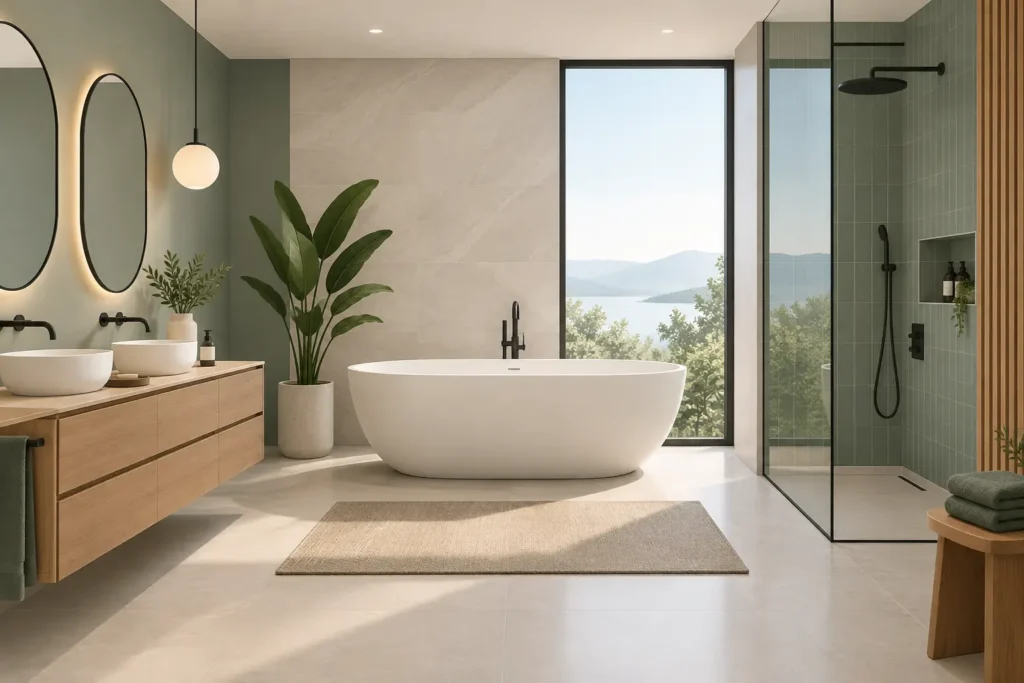
A bathroom renovation is one of the few home improvements where every decision is felt daily. The room needs to work during the school-run rush, provide a quiet place to unwind, and stand up to moisture, cleaning and constant use. That is why bathroom design trends 2027 are moving away from short-lived show-home looks and towards thoughtful, comfortable spaces with lasting character.
For homeowners in Poole, Bournemouth and across Dorset, the strongest ideas are not about copying a photograph. They are about using proportion, light, storage and well-chosen materials to make a bathroom feel considered for years to come.
Bathroom design trends 2027: warmth with purpose
The clinical, all-white bathroom is giving way to a warmer interpretation of modern design. This does not mean a return to dark, heavy rooms. Instead, expect softened neutrals, natural textures and subtle contrast: warm stone shades, chalky plaster tones, muted greens and earthy browns balanced with lighter walls or sanitaryware.
Wood-effect finishes will continue to feature, particularly on fitted vanity units and tall storage. Used well, they bring the familiarity of furniture into a room that can otherwise feel hard and impersonal. A textured oak-effect finish, for example, can sit comfortably alongside simple matt tiles and brushed brassware without making the scheme feel overly rustic.
The key is restraint. A bathroom with timber tones, patterned tile, coloured sanitaryware and bold metalwork can quickly become busy. Choose one or two stronger features, then let the remaining surfaces do the quiet work. Bespoke furniture is especially useful here because its size, finish and internal layout can be tailored to the room rather than chosen from a limited range of standard units.
Fitted storage that clears the clutter
Better storage is likely to be one of the most enduring bathroom trends of 2027. Open shelving has its place, but most households need somewhere practical for spare toilet rolls, cleaning products, hair tools, medicines and the everyday items that accumulate around a basin.
Wall-hung vanity units remain a sensible choice in many rooms. They reveal more floor, which can help a compact bathroom feel larger, while still providing useful drawer space. Deep drawers with internal organisers are generally more practical than a conventional cupboard, as bottles and products are easier to see and reach.
Tall fitted cabinets are also becoming more considered. In a family bathroom, a narrow full-height unit can provide a surprising amount of storage without taking over the room. In an en-suite, a shallower cabinet may be enough to keep the worktop clear. The right answer depends on the room’s dimensions and who uses it, not on a trend board.
There is a practical benefit to keeping surfaces clear too. Fewer items around the basin make cleaning easier and allow the materials, mirror and lighting to have more impact.
Spa-like does not have to mean high-maintenance
The wish for a calmer, more restorative bathroom is not fading. In 2027, the better version of the spa-inspired scheme will be less about novelty features and more about how the room feels to use. A generous walk-in shower, good water pressure, a heated towel rail, comfortable lighting and finishes that are pleasant to touch will matter more than trying to recreate a hotel bathroom exactly.
Large-format porcelain is a popular route to this quieter look. With fewer grout lines, it can create a more continuous surface across walls and floors. It is also practical to maintain, although it is not automatically the right choice for every room. Larger tiles may involve more cutting in an awkward layout, and a small-format mosaic can offer better grip in a shower area or add welcome detail to an otherwise simple scheme.
Consider a wet-room-style shower with care. It can look excellent and improve accessibility, but it requires precise falls, dependable waterproofing and sufficient room for drainage. A low-profile shower tray may offer much of the same clean appearance with a more straightforward installation. The best design is the one that suits the building as well as the brief.
Lighting designed for real routines
One central ceiling light is rarely enough for a bathroom. The most successful new schemes layer light according to the task at hand: bright, even light at the mirror; general illumination for the room; and a softer option for a late-night bath or early start.
Backlit mirrors and discreet lighting beneath a vanity unit remain popular because they create atmosphere without adding visual clutter. They should complement, rather than replace, properly positioned face lighting. Downlights directly above a mirror can cast shadows, making shaving, applying make-up or skincare less comfortable.
This is an area where planning early makes a difference. Electrical points, switches, extraction and lighting zones need to be designed around the final layout, not added as an afterthought. In a room with little natural light, a carefully selected paint colour and warm-white lighting can make a substantial difference to the sense of comfort.
The return of characterful details
Bathrooms are becoming less anonymous. Rather than a matching suite of fittings from one collection, homeowners are choosing details that give the room a more individual finish. This may be a fluted glass screen, a shaped mirror, an inset niche lined in a contrasting tile, or a vanity colour that echoes the wider home.
Brushed nickel, antique bronze and softer brass finishes are likely to remain more popular than highly polished chrome, particularly in warm neutral schemes. They introduce depth, but consistency matters. Mixing every metal finish in one compact room usually looks accidental. Pick a main finish for brassware, handles and accessories, then introduce a second only where there is a clear reason.
Colour is also being used with more confidence. Deep blue, moss green and clay-toned cabinetry can look excellent in a well-lit bathroom, while paler sage, mushroom and putty shades suit those wanting a gentler effect. If a bold finish feels like too great a commitment, reserve it for a painted unit or feature wall rather than the tile used across the whole room.
Sustainable choices that make practical sense
Sustainability in bathroom design is increasingly about buying well, reducing waste and selecting products that remain useful over time. A carefully made vanity unit with replaceable handles, durable drawer runners and a repairable finish is a better long-term proposition than furniture designed for a short cycle of replacement.
Water-saving showers and dual-flush WCs are sensible considerations, though performance should not be sacrificed. Low-flow fittings work best when the home’s existing water system has been assessed properly. Similarly, natural materials can bring exceptional character, but some require sealing and more ongoing care than porcelain or quality laminate finishes. There is no single correct material, only an honest choice about maintenance and budget.
A well-planned renovation can also avoid unnecessary disruption later. Providing enough storage, allowing access to key pipework where possible, and choosing a layout that will still work as household needs change are all decisions that repay attention.
Start with the room, not the trend
Before settling on colours or tiles, think through how the bathroom is used. Is it a busy family room, a compact en-suite, a guest bathroom or a space being adapted for easier access? Measure what needs to be stored, identify where the room feels cramped, and decide which elements genuinely need to change.
A professional design visit can reveal possibilities that are not obvious from a showroom display, particularly in older properties or rooms with awkward corners, sloping ceilings and existing pipework. Hale & Murray can design, manufacture and install a tailored bathroom scheme, coordinating the practical work alongside the furniture and finishes so that decisions are carried through properly.
The most satisfying bathrooms in 2027 will not be those that chase every new idea. They will be the rooms that feel calm on a Monday morning, practical when the family is in a hurry, and still pleasing after the novelty of the renovation has passed. Start with the way you live, then choose the details that make that routine feel better.