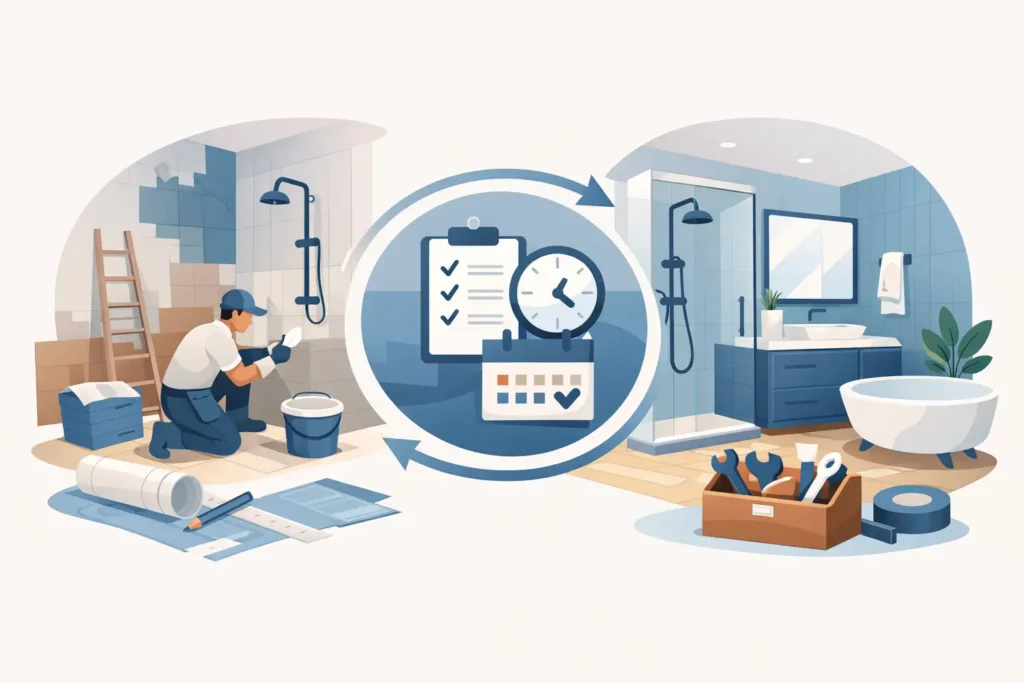
If you are planning a new bathroom, the question usually comes up early – how long is this actually going to take? A good bathroom renovation timeline guide should do more than give a rough number of days. It should show you where time is genuinely needed, where delays tend to happen, and what can be done at the start to keep the project moving.
For most homeowners, a full bathroom renovation takes somewhere between two and four weeks on site. That is a sensible rule of thumb, but it is not a promise. A straightforward replacement in a similar layout will sit at the shorter end. A more bespoke scheme with structural work, made-to-measure cabinetry, specialist tiles or changes to plumbing and electrics will usually take longer. The quality of planning before work begins often makes the biggest difference.
What affects a bathroom renovation timeline?
The size of the room matters, but not as much as many people expect. A compact bathroom can still be complex if everything is tightly arranged and access is awkward. Equally, a larger room may run smoothly if the layout is sensible and all products are ready when needed.
The main factors are usually the level of change, the condition of the existing room and the quality of coordination. If you are moving sanitaryware, altering pipe runs, replacing flooring, improving ventilation or upgrading lighting, each trade needs to arrive in the right order. If there is hidden damage behind old tiles or worn floorboards underneath, the timeline may need to flex.
This is one reason many clients prefer a full design-and-installation service rather than trying to coordinate separate trades themselves. When one team is responsible for design, manufacture, supply and fitting, there is far less room for crossed wires.
Bathroom renovation timeline guide by project stage
A realistic bathroom project starts well before the first tile is removed. The on-site phase is only one part of the overall timeline.
1. Design and home survey
This stage often takes one to three weeks, depending on how quickly decisions are made. Measurements need to be accurate, the room needs to be assessed properly and the design has to reflect how the space will actually be used.
This is where practical questions should be settled early. Do you want a walk-in shower rather than a bath? Will fitted storage make the room easier to live with? Are you trying to create a cleaner, more spacious feel in a smaller room? Good design work saves time later because it reduces changes once the job is under way.
2. Choosing products and finalising details
This part can be quick or surprisingly drawn out. If you choose standard products with reliable availability, it may only take a few days. If you are selecting bespoke furniture, particular brassware finishes, large-format tiles or specialist worktops, lead times need to be checked carefully.
One delayed item can hold up several others. A vanity unit that arrives late may affect plumbing and templating. Tiles that are out of stock may push back the whole programme. That is why final selections should be confirmed before installation dates are locked in.
3. Ordering and manufacturing
Allow anything from two to eight weeks here, depending on what is being supplied. Off-the-shelf items can be available quickly. Bespoke elements naturally need more time, but they can also solve awkward layouts far better than standard units.
For homeowners investing in a bathroom that is meant to last, this stage is worth treating seriously. Rushing product choices to save a week often leads to compromises that are noticed every day afterwards.
4. Strip-out and preparation
Once work starts on site, the first one to two days are usually dedicated to removing the old bathroom and preparing the room. This can include taking out the suite, lifting old flooring, removing wall coverings and exposing the first fix areas for plumbing and electrics.
This is often when hidden issues come to light. Damp, poor plasterwork, outdated pipework or uneven walls are all common in older properties across Poole, Bournemouth and the wider Dorset area. Some can be resolved quickly. Others add a day or two because they need putting right before new finishes go in.
5. First fix plumbing and electrics
This stage generally takes two to four days. Pipework is repositioned, cables are run, lighting points are prepared and any ventilation changes are installed. If the layout is staying much the same, this can be fairly efficient. If you are relocating a toilet, adding recessed storage or changing from a bath to a low-profile shower tray, expect a little more time.
It is not glamorous work, but it is the part that supports everything else. A bathroom can look excellent on the surface and still be troublesome if this stage is rushed.
6. Walls, floors and making good
Plastering, boarding, floor preparation and tanking often take another two to four days, with drying time allowed where needed. This is one of those stages where patience matters. Surfaces need to be true before tiling and decorating start. Waterproofing in the right places is not optional.
If underfloor heating is being installed, or if the subfloor needs strengthening, the programme may stretch slightly. It is better to account for that than to push ahead and risk problems later.
7. Tiling and second fix installation
For many bathrooms, this is the longest visible stage and may take four to seven days. It includes wall and floor tiling, fitting sanitaryware, connecting brassware, installing furniture and bringing the room together.
Tile choice has a direct effect on timing. Large-format porcelain can be quicker in some spaces because there are fewer grout lines, but cuts and setting-out can be more exacting. Small patterned tiles or detailed layouts usually take longer. The same applies to bespoke fitted furniture, which can transform storage and finish but requires accurate preparation and installation.
8. Finishing, testing and snagging
The final one to two days are for sealing, decorating where required, testing electrics and plumbing, fitting accessories and resolving any final details. This stage should never be treated as an afterthought.
The difference between a bathroom that looks finished and one that feels properly complete is often in these last checks. Doors should align, drawers should run smoothly, seals should be neat and the room should be ready to use with confidence.
Common delays and how to avoid them
The most common cause of delay is not the fitting itself. It is incomplete planning. When product decisions are changed midway through, or materials have not arrived, the timeline can unravel very quickly.
Access can also affect progress. In period homes or occupied family houses, protecting floors, managing deliveries and working around daily routines all need thought. If there is only one bathroom in the property, this becomes even more important. Some families choose to schedule work around school holidays or arrange temporary alternatives to reduce pressure.
Another frequent issue is unrealistic expectations. A bathroom renovation involves several trades working in sequence. If one part needs more time, the rest cannot simply be compressed without risking the result. A trustworthy installer will give you a realistic programme, not just the shortest one.
How to plan a smoother bathroom renovation timeline
If you want the project to move well, start by making firm decisions early. Agree the layout, choose the main products, confirm who is responsible for each stage and check lead times before booking installation. It also helps to allow a little contingency in both time and budget.
Ask practical questions at the outset. Who is managing the job day to day? Are the furniture and fittings being supplied from one place or several? What happens if hidden issues are uncovered during strip-out? The clearer those answers are, the less stressful the process tends to be.
For clients who want a more tailored result, bespoke manufacture can actually simplify the timeline once the design is signed off. Instead of trying to force standard products into an awkward room, made-to-measure pieces are built for the space. That often reduces compromise, especially where storage, pipe boxing or unusual dimensions are involved.
A realistic bathroom renovation timeline guide for homeowners
The best bathroom renovation timeline guide is one that balances speed with proper workmanship. A fast turnaround sounds appealing, but bathrooms are hard-working rooms. They deal with moisture, heat, daily use and constant cleaning. Corners cut during installation rarely stay hidden for long.
A sensible plan is to expect several weeks from design to completion, with two to four weeks on site for most full renovations. Some projects will move faster. Others should move more carefully. What matters is knowing why the timeline is what it is, and having a team that keeps you informed at each stage.
If you are investing in a bathroom you want to enjoy for years, a well-managed process is every bit as valuable as the finished look. Take the time to get the early decisions right, and the rest of the project usually follows more calmly.