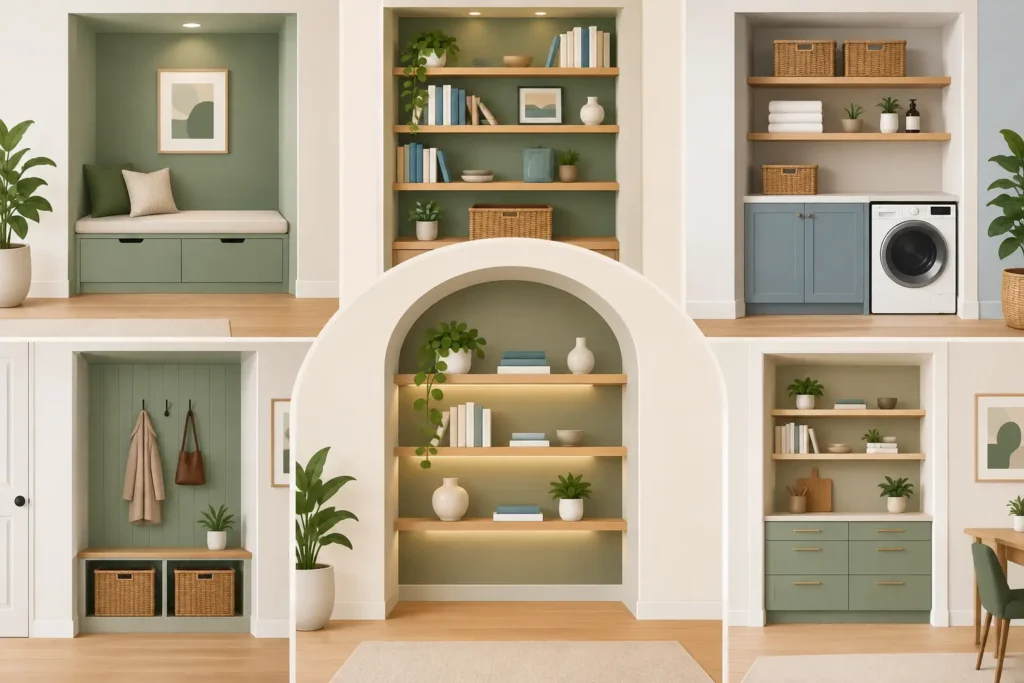
An alcove can be one of the most useful parts of a room, yet it is often left as an awkward gap beside a chimney breast or a place for furniture that never quite fits. The best storage ideas for alcoves make that overlooked space work harder, while keeping the room balanced, calm and easy to live in. Whether the room needs a proper bookcase, a discreet place for media equipment or extra cupboard space, the right solution starts with how you use it every day.
Start with the room, not the empty space
It is tempting to decide that every alcove needs shelves. Open shelving can look excellent, but it is not always the most practical answer. In a busy family lounge, for example, concealed storage may be more valuable than another surface to dust. In a home office, the priority could be files, printers and cables rather than display space.
Consider what currently causes clutter in the room. Books, toys, paperwork, games consoles, glassware and spare throws all need different types of storage. A well-designed alcove should deal with those everyday items without looking like an afterthought.
It also pays to consider the proportions of the whole wall. Alcoves either side of a fireplace usually benefit from a matching approach, even if the contents differ. In a single alcove, such as one beside a window or in a bedroom, the furniture can be designed to look intentional without forcing unnecessary symmetry.
1. Full-height fitted bookcases
Floor-to-ceiling bookcases remain one of the best storage ideas for alcoves because they make use of vertical space that freestanding furniture rarely reaches. They can bring character to a lounge, dining room or study, especially when arranged around a chimney breast.
The key is not to make every shelf the same. Adjustable shelves allow room for paperbacks, larger art books and decorative pieces, while a few taller sections stop the finished design feeling too regimented. A painted finish can blend the joinery into the wall colour for a quieter look, or create a stronger focal point in a deeper shade.
Full-height shelving is best for households happy to keep possessions reasonably organised. If the idea of visible cables, children’s toys or mixed paperwork feels less appealing, combine upper shelves with cupboards below.
2. Base cupboards with open shelving above
This is often the most versatile alcove arrangement. Lower cupboards provide generous hidden storage for the things that do not need to be on show, while open shelves above give the room personality. The result is practical without becoming visually heavy.
Cupboards can be fitted with hinged doors, push-to-open fronts or discreet handles to suit the style of the room. Internally, adjustable shelves make a real difference. A deep cupboard without a sensible shelf layout can quickly become a difficult-to-use dumping ground.
Keeping the base units around sideboard height also creates a useful surface for lamps, family photographs or artwork. In a lounge, this can make the alcove feel more like part of the furniture scheme than a run of storage units.
3. A built-in media unit
An alcove beside a fireplace is often the natural home for a television, but a television on a small stand can leave wasted space around it. A made-to-measure media unit can accommodate the screen, soundbar, games console and associated equipment in one considered design.
Ventilation is essential. Media equipment produces heat, so enclosed cupboards need sufficient airflow and access for plugs and wiring. Cable routes should be planned before installation, rather than relying on a collection of extension leads afterwards. Allowing for future changes is sensible too, particularly if you may replace the television or add further equipment.
Where the television is wall-mounted over a fireplace, the alcoves can instead house low cupboards for devices and drawers for games, remotes and accessories. This keeps the main wall clear while giving the room the storage it needs.
4. Display shelves with integrated lighting
For homeowners with collections, ceramics, framed photographs or favourite books, illuminated shelves can turn an alcove into a feature. Warm, carefully positioned LED lighting brings depth to darker corners and makes the room feel more welcoming in the evening.
Lighting needs restraint. A gentle glow beneath individual shelves is generally more effective than a bright strip that dominates the room. It is also worth specifying where switches and drivers will sit from the outset, particularly where a fireplace, television or existing sockets restrict the available space.
This approach works especially well in dining rooms and lounges where the purpose is partly decorative. It is less suitable for an alcove that has to contain a large volume of everyday storage, unless lower cupboards are included.
5. A compact home-office alcove
A shallow alcove can become a highly effective workspace, even where there is not enough room for a separate office. A fitted desk, shelving and a couple of drawers can create a dedicated place for working without taking over the lounge or bedroom.
The desk depth matters. A laptop-based setup may work comfortably in a shallower unit, but a desktop monitor, keyboard and paperwork need more room. Think about chair clearance as well. A beautiful desk is of limited value if it blocks a route through the room whenever it is in use.
For occasional work, consider a desk with cupboards above and below to keep office supplies out of sight at the end of the day. In rooms used by more than one person, this helps the space return to being a lounge rather than looking permanently like a workplace.
6. Bedroom wardrobes that use every inch
Bedroom alcoves are frequently too narrow for standard wardrobes, leaving awkward gaps at each side of a chimney breast. Bespoke wardrobes solve this by being made to the exact width, depth and height available.
Internally, a combination of hanging rails, drawers and shelves is usually more useful than a single large empty compartment. Long hanging for dresses or coats, double hanging for shirts and shelves for knitwear should reflect the clothes you actually own. Doors can be designed to sit neatly around uneven walls, sloping ceilings or original features.
Mirrored doors can make a smaller bedroom feel lighter, while painted or timber-effect finishes can coordinate with existing furniture. The right choice depends on whether you want the wardrobe to disappear into the room or become a feature in its own right.
7. Window-seat storage in a low alcove
Not every alcove needs tall furniture. A low recess beneath a window can be transformed into a fitted window seat with useful storage below. It is a particularly good option for bay windows, children’s bedrooms and relaxed reading corners.
Drawers are convenient for items used often, such as toys, blankets or board games. Lift-up lids can provide larger storage volumes, although they are less practical if the top is regularly covered with cushions. A made-to-measure seat can also accommodate uneven walls and skirting boards, giving a much neater result than a freestanding bench.
Choose durable upholstery and a washable cushion cover if the seat will be used daily. Comfort matters, but so does being able to keep it looking good.
8. A drinks or serving cupboard
In a dining room or entertaining space, an alcove can make an excellent drinks cupboard or serving area. Base cabinets can store glassware and table linen, while open shelves provide room for bottles, decanters and display pieces.
This is one area where material choices can add character. Fluted glass doors conceal the contents slightly while still catching the light, and a contrasting interior colour can give open shelving more depth. If the alcove includes a worktop, choose a surface that is easy to wipe clean and can cope with the occasional spill.
9. Shallow cupboards for awkward alcoves
Some alcoves are simply too narrow or shallow for conventional shelving. That does not mean they are unusable. Slim cupboards can hold cleaning equipment, paperwork, shoes or household essentials that otherwise migrate around the home.
Shallow storage is particularly useful in hallways, landings and smaller reception rooms. Doors keep the elevation tidy, while internal pull-out shelves or drawers prevent items being lost at the back. A bespoke solution is valuable here because even a few centimetres of additional usable depth can change what the cupboard can hold.
10. Combine storage with architectural details
The most successful alcove furniture often looks as though it has always belonged in the house. Cornice detailing, skirting, panelled doors and carefully considered filler panels can help fitted furniture sit naturally alongside period features. In contemporary homes, clean lines, handleless fronts and shadow gaps can achieve the same sense of purpose.
This is where measured design makes a difference. Older properties rarely have perfectly square walls, level floors or identical alcoves. Furniture made for the space can accommodate those realities, rather than exposing them with visible gaps and uneven lines.
At Hale & Murray, our furniture is made in our own workshop and designed around the way each household lives. A free design consultation can help establish whether your alcoves are better suited to shelves, cupboards, a workspace or a combination of all three.
Before settling on a design, take a moment to list the items you would like to store and measure the room as a whole, not just the recess. The most satisfying alcove storage is not necessarily the one with the most shelves. It is the one that gives everyday belongings a proper home and makes the rest of the room easier to enjoy.