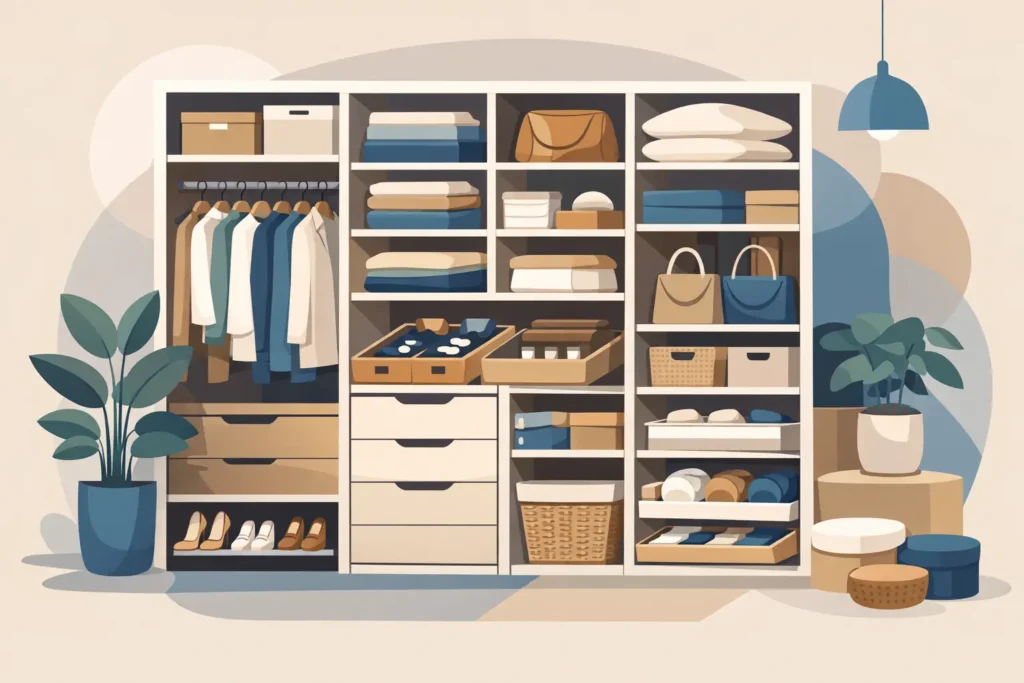
A wardrobe can look generous from the outside and still leave you folding jumpers on a chair. The difference is rarely the overall size of the cabinet. It is the layout behind the doors. The best wardrobe interiors for storage are planned around what you own, how you get ready and the awkward proportions of the room – not around a standard set of rails and shelves.
For a busy family bedroom, that may mean enough hanging space for school uniforms alongside low drawers a child can reach. In a main bedroom, it could mean double hanging for shirts and blouses, deeper shelves for knitwear, and a dedicated place for suitcases. Good fitted storage makes these everyday details feel considered rather than improvised.
Start with what needs storing
Before choosing drawers, rails or accessories, take stock of the contents. This simple step prevents one of the most common wardrobe mistakes: allocating plenty of space to long hanging garments when most of the wardrobe is actually used for folded clothes, shoes and bags.
Separate clothing into long-hang items, such as dresses and coats; short-hang items, including shirts, jackets and trousers; folded pieces; and smaller items. Do the same for bedding, seasonal clothing, luggage and anything else that genuinely belongs in the bedroom. A wardrobe designed for a neat capsule wardrobe needs a different interior from one serving two people, a growing family or a keen traveller.
Think about frequency as well as volume. Everyday clothing should sit at eye level or within easy reach. Occasionwear, spare duvets and holiday luggage can occupy higher shelves. This keeps the most useful parts of the wardrobe working hardest, while still giving less-used belongings a proper home.
The best wardrobe interiors for storage balance hanging and folding
Hanging space is essential, but more is not always better. A single full-height rail can waste a substantial amount of usable room if it is filled mainly with shirts, skirts and trousers. These garments need far less vertical clearance than dresses, long coats or formalwear.
Double hanging for everyday clothes
Two rails, one above the other, are often one of the most efficient choices in a fitted wardrobe. They can nearly double the hanging capacity for shorter garments while keeping everything visible. This arrangement works particularly well for couples who prefer separate sections, or for wardrobes that need to accommodate workwear, casual clothing and school uniform.
Allow one dedicated full-height area for longer pieces. It does not need to be wide, but it should be tall enough for garments to hang freely rather than bunching at the bottom. The right proportion depends entirely on the contents. Someone with many long dresses needs more long-hang space than someone whose wardrobe is mostly shirts and knitwear.
Adjustable shelving for flexibility
Shelves are excellent for folded knitwear, jeans, bags and storage boxes, provided they are not too deep or too widely spaced. Very deep shelves can turn into dark piles where clothing disappears at the back. Well-proportioned shelving makes it easier to see what is there and maintain order.
Adjustable shelf positions are especially useful as household needs change. A child’s wardrobe may later need taller spaces for adult clothing. A section used for jumpers can become a linen cupboard. Bespoke interiors should give you this flexibility where it adds value, rather than fixing every dimension without room to adapt.
Drawers keep small items under control
Internal drawers bring calm to the parts of a wardrobe that can quickly become cluttered. They are ideal for underwear, socks, T-shirts, gymwear, nightwear and accessories. Full-extension runners are worth considering because they allow you to see the whole drawer rather than losing items at the rear.
Shallow drawers suit smaller pieces, while deeper drawers are useful for bulkier knitwear or folded denim. Drawer dividers can be helpful for jewellery, belts and watches, although they should match your real habits. Too many small compartments can become restrictive if your needs change. A few practical divisions are often more useful than an elaborate organiser with a place for everything except the items you actually use.
Make awkward rooms work harder
Bedrooms in Dorset homes come in every shape, from period cottages with sloping ceilings to modern properties with alcoves, chimney breasts and tight corners. Standard freestanding furniture often leaves these areas unused. A fitted wardrobe can turn them into useful storage without making the room feel crowded.
A wardrobe built into an alcove can extend to the ceiling, creating space for rarely used items above. Under-eaves wardrobes can use reduced-height sections for drawers, shoes or folded clothing, while taller areas retain hanging space. Even a narrow return can be valuable for shelves, pull-out trouser racks or a slim linen section.
Depth needs careful thought. Full-depth hanging storage is generally required for clothes to sit correctly, but not every part of a wardrobe needs to be that deep. A shallower cabinet may be the better choice near a doorway or beside a bed if it improves circulation around the room. This is where a home visit and measured design make a practical difference: the aim is not simply to fit more furniture in, but to preserve a bedroom that is comfortable to use.
Do not overlook shoes, accessories and seasonal items
Shoes are often the storage category that gets missed until the wardrobe is installed. Open shelves can work well for frequently worn pairs, but spacing needs to suit boots as well as trainers and formal shoes. Pull-out trays offer easy access in a deeper wardrobe, while lower cupboards can keep footwear out of sight.
Accessories deserve a planned place too. Pull-out trouser rails, belt racks, tie holders and jewellery trays can be worthwhile where they will be used regularly. They are less useful when chosen simply because they sound impressive. A well-designed wardrobe interior should reduce friction in your morning routine, not fill the cabinet with mechanisms you do not need.
For seasonal belongings, use the top of the wardrobe intelligently. High-level shelves are ideal for labelled boxes containing holiday clothes, spare blankets or occasionwear. If the wardrobe reaches the ceiling, this space can remove the need for separate storage furniture elsewhere in the room. It also avoids the dusty gap above a standard wardrobe that rarely serves a useful purpose.
Choose doors and lighting to support the interior
The wardrobe doors influence how the inside functions. Hinged doors give a broad view across the interior and make it easier to access drawers and shelves at the same time. Sliding doors are a sensible option where there is limited clearance in front of the wardrobe, though only part of the interior is visible at once. Neither is automatically better – the room layout and how the wardrobe will be used should decide.
Internal lighting can be a valuable finishing touch, particularly in deep wardrobes or bedrooms with limited natural light. Sensor-operated LEDs help you find dark clothing, see shelf contents and use the space without switching on the main bedroom light. They should be placed to illuminate the contents rather than casting shadows from behind the user.
Colour and finish matter as well. A lighter interior can make a large wardrobe easier to use, while a coordinated darker finish may suit a more tailored bedroom scheme. More importantly, choose durable materials and fittings that can cope with daily opening, closing and rearranging. Wardrobe interiors are working furniture, not just a showroom feature.
Plan for the next stage of life
The most successful wardrobe design looks beyond this season’s clothes. Families change, children grow, working patterns shift and a room may later become a guest bedroom or dressing room. Building in a degree of adjustability can protect the investment and keep the furniture useful for longer.
That does not mean trying to predict every future need. It means avoiding a layout that is so specialised it only works for one narrow purpose. A sensible combination of adjustable shelves, well-sized drawers, short and long hanging sections, and useful overhead storage will suit most households far better than a rigid arrangement.
At Hale & Murray, wardrobe interiors are designed around the room and the people who use it, then made in-house to suit the final specification. A free design consultation is an opportunity to discuss the clothes, belongings and practical frustrations that a standard wardrobe has not solved.
The right interior should make putting things away as easy as finding them. When every section has a clear purpose, a fitted wardrobe becomes more than a place to store clothes – it gives the room a quieter, more settled feel every day.