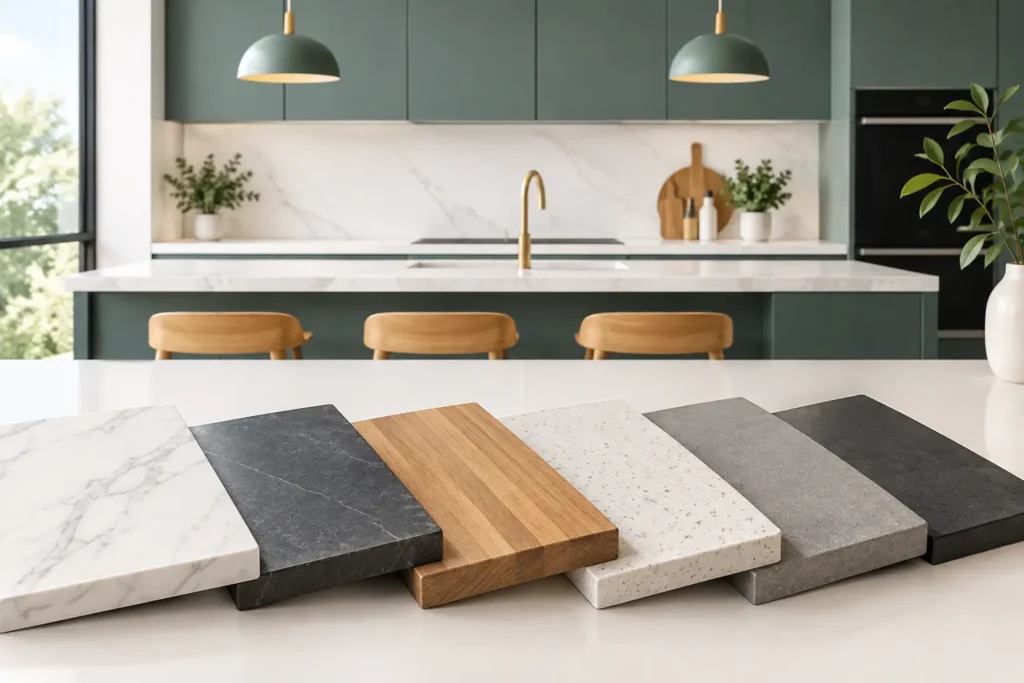
A worktop is where a kitchen earns its keep. It takes hot pans, hurried breakfasts, chopping boards, homework, spills and the occasional ambitious baking session. Choosing between the best worktop materials is therefore about far more than finding a colour that works with your cabinet doors. The right choice should suit the way your household lives, the character of the room and the level of care you are happy to give it.
For a long-term kitchen investment, it helps to look beyond the showroom sample. A small piece of stone, timber or laminate cannot tell you how it will feel across a full run of units, around a sink, or beside natural light from a Dorset garden. These are the practical differences worth considering before you decide.
Best worktop materials: start with daily life
There is no single best material for every kitchen. A busy family kitchen may benefit from a forgiving, low-maintenance surface, while a keen cook might prioritise heat resistance and a solid, substantial feel. In a period home, natural timber or stone can bring welcome warmth and character. In a contemporary extension, porcelain or quartz may better suit clean lines and a more architectural finish.
Budget matters too, but it should be considered alongside lifespan, installation requirements and the cost of any future maintenance. A cheaper worktop can be the right decision for a rental property, utility room or short-term refresh. For a kitchen designed to serve a home for many years, a more durable surface may offer better value over time.
Quartz: dependable and design-led
Quartz is one of the most popular choices for bespoke kitchens, and with good reason. It is an engineered material made from natural quartz combined with resins and pigments, creating a non-porous, hard-wearing surface available in an extensive range of colours and patterns.
Its practical advantage is straightforward: quartz is highly resistant to staining and does not usually require sealing. It copes well with everyday cooking, making it a sensible choice for family homes and households that want a polished finish without a demanding care routine. From soft marble-effect veining to plain whites, warm neutrals and darker industrial tones, it can work in both classic and modern schemes.
Quartz is not completely carefree. It should not be treated as a chopping board, and very hot pans are best placed on a trivet rather than directly onto the surface. Because it is heavy and requires accurate cutting, professional templating and fitting are essential. A well-planned design also considers joins, upstands and the position of drainer grooves from the outset.
Granite: natural character with lasting strength
Granite remains a strong contender for homeowners who want a genuinely natural worktop. Each slab has its own mineral pattern and colour variation, so no two kitchens will look exactly alike. It can add real depth to a room, particularly when paired with painted cabinetry or timber features.
As a dense natural stone, granite is durable, heat resistant and well suited to hardworking kitchens. It is often more tolerant of hot cookware than quartz, although sensible protection is still good practice. Depending on the particular granite selected, it may need periodic sealing to help protect against staining and keep it looking its best.
The variation that gives granite its appeal is also something to embrace rather than try to control. A large patterned slab can be striking, but it may not suit every understated design. Viewing the chosen slab in person, rather than selecting solely from a small sample, is particularly valuable with natural stone.
Porcelain and sintered stone: high performance, refined finish
Porcelain worktops and sintered stone surfaces are increasingly requested for contemporary kitchens. These materials are made using minerals and high-pressure manufacturing processes, producing slim, elegant slabs with impressive resistance to heat, scratches, UV light and stains.
They are especially useful where an indoor kitchen flows into an outdoor entertaining space, as their colour is less likely to fade in strong sunlight. They can also create a very convincing marble, concrete or natural-stone appearance without the sealing requirements associated with some natural materials.
Their strength does not mean they are indestructible. Edges can be vulnerable to a sharp impact, and fabrication requires specialist equipment and experienced handling. Porcelain can also feel cooler and less tactile than timber, which may matter if you want a kitchen with a softer, more traditional atmosphere.
Solid wood: warmth that improves with age
A solid wood worktop brings a quality that manufactured surfaces cannot quite replicate. Oak, walnut and beech can soften the look of painted units, introduce texture to a modern kitchen or provide a natural focal point on an island or breakfast bar.
Wood does need commitment. It should be regularly oiled, particularly around sinks, and standing water must be wiped away promptly. It can mark, scratch and develop a patina over time. For many homeowners, that lived-in character is part of its appeal. For others, particularly those who prefer a perfectly uniform finish, it may become frustrating.
One considered approach is to use wood selectively. A timber island top or breakfast area can bring warmth, while a lower-maintenance stone or quartz worktop handles the sink and main preparation zone. This combination can look purposeful rather than compromised when the colours and thicknesses are carefully coordinated.
Laminate: practical value without the old-fashioned look
Laminate has moved a long way from the surfaces many people remember. Modern options can imitate timber, stone and concrete convincingly, with a wide choice of edge details, textures and colours. It remains one of the most budget-conscious worktop options and is often a sensible fit for first homes, utility rooms, buy-to-let properties or renovation projects where funds need to stretch across several trades.
It is easy to clean and generally handles everyday use well. However, laminate is less resistant to heat, deep scratches and water ingress than stone-based alternatives. Once moisture gets into an exposed joint or damaged edge, the substrate can swell. Good fitting, especially around sinks and hobs, is therefore vital.
A laminate worktop need not look like a temporary choice. Choosing a realistic finish, a sensible thickness and a well-designed splashback can produce a clean, considered result. It simply asks for more care around heat and water than quartz, granite or porcelain.
Stainless steel: the professional kitchen option
Stainless steel is exceptionally hygienic, heat resistant and non-porous, which explains its enduring place in commercial kitchens. In a home, it can work beautifully in an industrial-style scheme, a serious cook’s kitchen or as a hardworking section around a range cooker.
It will show fingerprints, water marks and fine scratches, especially when new. Over time, those marks blend into a softer brushed patina. If a pristine, uniform surface is essential, stainless steel may not be the best match. If practicality and a professional character are higher priorities, it is difficult to beat.
Do not overlook thickness, edges and installation
Material is only part of the decision. A 20mm porcelain worktop creates a very different impression from a deeper-profile timber top, even in the same kitchen layout. Mitred edges can make quartz or porcelain appear thicker, while a traditional timber edge may suit a more classic cabinet style.
The sink choice also affects the result. Undermounted sinks are well suited to quartz, granite and porcelain because crumbs and water can be wiped directly into the bowl. Belfast sinks tend to sit more naturally with timber, stone and traditional kitchen designs, but need careful detailing to protect surrounding surfaces.
Accurate templating after the cabinets are fitted is essential for stone and porcelain worktops. Walls are rarely perfectly straight, and a bespoke kitchen deserves a worktop that follows the room properly rather than relying on assumptions made from a plan. This is where an experienced design, manufacture and installation team can make a noticeable difference to both the finish and the fitting process.
Making a choice you will still value in years to come
When comparing samples, ask to see larger pieces in natural light and place them beside your chosen door colour, flooring and splashback. Think honestly about who uses the kitchen, how much cooking happens there and whether maintenance will become a pleasure or a chore. Hale & Murray can help homeowners weigh those details during a free design consultation, with the benefit of a bespoke kitchen designed around the way the room will actually be used.
The best surface is the one that feels right every morning, stands up to ordinary life without fuss and continues to suit your home long after the excitement of installation day has passed.