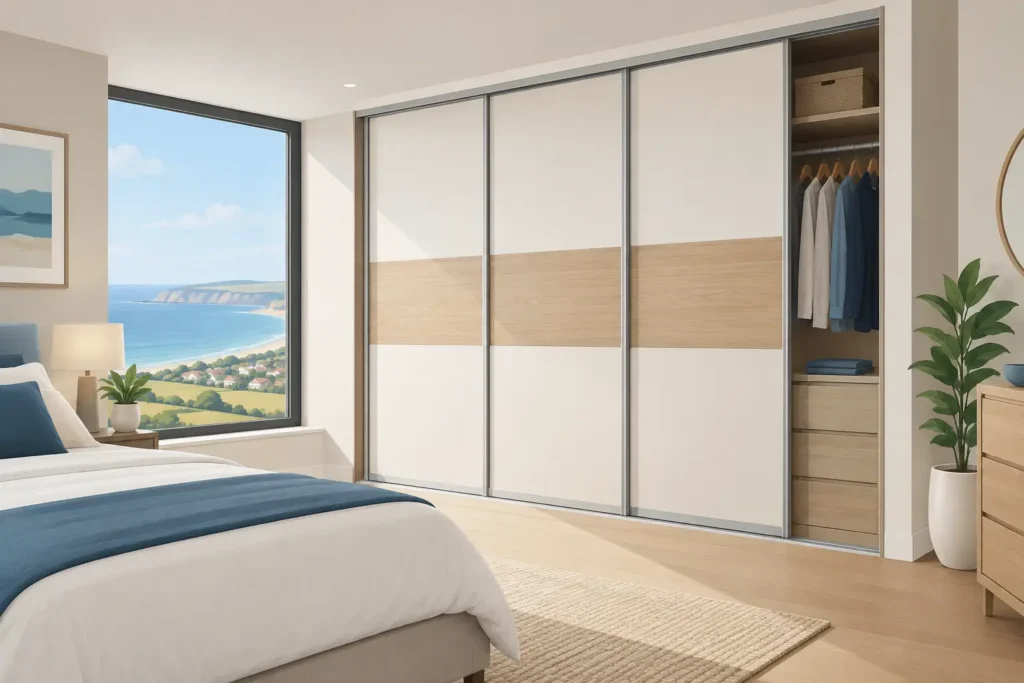
A sliding door wardrobe review should begin where most bedroom frustrations begin: with the space around the bed. If opening a hinged door blocks a walkway, catches a bedside table or leaves one person unable to get dressed while the other is in the room, sliding doors can make a noticeable difference. They are not automatically the right answer for every home, however. The best result depends on the room proportions, the storage you need and, above all, the quality of the wardrobe behind the doors.
Sliding Door Wardrobe Review: The Space Test
The main advantage is straightforward. Sliding doors travel across the front of the wardrobe rather than swinging into the room. In a narrower bedroom, box room or loft conversion, that can recover useful floor space and make a fitted scheme feel calmer and less crowded.
This is particularly valuable where a bed, chest of drawers or dressing table sits close to the wardrobe. A sliding-door design allows you to position furniture according to how you live, rather than leaving a clear arc for conventional doors. It can also create a clean, uninterrupted wall in a modern bedroom, especially with full-height panels in a carefully chosen finish.
There is a trade-off. With hinged doors, you can open the full wardrobe frontage at once. Sliding doors expose one section at a time, which may matter if two people regularly use the wardrobe together during busy mornings. A well-planned interior reduces this inconvenience, but it is worth acknowledging before choosing a style on appearance alone.
Door width also matters. Very wide panels can look impressive, but they are heavier and need reliable runners, strong frames and accurate fitting. In most rooms, dividing the wardrobe into two or three balanced sections produces a more practical and considered result.
What Good Sliding Doors Feel Like
A wardrobe door is used every day, often several times a day. The difference between a door that glides quietly and one that rattles, sticks or needs a firm pull becomes obvious very quickly. This is why a sliding door wardrobe review should look beyond colour swatches and showroom displays.
Quality is found in the running gear, the alignment of the tracks and the rigidity of the door construction. A properly fitted door should move smoothly with a controlled feel, sit square within its opening and close without scraping adjacent panels. Soft-close mechanisms can be a worthwhile addition, particularly in family bedrooms, as they prevent doors being pushed too sharply against the frame.
The material of the panel affects both appearance and day-to-day use. Mirrored doors can brighten a darker room and remove the need for a separate full-length mirror. They do, of course, show fingerprints and require regular cleaning. Glass fronts offer a refined look and can bring depth to a scheme, while textured timber-effect or painted finishes usually feel warmer and more forgiving in a busy household.
Frameless styles suit contemporary interiors, while slim metal frames can give definition and strength. Neither is inherently better. The right option is the one that complements the room and can be manufactured to the scale of the opening without compromising the door’s stability.
The Storage Behind the Frontage Matters More
An attractive set of sliding doors can conceal a poorly organised wardrobe. That is rarely good value. The interior should be designed around the clothes, shoes and household items that need to live there, rather than filled with standard shelves simply because they are easy to specify.
Start with hanging requirements. Long hanging for dresses and coats needs more height than shirts, jackets and folded knitwear. Double hanging can make excellent use of a tall wardrobe, but only where the clothes are genuinely short enough. Deep drawers are useful for thicker jumpers and bedding; shallower drawers may be better for smaller items that otherwise disappear into a pile.
Shelves should be neither too deep nor too widely spaced. Deep shelves often lead to forgotten clothes at the back, while over-tall shelf openings waste usable volume. Pull-out shoe storage, internal drawers, belt racks and integrated lighting can be valuable additions, but they should solve a real need rather than add cost for the sake of it.
A made-to-measure design is particularly helpful in Dorset homes with chimney breasts, sloping ceilings, alcoves or uneven walls. Instead of losing awkward areas to filler panels and gaps, the wardrobe can be shaped around the room. This is where bespoke furniture earns its place: the exterior can look simple, while the internal layout works hard for the people using it.
Fitted or Freestanding: Which Offers Better Value?
A freestanding sliding wardrobe can be a sensible choice for a rental property, a temporary arrangement or a room with generous wall space and standard proportions. It is quicker to buy, may cost less initially and can move home with you. The compromises are usually visible gaps at the sides and above the unit, plus wasted space where the furniture does not meet the wall precisely.
A fitted wardrobe is designed to use the full available height and width. It can incorporate the room’s features, achieve a neater finish and provide more storage without making the bedroom feel larger or heavier. For homeowners renovating a long-term home, this often represents better value over time, even if the initial investment is higher.
The key is to compare like with like. A low headline price may not include the preparation needed for uneven walls, the quality of carcasses and runners, delivery, fitting, or removal of old furniture. Ask what is included from the outset and whether the installer is responsible for resolving issues during the project. Clear responsibility is as important as a competitive quotation.
Questions Worth Asking Before You Order
Before committing to a sliding-door wardrobe, establish how the design will be measured, made and installed. A detailed home visit is valuable because walls, floors and ceilings are rarely as square as they appear on a plan. Accurate measurement prevents doors from binding and ensures that the finished furniture sits properly within the room.
Ask to see the finish samples in your own lighting where possible. A pale grey that appears warm in a showroom may look cooler in a north-facing bedroom. Consider the handles or finger-pull profile too. Sliding doors do not need large handles, but the chosen opening method should feel comfortable and suit the style of the room.
It is also sensible to ask about future support. Runners and mechanisms are hard-working components, and local access to advice or replacement parts can offer real reassurance. A family firm with its own workshop can be especially useful when a door needs adjusting, a finish needs matching or a homeowner wishes to extend an existing scheme later on.
At Hale & Murray, wardrobes are designed, manufactured and installed as part of a managed local service, rather than assembled from a one-size-fits-all range. That gives homeowners more control over the door finish, internal storage and use of difficult spaces, while keeping responsibility clear from the first design conversation to final fitting.
Are Sliding Doors Right for Your Bedroom?
Sliding doors are an excellent choice when clear floor space is limited, when you want a tidy full-wall appearance or when a fitted wardrobe needs to work around an awkward room shape. They can also be a strong design decision in larger bedrooms where understated, full-height furniture creates a more restful backdrop.
They may be less suitable if you want unrestricted access to the entire wardrobe at once, prefer the character of traditional hinged doors, or have a layout where opening space is not a concern. In those cases, a well-designed hinged wardrobe may be simpler and just as effective.
The most useful decision is not whether sliding doors are fashionable, but whether they make everyday routines easier. Take a few measurements, think about who uses the room at the same time, and list what currently ends up on chairs, floors and windowsills. Those details will tell you far more about the right wardrobe than a photograph ever can.