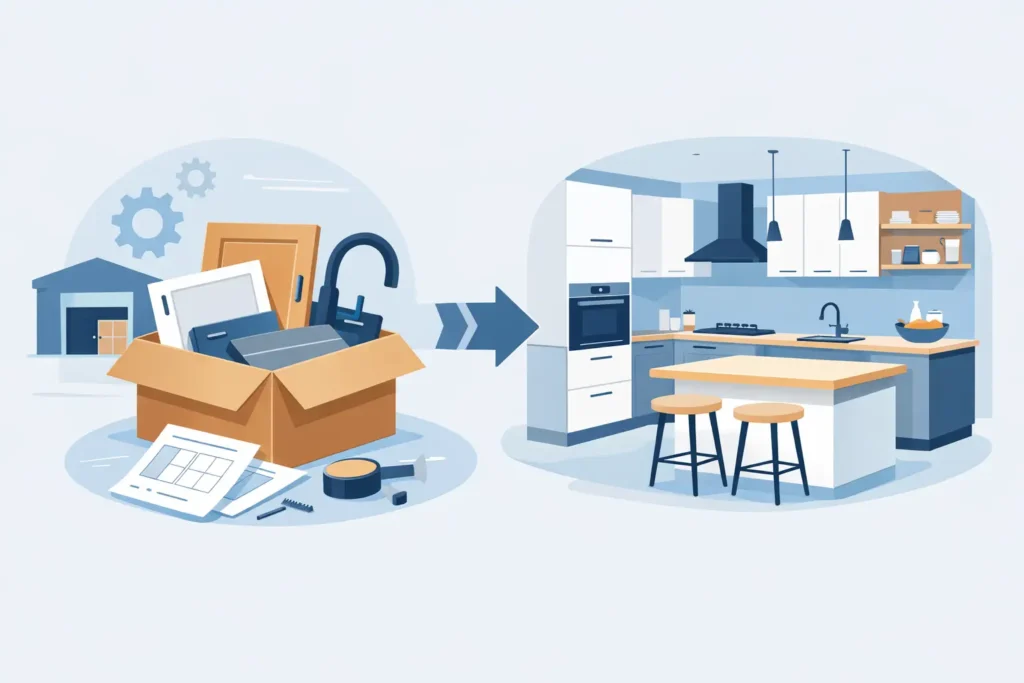
A new kitchen does not always need to be bought as one fully managed package. If you are asking, “what is supply only kitchen?”, it means purchasing the kitchen furniture and agreed components without the supplier carrying out the installation. You arrange the fitting yourself, either through your own tradespeople or as a capable DIY project.
For some homeowners, this creates welcome flexibility. For builders, kitchen fitters and property developers, it can be an efficient way to source well-made cabinetry to a confirmed design. The key is knowing exactly where the supplier’s responsibility ends and where yours begins before placing an order.
What does supply only mean for a kitchen?
A supply only kitchen is designed, manufactured or ordered, and delivered for someone else to install. Depending on the supplier and the specification, the supplied items may include cabinets, doors, drawer boxes, panels, plinths, handles, worktops, sinks and taps. Appliances, lighting, splashbacks and internal storage accessories may also be available, but they are not automatically included.
The important distinction is that fitting is excluded. A supply-only order will not normally cover removing the old kitchen, altering electrics or plumbing, building work, templating a stone worktop, connecting appliances, fitting cabinets or making good walls and flooring. Those elements need to be planned and priced separately.
This does not mean you must work without professional guidance. A good local supplier can still provide a detailed design, product advice and an accurate order, while leaving installation with your preferred fitter. At Hale & Murray, the same care given to made-to-measure furniture can be applied to supply-only orders for trade customers and confident homeowners who need a dependable product partner.
Why choose a supply only kitchen?
The main benefit is control. You can choose the installer you know and trust, coordinate the kitchen around a wider renovation, or manage the project through your own builder. This is particularly useful when the trades are already on site for an extension, reconfiguration or full property refurbishment.
It can also offer better value in the right circumstances. If you already have an experienced kitchen fitter, there is no need to pay twice for installation provision. A trade customer may be able to programme delivery around other works and keep responsibility for the full site schedule in one place.
Supply only is not automatically the cheaper option, however. A kitchen installation involves more than assembling cabinets. You may need separate costs for rip-out, waste removal, electrical works, plumbing, plastering, flooring, decorating, worktop fitting and appliance connections. A lower furniture price can be offset by poor sequencing, delays or remedial work if those responsibilities are unclear.
For that reason, supply only tends to work best when there is a competent person in charge of the installation and a clear plan for every trade.
What is usually included and excluded?
Every quotation should be read item by item. Do not assume that an attractive kitchen image represents a complete, ready-to-use room. Suppliers often use terms such as “kitchen units” or “furniture only”, which can cover very different specifications.
Cabinets, doors, end panels, decorative features and standard hinges or drawer runners are commonly part of the furniture package. Handles may be included or selected separately. If the kitchen is bespoke, fillers, scribing panels and pieces shaped for awkward walls or ceiling heights should be identified clearly on the order.
Worktops need particular attention. Laminate or timber tops may be supplied with the furniture, while quartz, granite, solid surface and porcelain generally require a specialist template visit after the cabinets have been fitted. The final worktop installation is therefore often a separate stage, even where the material has been chosen through the kitchen supplier.
The following are frequently excluded from a supply-only price:
- Removal and disposal of the existing kitchen
- Cabinet installation, levelling, securing and adjustment
- Electrical, gas and plumbing works
- Appliance installation and testing
- Worktop templating, cutting and fitting where specialist materials are chosen
- Tiling, flooring, decorating and general building work
Ask for a written schedule of what is supplied, including quantities, finishes and any accessories. It is far easier to resolve a question before manufacture or delivery than when a fitter is waiting on site.
Who is a supply only kitchen suitable for?
It is a strong option for established builders, kitchen installers, joiners and developers who have the practical knowledge to check drawings, prepare a room correctly and fit to the required standard. It also suits homeowners undertaking a renovation with a trusted contractor already appointed.
A capable DIY buyer may choose supply only too, particularly for a straightforward replacement kitchen. But be realistic about the work involved. Walls and floors are rarely perfectly square or level, services may need moving, and tall units or integrated appliances demand accurate fitting. A small error at the start can affect worktops, door alignment and the final finish across the room.
If you want one company to manage the design, manufacture, trades and installation, a fully fitted service is generally the safer route. It offers a single point of accountability and can reduce the pressure of coordinating several specialists. Supply only is about flexibility, not about leaving you to take unnecessary risks.
How to plan a supply-only order properly
The success of a supply-only kitchen is decided well before delivery day. Begin with an accurate room survey. Confirm wall lengths, ceiling heights, window positions, pipework, consumer units, boiler clearances, ventilation routes and door swings. Measure more than once, especially in older homes where walls may not run true.
Finalise the room before furniture is made
The room should be ready for the kitchen dimensions shown on the plan. If a stud wall, window, radiator or doorway is changing, make that decision before the order is released. Last-minute alterations can create expensive gaps or leave a cabinet unable to open fully.
Electrical and plumbing positions also need to match the layout. Consider where sockets, switches, water feeds, waste pipes, extractor ducting and appliance isolation points will sit. Your electrician and plumber should work from the final kitchen drawings, not from an early sketch.
Check the design with your fitter
If someone else is installing the kitchen, involve them before you place the order. They can identify practical issues around service voids, floor levels, awkward corners, worktop joints and access for large units. This is not a replacement for professional design, but it helps make sure the design and site method agree.
Confirm whether cabinets arrive rigid or flat-packed, whether doors are pre-fitted, and what assembly or adjustment is expected. Also establish who will fit feature items such as mantle shelves, cornice, lighting pelmets and integrated bins.
Plan delivery and storage
A kitchen delivery needs dry, secure storage space. Cabinets and doors should not be left in a damp garage, an unfinished extension or a room where plastering and wet trades are still underway. Check access from the vehicle to the property, particularly for narrow side passages, upper-floor flats and homes with limited parking.
On arrival, inspect the delivery against the order and report any visible damage or missing items promptly. Keep packaging until your fitter has checked the contents. This simple step prevents a damaged panel or overlooked fitting from becoming a problem halfway through installation.
Supply only versus fully fitted: which is better?
Neither route is universally better. The right choice depends on who is managing the project, the complexity of the room and how much responsibility you want to retain.
A supply-only kitchen gives you freedom to use your own installer and control timings around other renovation works. It can be particularly sensible where an experienced builder is already overseeing the site. A fully fitted kitchen provides coordinated project management and clearer accountability across design, furniture, installation and associated trades.
For a simple kitchen replacement with a reliable fitter, supply only can be a practical and cost-conscious decision. For a larger renovation involving structural changes, bespoke details, multiple trades and a tight finish standard, professional installation may represent better overall value and greater peace of mind.
Questions to ask before you commit
Before approving a supply-only quotation, ask who is responsible for the final site measure, what happens if dimensions change, and whether the drawings are approved by you and your installer. Clarify the delivery arrangements, lead time, payment stages, warranty terms and the process for ordering replacements if an item is damaged or incorrectly specified.
It is also worth asking how future additions will be handled. If you expect to replace a worktop, add a matching unit or order a replacement door later, a supplier with its own manufacturing knowledge and a long-term local presence can be reassuring.
The best supply-only kitchen is not simply a collection of cabinets delivered to the kerb. It is a well-considered design, a precise order and a fitting plan that gives every person involved the information they need. Take the time to agree those details at the outset, and you can retain the flexibility of supply only without compromising the quality of the finished room.