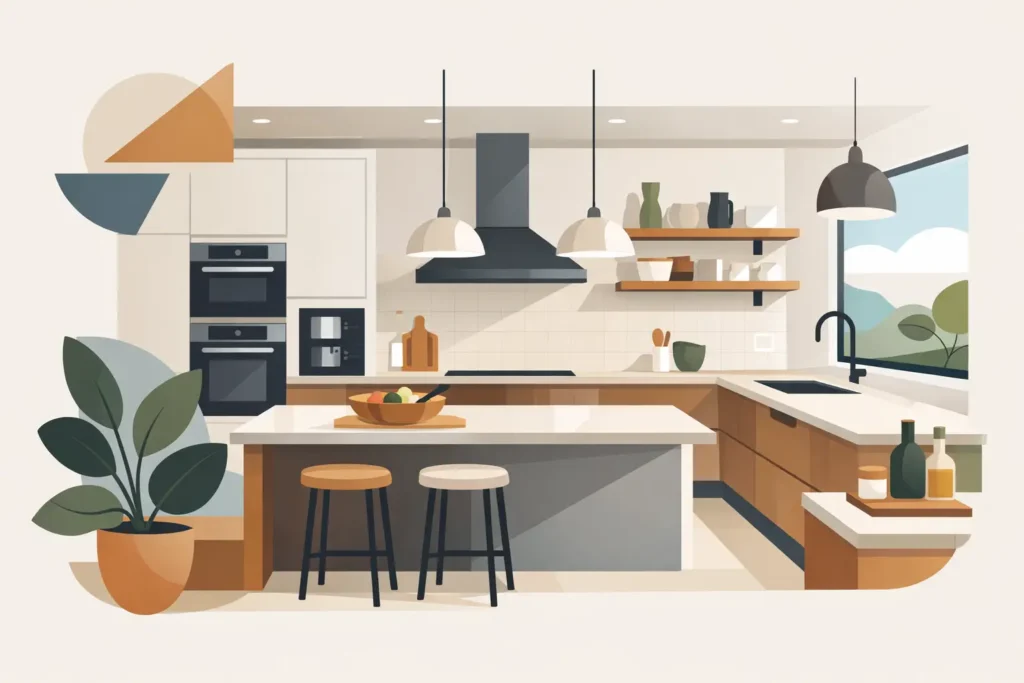
A kitchen can look impressive in a brochure and still be frustrating to live with. The difference usually comes down to how well it fits the room, the household and the small routines that happen there every day. That is why bespoke kitchen design trends are moving away from show-home styling and towards kitchens that feel considered, hardworking and genuinely personal.
For homeowners across Poole, Bournemouth and the wider Dorset area, that shift makes sense. People are investing more carefully, expecting more from the space and looking for quality that lasts. Trends still matter, but the best ones are those that improve the way a kitchen works rather than date it in a few years’ time.
Bespoke kitchen design trends are becoming more practical
One of the clearest changes in recent years is the move towards practicality with character. Clients still want a kitchen that feels current, but they are less interested in copying a standard display and more interested in making each decision suit their home.
That often starts with layout. Open-plan living remains popular, but the approach is more refined now. Instead of one large empty space, homeowners are asking for better zoning. Islands are being used to separate cooking from dining, tall cabinetry is defining utility areas, and breakfast cupboards are helping everyday clutter disappear when not in use. The room still feels open, but it works harder.
This is where bespoke design earns its place. A made-to-measure kitchen can respond to awkward corners, ceiling heights, chimney breasts and existing architectural features in a way off-the-shelf furniture cannot. It also allows storage to be designed around the people using it, whether that means deeper pan drawers, a better place for small appliances or a layout that makes family life easier at busy times of day.
Warmer colours and more natural texture
The all-grey kitchen has not disappeared entirely, but it has certainly softened. Many current bespoke kitchen design trends favour warmer, more welcoming tones. Painted cabinetry in earthy greens, muted blues, mushroom shades and soft putty colours is increasingly popular, especially in homes where owners want a timeless look rather than something stark.
Natural timber also has a stronger presence than it did a few years ago. Sometimes that means full timber cabinetry, but more often it appears as a balancing material – on shelving, breakfast bar panels, feature cabinetry or internal storage details. It adds warmth and texture without making the room feel heavy.
Worktops are following a similar pattern. Clients are still choosing durable materials with a clean finish, but there is more interest in subtle movement, softer veining and surfaces that feel less clinical. The aim is a kitchen with depth and calm rather than high contrast for its own sake.
There is a trade-off here. Lighter painted finishes can brighten a room beautifully, but they may show marks more readily in a busy family kitchen. Darker colours can feel rich and grounded, but in a room with limited natural light they need careful balancing. Good design is not about following the colour of the moment. It is about choosing a palette that suits the room and will still feel right after the novelty wears off.
Hidden function is shaping the modern kitchen
A well-designed kitchen should not have to display everything it does. That is why concealed function is one of the strongest trends in the fitted market.
Appliance garages, larder cupboards with internal drawers, integrated bins, charging points hidden within cabinetry and utility storage built behind matching doors are all in demand. These features are not just about keeping surfaces tidy. They help the kitchen stay calm and organised, especially in open-plan homes where the space is visible for most of the day.
Pocket doors are another popular detail, particularly for breakfast stations and coffee areas. They allow homeowners to access everything quickly in the morning and close it away afterwards. For some households, that is more useful than adding yet another open shelf that will need constant styling and cleaning.
Bespoke manufacture is particularly valuable here because hidden storage only works when it is properly planned. Internal dimensions, appliance sizes and movement clearances all matter. A cupboard that looks good on paper but does not open comfortably in a real room is not good design.
Statement islands with a purpose
Kitchen islands remain high on wish lists, but they are evolving. The best ones are no longer oversized blocks dropped into the middle of the room simply because there is space. Clients are asking more of them.
A well-planned island might provide prep space, casual seating, additional storage and a social point for the household, but it needs careful proportion. Too large, and it interrupts movement. Too small, and it becomes decorative rather than useful. In a bespoke kitchen, the island can be sized and detailed to support the room properly, whether that means a waterfall worktop, curved end panels, open book storage or seating positioned where it will not clash with working zones.
Multi-level islands are less common than they once were. In most cases, a single-level surface creates a cleaner look and a more flexible workspace. That said, it depends on how the kitchen is used. Some clients still prefer a slightly raised section to screen food preparation from dining or entertaining areas.
Lighting is doing more than one job
Lighting is often left until late in a project, yet it has a major effect on how a kitchen feels. One of the more valuable design trends is treating lighting as part of the furniture plan rather than an add-on.
Layered lighting is now expected in a well-considered kitchen. Ceiling lights provide general illumination, task lighting supports worktops and cooking areas, and softer feature lighting adds atmosphere in the evening. LED lighting inside glazed cabinets, beneath wall units or along plinths can make the room feel more refined, but only when used with restraint.
Colour temperature matters as much as fixture choice. A kitchen filled with hard, cold light can make even quality materials feel flat. Warmer lighting tends to be more flattering and more comfortable for day-to-day living, especially in kitchens that double as dining or entertaining spaces.
Sustainability is becoming a quality question
Many homeowners now ask about sustainability, but usually in practical terms. They want cabinetry that lasts, materials that wear well and a kitchen that will not need replacing because fashions have changed.
That is one reason bespoke kitchens continue to appeal. Furniture made for a specific room, by experienced makers, tends to offer better use of space and longer-term value than standard units adapted to fit. There is less compromise, and when elements such as doors or worktops can be replaced without starting again, the kitchen has a longer life.
Clients are also paying closer attention to appliance efficiency, durable finishes and materials that justify the investment. Sustainability is not just about labels. For many households, it means buying once and buying properly.
The return of detail and individuality
Minimal kitchens still have their place, but many homeowners are moving away from flat, anonymous schemes. They want a kitchen with a little more personality.
That might show up in framed doors, fluted glass, curved end units, a contrasting pantry cabinet or a painted finish chosen to suit the character of the property. Traditional and contemporary styles are blending more confidently too. A period home may carry a cleaner-lined kitchen than expected, while a newer property may benefit from warmer textures and classic detailing.
This is where local, experienced design support matters. Trends can be useful starting points, but every home brings its own conditions. Ceiling height, natural light, family routines, storage demands and the age of the property all influence what will work best. At Hale & Murray, that hands-on approach is central to getting the detail right from the outset, so the finished kitchen feels settled rather than forced.
What these trends mean for homeowners
The strongest kitchen trends at the moment are not really about fashion. They reflect a more thoughtful way of buying. Homeowners want rooms that look smart, certainly, but they also want reassurance that the kitchen will stand up to daily life and still feel right years down the line.
That usually means making decisions in the round. A bold colour may be perfect in one house and overwhelming in another. Open shelving may look attractive but prove impractical for a busy family. A large island may be a genuine asset, or it may simply reduce circulation space. The right answer depends on the property and the people living in it.
If you are planning a new kitchen, the most useful trend to follow is this one: choose design decisions that make the room easier to use, more comfortable to live with and better suited to your home. A kitchen should not just reflect current taste. It should feel like it belongs there from the day it is fitted.