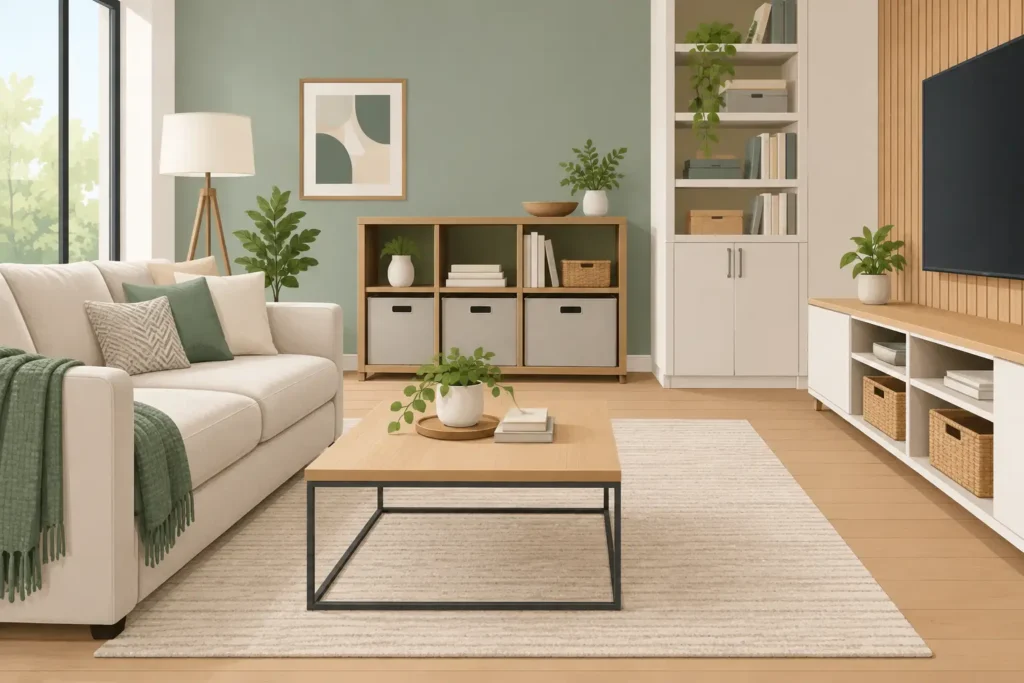
A lounge rarely becomes cluttered because a household owns too much. More often, it lacks a proper place for the things used every day: remotes, games consoles, books, children’s toys, chargers, paperwork and the technology that makes the room work. The best lounge storage solutions do more than hide these items. They make the room calmer, easier to use and more enjoyable to come home to.
For many homes across Poole, Bournemouth and Dorset, a fitted approach is the difference between storage that merely fills a wall and furniture that genuinely suits the space. It can work around a chimney breast, use an awkward alcove, conceal cables and reflect the way your family actually lives.
Start with how the lounge is used
Before choosing doors, shelving or finishes, consider what happens in the room from morning to night. A formal sitting room has very different demands from a busy family lounge that is also used for homework, gaming and film nights. Storage should support those routines without making the space feel over-furnished.
Think about what needs to remain within easy reach and what can sit behind closed doors. Books, carefully chosen objects and family photographs may deserve open shelving. Routers, controllers, board games and assorted cables usually benefit from a cupboard. This simple distinction gives a designer a useful starting point and prevents the familiar pattern of attractive shelves becoming a permanent holding area for everyday clutter.
It is also worth measuring the reality, not just the wall. Radiators, plug sockets, light switches, skirting boards, ceiling slopes and existing coving all influence what is practical. Bespoke furniture is particularly valuable where a standard unit would leave unusable gaps or look awkward beside original features.
Best lounge storage solutions for different rooms
There is no single answer for every property. The right arrangement depends on the room’s proportions, the amount of storage required and whether the furniture must accommodate a television or other equipment.
Fitted media walls for a composed focal point
A media wall brings the television, sound equipment and storage into one considered composition. It is often the strongest option when the television dominates the room and you want it to feel more integrated with the furniture rather than perched on a stand.
A well-designed media wall can include low cupboards for games consoles and household items, open niches for display, and discreet routes for power and signal cables. Where appropriate, it can be built around a chimney breast or designed with a central recess, allowing the wall to retain balance rather than competing with the architecture.
The trade-off is that a media wall is a more permanent decision. Screen size, ventilation requirements and access to sockets need careful planning at the design stage. Closed cabinetry around equipment must allow heat to escape, while removable panels or accessible cupboards make future changes less troublesome. This is where experienced design and installation matter far more than simply building shelves around a television.
Alcove cabinets that make every inch work
Alcoves are one of the most underused parts of a lounge. Freestanding bookcases can be useful, but they often leave awkward margins at the sides and stop short of the ceiling. Fitted alcove furniture turns these recesses into storage with a deliberate, built-in appearance.
A popular arrangement combines base cabinets with shelves above. The lower section deals with less attractive essentials, while the upper section keeps books and favourite pieces visible. In rooms with high ceilings, full-height joinery can add useful capacity without taking more floor space.
Symmetry is appealing on either side of a fireplace, but it is not compulsory. One alcove may need deeper cupboards for games or toys, while the other could provide a compact desk, reading shelves or a drinks cabinet. Designing each side around its purpose often produces a better result than forcing both to match exactly.
Low fitted cabinets for smaller lounges
In a compact lounge, tall storage can sometimes make the room feel narrower, especially when natural light is limited. A run of low fitted cabinets can be the more considered choice. It provides generous hidden storage, a surface for lamps or artwork, and a quieter visual line across the room.
Low units work well beneath windows and along walls that cannot take full-height furniture. They are also practical for households with younger children, as frequently used toys and games are accessible without turning the room into open shelving. A durable top can serve as a display ledge, but avoid overfilling it. A few well-chosen items will keep the room feeling settled.
Full-height cabinetry when storage is the priority
Some lounges need to work harder. Perhaps the property has limited cupboards elsewhere, or the room needs to store files, hobbies, extra tableware or seasonal items. Full-height fitted cabinetry can provide a surprising amount of capacity while maintaining a clean exterior.
The key is proportion. Tall cupboards are most successful when they are designed as part of the room, not treated as a row of wardrobes placed in a living area. Breaking up the elevation with a mix of cupboard doors, open display sections or a central television area can reduce visual weight. Handle choices, door detailing and colour also make a significant difference.
Pale finishes can help cabinetry recede in a smaller room, while deeper painted colours can create a confident, furniture-like feature in a larger one. Neither approach is automatically right. The existing light levels, wall colours and period of the property should guide the decision.
Design details that make storage easier to live with
Good lounge storage should look right on day one and remain useful years later. Internal layouts deserve as much thought as the doors and exterior finish. Adjustable shelves allow for changing book collections and equipment. Deep drawers are often more convenient than low cupboards for toys, blankets and media, because everything can be seen at once.
Cable management is another detail that pays off every day. A dedicated route behind cabinetry keeps wires out of sight and reduces the temptation to trail extension leads across the room. Where equipment is stored inside a cupboard, consider ventilation and easy access for resetting plugs or changing connections.
Lighting can add warmth to shelving, particularly in the evening, but it should be purposeful rather than excessive. Soft illumination in selected display niches can make a lounge feel welcoming; lighting every shelf can become distracting. Similarly, glass doors are attractive for display but demand more tidying than solid doors. If the contents are likely to be practical rather than decorative, an opaque finish is usually the more forgiving choice.
Why made-to-measure furniture earns its place
Freestanding furniture is useful when flexibility is the priority or when a room is likely to change purpose soon. It can be moved, replaced and purchased gradually. However, it rarely resolves uneven walls, recessed corners or architectural features as effectively as fitted furniture.
Made-to-measure storage is designed around the available space, including the less obvious dimensions that standard furniture cannot accommodate. It can meet the ceiling cleanly, work around alcoves and make use of depths that would otherwise be wasted. More importantly, it can be designed around your belongings and the way you use them, rather than asking you to adapt to a fixed configuration.
At Hale & Murray, furniture is made in-house and planned as part of the wider room, from initial consultation through to installation. That gives homeowners the reassurance of one accountable team and the opportunity to make practical decisions before the furniture is manufactured, rather than trying to solve them after delivery.
Plan for a room that can change with you
The best storage schemes leave some room for the future. A lounge used for children’s toys today may need space for books, hobbies or home-working equipment later on. Adjustable shelving, flexible cupboard interiors and sensible cable access allow the furniture to adapt without a complete rethink.
Bring a short list of what you need to store to a design consultation, including the less obvious items that tend to create clutter. A few accurate measurements, photographs of the room and an honest conversation about how it is used will lead to a far more useful design. When every item has a sensible home, the lounge becomes a room to enjoy rather than one that constantly needs putting back in order.