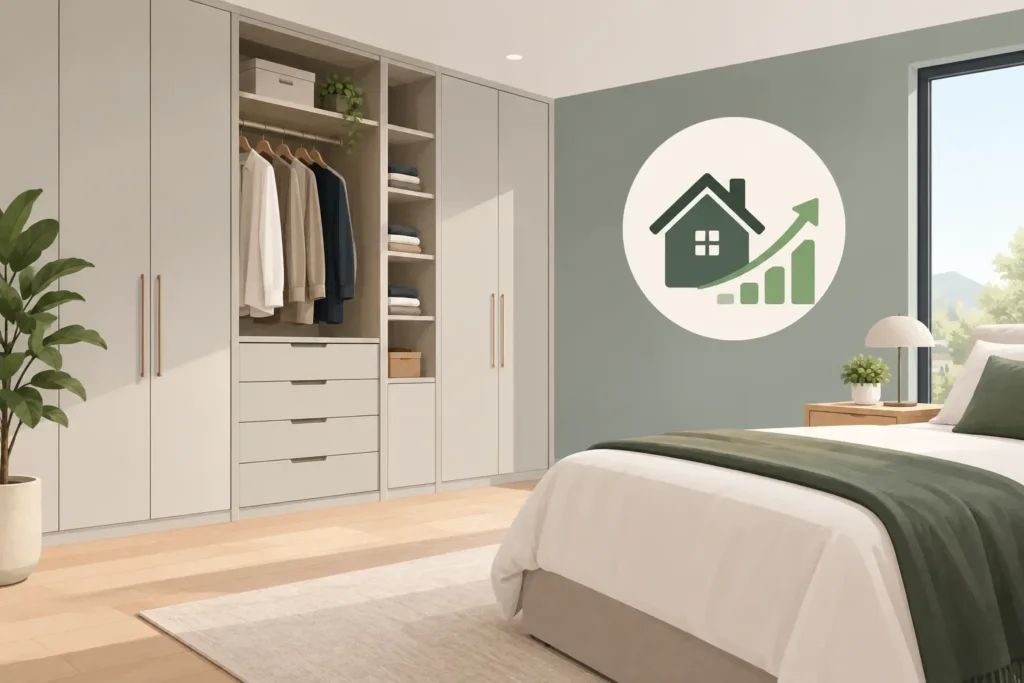
A freestanding wardrobe can be useful, but it rarely makes a room feel finished. One that leaves an awkward gap to the ceiling, blocks light or cannot accommodate everyday storage can make even a generous bedroom appear smaller. So, can fitted wardrobes add value? In the right property, designed around the room and fitted properly, they can add both practical value for the household and stronger appeal when it is time to sell.
The key is not simply putting wardrobes on a wall. Buyers respond to homes that feel considered, well maintained and easy to live in. Bespoke fitted storage can support all three, particularly in bedrooms where clutter, limited hanging space and unused alcoves are common frustrations.
Can fitted wardrobes add value beyond storage?
A fitted wardrobe is unlikely to transform a property’s valuation in the way a well-planned extension or additional bathroom might. Estate agents and surveyors do not usually assign a fixed pound value to a wardrobe installation. Its value is more often seen in the wider impression of the home: a bedroom that feels calm, spacious and ready to use can help a property compete more confidently.
For homeowners planning to stay put, the immediate value is easier to measure. A wardrobe tailored to the available space can replace several pieces of freestanding furniture, give every item a proper place and make daily routines less of a compromise. For a busy family, that may mean separate hanging for workwear and school uniforms, drawers for folded clothes, shoe storage and space for luggage. For a downsizer, it might mean making full use of a smaller main bedroom without filling it with bulky furniture.
When buyers view a home, they are also buying into the potential of each room. A built-in wardrobe that makes an awkward eaves room work, or turns a narrow alcove into useful storage, helps them see the room as a proper bedroom rather than a challenge to solve after completion.
Why fitted storage can strengthen buyer appeal
Well-designed fitted furniture uses space that standard wardrobes cannot reach. Full-height cabinetry makes use of the area above the usual wardrobe line, while carefully planned interiors can be adjusted around sloping ceilings, chimney breasts, alcoves and uneven walls. This is particularly useful in period homes, loft conversions and rooms where every centimetre matters.
It can also improve the visual proportions of a bedroom. A run of doors designed to sit neatly from wall to wall often looks quieter than separate units with visible gaps around them. Choosing a finish that suits the room, rather than dominates it, can make the furniture feel like part of the architecture.
There is a difference, however, between fitted furniture that adds appeal and furniture that limits it. Very bold colours, highly personal internal layouts or an oversized bank of cabinetry in a small room may not suit every future buyer. The strongest designs are tailored to the homeowner’s needs while retaining enough flexibility for the next occupant.
The quality of the installation matters
Buyers notice doors that sit straight, drawers that run smoothly and panels that meet walls cleanly. They also notice chipped edges, uneven gaps and poorly planned sockets. A fitted wardrobe should feel permanent for the right reasons: it should look carefully made and professionally installed, not difficult to alter or cheaply fixed in place.
This is where a local specialist with control over design, manufacture and installation can make a genuine difference. Accurate measuring, sensible design decisions and furniture made for the individual room avoid many of the compromises that come with off-the-shelf sizes. It also gives homeowners one accountable team should adjustments be needed during the project.
What buyers tend to look for in bedroom storage
Most buyers do not expect a dressing room in every property. They do appreciate enough well-organised storage for modern life. The most useful wardrobes balance hanging space, shelves and drawers rather than relying on one long rail and a high shelf that is hard to reach.
A practical layout may include double hanging for shirts and jackets, full-length hanging for dresses and coats, adjustable shelving, integrated drawers and a dedicated space for shoes. Internal lighting can be helpful in deeper units, but it should be discreet and professionally planned. Mirrored doors can make a compact room feel larger, although too much mirror can date a scheme if it is not in keeping with the property.
Door style deserves equal attention. Hinged doors offer easy access across the full width of a wardrobe and work well when there is room to open them. Sliding doors save floor space in tighter bedrooms, though they only allow access to part of the wardrobe at one time. Neither option is automatically better – it depends on the room, the furniture arrangement and how the household uses the space.
Where fitted wardrobes make the biggest difference
Fitted wardrobes are especially worthwhile where space is difficult or limited. In a box room, a shallow wardrobe with a well-considered interior may allow the room to function as a guest bedroom, nursery or home office. In a principal bedroom, a wall of storage can remove the need for a chest of drawers and free up valuable floorspace.
Loft bedrooms often benefit most visibly. Sloping ceilings leave areas that standard furniture cannot use, yet these lower sections can be ideal for drawers, shelves or cupboards for seasonal items. A bespoke design turns what might be dead space into storage without making the room feel crowded.
They can also be valuable in homes with older, irregular architecture. Dorset properties range from character cottages to coastal flats and newer family homes, each with different proportions and challenges. A home visit and proper survey are essential, because the best solution is shaped by the room itself, not a standard catalogue size.
How to make a fitted wardrobe a sensible investment
Start with the purpose of the room. A wardrobe for a main bedroom should support two people’s routines, whereas a child’s room needs adaptable storage that can change as they grow. Think beyond the clothes you use this week. Bedding, suitcases, coats, laundry and spare towels all need a place, and a good designer will ask about these details before planning the interior.
Choose materials and finishes for longevity. Neutral painted finishes, wood effects and simple door styles generally have broad appeal and can be refreshed more easily than a strongly themed scheme. That does not mean every wardrobe must be plain. A distinctive handle, framed door or carefully selected colour can give a room character without making it feel overly personal.
Avoid designing every inch around one particular wardrobe collection or shoe arrangement. Adjustable shelves and a mixture of storage types give the furniture a longer useful life. It is also worth considering access for future maintenance, especially around lighting, sockets and radiator controls.
Budget should be viewed in terms of design, materials, manufacture and fitting, rather than the cabinet price alone. Bespoke furniture costs more than a flat-pack alternative because it is made to suit the room and installed as part of a finished result. Yet it may offer better use of space, a longer service life and a more polished outcome. The right choice depends on whether the room has straightforward dimensions, how long you expect to stay in the property and how much daily value better storage will bring.
When fitted wardrobes may not add much value
There are cases where a fitted wardrobe is not the best use of budget. If a bedroom is unusually small, large cabinetry may reduce flexibility and make the room feel cramped. If you expect to move very soon, spending heavily on a highly customised scheme may not be recovered directly in the sale price.
Similarly, a poorly designed installation can work against the property. Wardrobes that take over a window wall, restrict access to the bed or provide little useful internal storage will not impress buyers simply because they are built in. Good planning matters more than the label.
For many homeowners, the better question is not whether fitted wardrobes will pay back pound for pound, but whether they will make the home more enjoyable now and more appealing later. If the answer is yes, a carefully designed scheme is a sound improvement rather than a cosmetic expense.
A free design consultation gives you the chance to assess the room properly, talk through storage needs and see how a made-to-measure solution could sit within your home. The most successful fitted wardrobe is one that earns its place every morning, while leaving the room ready to make a good impression whenever the next chapter arrives.