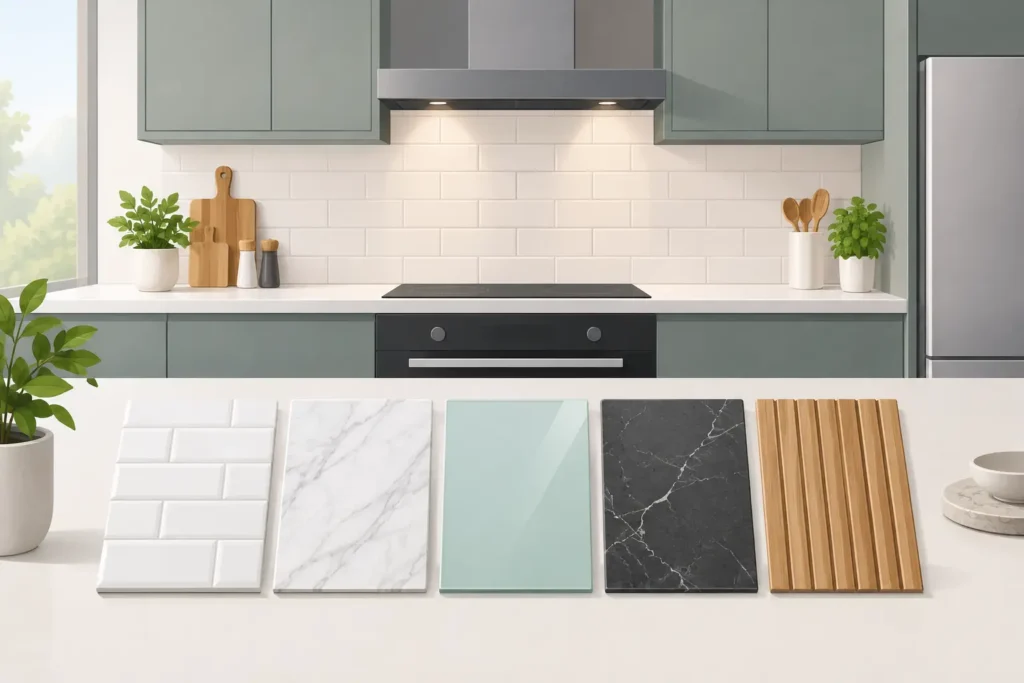
A splashback occupies a relatively small area of a kitchen, yet it has an outsized effect on the finished room. It sits where heat, water, oil and everyday cooking meet, while often forming the visual link between worktops, cabinetry and appliances. Choosing kitchen splashbacks well means looking beyond a showroom sample and considering how the material will perform in your own home.
For a family kitchen used several times a day, easy cleaning may come first. In a quieter, design-led room, a distinctive surface or carefully matched worktop could be the priority. The best choice is one that works with the way you cook, the amount of natural light in the room and the level of detail you want around sockets, corners and upstands.
What should a kitchen splashback do?
Its first job is practical. A splashback protects the wall behind a hob, sink or preparation area from steam, splashes and staining. Painted plaster is difficult to keep looking fresh once cooking residue has settled into it, particularly behind a hob. A properly fitted, non-porous surface gives you a far more durable and wipeable finish.
It also establishes a clear visual boundary. A full-height splashback can make a run of cabinetry feel more considered, while a shorter upstand offers a quieter, more traditional look. Neither is automatically better. Full-height materials suit contemporary kitchens and can reduce visible grout lines; tiled finishes bring pattern, texture and character that may be exactly right for a period property or a more individual scheme.
Practical details matter just as much as colour. Consider where sockets will sit, whether the hob requires a particular clearance, and how the splashback will meet a window sill, extractor or shelving. These decisions are much easier to resolve before the kitchen is manufactured and installed, rather than after the worktop is in place.
Kitchen splashbacks: choosing the right material
There is no single best material for every project. Budget, cooking habits, maintenance preferences and the desired finish all play a part. Seeing larger samples alongside your cabinet door and worktop is worthwhile, as light can change a material considerably from morning to evening.
Tiles: flexible and full of character
Tiles remain a popular option because they offer an enormous range of colours, shapes and finishes. Metro tiles can give a kitchen a familiar, timeless feel, while handmade-look tiles introduce gentle variation. Large-format porcelain tiles create a more streamlined result with fewer grout joints.
The trade-off is maintenance. Grout needs regular cleaning and, depending on the product, may need sealing to resist staining. A dark grout can be forgiving in a busy cooking area, whereas a pale grout may look crisp initially but show marks more readily. Careful setting out is essential too, particularly where a tiled splashback meets sockets or a cooker hood.
Glass: clean lines and easy care
Toughened glass offers a sleek, uninterrupted surface that is particularly effective behind a hob. It is simple to wipe clean, has no grout lines and can be supplied in a wide range of colours. Back-painted glass can either blend quietly with the kitchen or provide a confident block of colour.
Glass is not completely without considerations. It needs precise measuring once surrounding elements are confirmed, and it can show smears more readily than textured finishes. For many homeowners, though, its clean appearance and low-maintenance surface outweigh this.
Quartz, granite and sintered stone: a joined-up finish
Using the worktop material for the splashback creates a strong, tailored appearance. Quartz and granite can bring natural depth or a refined, consistent pattern, while sintered stone is valued for its resistance to heat, staining and scratches. A full-height stone-effect splashback can make a compact kitchen appear calmer because the eye is not interrupted by additional lines or colours.
Cost is usually the main consideration. Fabrication, templating, delivery and fitting make this a more premium route than many tiled alternatives. Veined materials also need thoughtful planning, so the pattern flows convincingly across the worktop and wall rather than looking pieced together. When handled properly, however, it gives a kitchen the made-for-the-room quality many homeowners are looking for.
Stainless steel and other metals: practical near the cooker
Stainless steel is a hard-working choice behind a range cooker or in a keen cook’s kitchen. It tolerates heat well, wipes down easily and has a professional feel that pairs naturally with darker cabinetry, timber or painted shaker doors. Brushed finishes tend to disguise fingerprints better than highly polished steel.
Other metal finishes can be striking, but they deserve careful thought. Copper, brass and aged-effect surfaces may change with use or require specialist care. They work best when the rest of the scheme supports them, rather than as an isolated feature added late in the process.
Acrylic and laminate: considered choices for tighter budgets
Modern acrylic panels and matching laminate upstands offer a neat, economical solution, particularly where the kitchen is being refreshed rather than fully rebuilt. They are available in a broad choice of decors and can coordinate easily with a worktop.
Their limitations should be understood before buying. Heat resistance varies by product, so they may not be suitable directly behind every type of hob. They can also scratch more easily than glass or stone. The right product, fitted in the right location, can still provide a smart and useful finish.
Matching the splashback to your kitchen style
A splashback does not need to be the loudest element in the room. In kitchens with strongly patterned worktops, richly grained timber or bold painted cabinets, a simple glass or neutral tile may create valuable balance. Conversely, a plain worktop and understated doors can provide the ideal backdrop for decorative tiles or a dramatic veined surface.
Think about sheen as well as colour. Glossy finishes reflect light and can make a smaller Dorset kitchen feel brighter, but they may show water marks. Matt surfaces feel softer and more contemporary, although some textured products take slightly more effort to clean. A sample held vertically near the proposed hob or sink will give a better impression than one laid flat on a showroom display.
The height of the splashback deserves an early decision. A 100mm upstand protects the wall while keeping the finish restrained. Taking a material to the underside of wall units creates a more complete look. Running it full height behind open shelving, or across a chimney breast, can turn a functional surface into a focal point. The choice depends on proportions, budget and how much visual simplicity you want.
Plan for fitting, not just the finish
Even the most attractive material can disappoint if installation details are overlooked. Socket positions should be agreed before cutting begins, and any wall that is uneven or damp needs attention first. Tilers, worktop fabricators, electricians and kitchen fitters need a clear sequence of work so that finished surfaces are not damaged or delayed.
For a full kitchen renovation, it is sensible to decide the splashback during the design stage. This allows cabinet heights, extractor position, worktop thickness and lighting to be coordinated. It can also avoid the common problem of choosing a tile only to find that its size leaves awkward cuts at both ends of a run.
At Hale & Murray, a joined-up design and installation service helps these decisions happen before they become site problems. Whether a customer chooses a simple upstand, glass panel, tiled wall or worktop-matched finish, the aim is the same: a kitchen that looks carefully resolved and remains straightforward to live with.
Care that keeps the finish looking new
Most kitchen splashbacks only need regular wiping with a soft cloth, warm water and a mild cleaner. Avoid abrasive pads on glass, acrylic, polished stone and metal, as they can leave fine scratches. With natural stone, follow the supplier’s advice on sealing and suitable cleaning products.
Do not leave strongly coloured spills, such as tomato sauce, curry or red wine, sitting on grout or porous stone. Around the hob, clean grease before it builds up. Small habits make more difference than harsh products, and they help preserve the finish you paid for.
Before making a final choice, place samples beside your worktop and cabinet door, then ask the practical question: will this still suit the way we use the kitchen on an ordinary Tuesday evening? The answer usually leads to a better decision than following a passing trend. A free design consultation can then turn that decision into a detailed, well-fitted part of a kitchen made for your home.