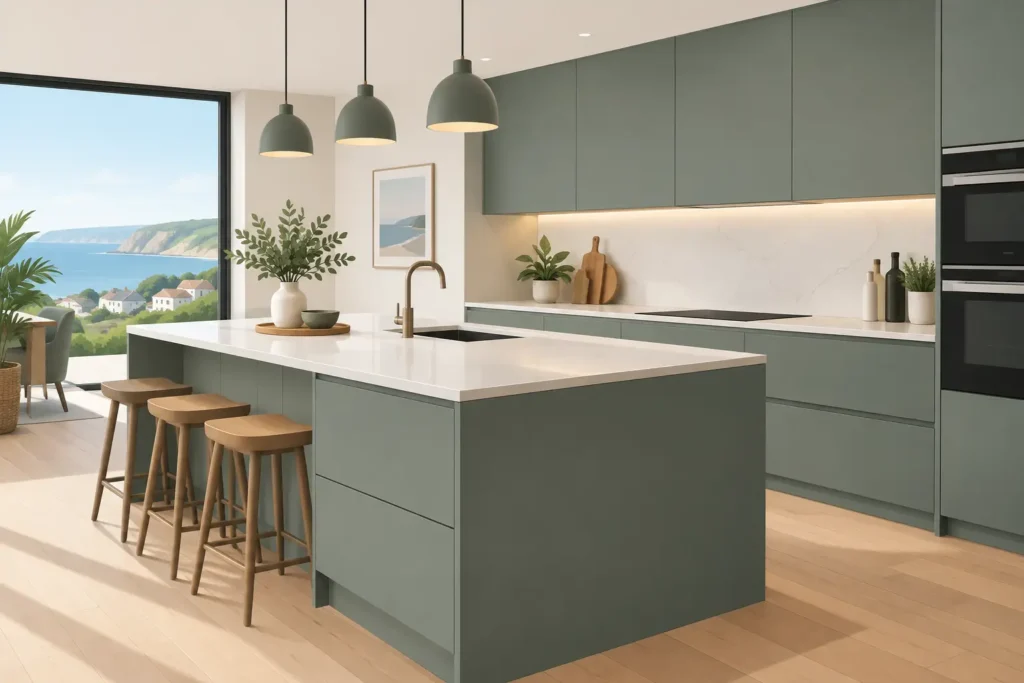
A kitchen without visible handles can make a modest room feel calmer, wider and more considered. But a good handleless kitchen review needs to look beyond the clean lines. The real question is whether the opening system, finishes and layout will work comfortably for the way your household cooks, clears up and lives every day.
For many homeowners in Poole, Bournemouth and across Dorset, handleless cabinetry is a strong choice for a renovation or new extension. It suits contemporary architecture particularly well, yet it can also bring a smart, understated finish to a more traditional property. The key is choosing a version of handleless design that feels good to use, wears well and has been planned properly around appliances, corners and work zones.
What makes a handleless kitchen different?
A handleless kitchen removes the external knobs, bars or cup handles fixed to cabinet doors and drawers. Instead, the furniture is opened using a recessed channel, a shaped door edge or a push-to-open mechanism. This creates uninterrupted runs of cabinetry, with no hardware projecting into the room.
The appearance is naturally tidy. Long banks of tall units can look almost architectural, while base cabinets sit neatly beneath the worktop without visual clutter. It is a useful design approach in smaller kitchens, where fewer competing details can help the room feel less busy. In larger open-plan spaces, it gives the kitchen a furniture-like quality that sits comfortably alongside living and dining areas.
That said, “handleless” covers several different systems. They do not all look, cost or perform in the same way.
True handleless rail systems
A true handleless kitchen uses aluminium or colour-matched rails fitted between doors and drawers. You reach behind the rail to pull the cabinet open. The channel creates a crisp horizontal shadow line, which is part of the design rather than something hidden away.
This option is particularly effective for a modern kitchen with wide drawer banks and tall appliance housings. It provides a reliable grip, even when hands are wet or busy, and does not depend on spring-loaded mechanisms. The rails do need accurate fitting, especially where doors meet at corners or sit beside integrated appliances, so detailed design and careful installation matter.
J-pull and integrated profile doors
J-pull doors have a curved or angled recess formed into the top of the door or drawer front. The opening detail is built into the cabinetry, making this a simpler route to a handle-free look. It can be an excellent choice for households wanting a clean design with a familiar, easy-to-grip opening.
The look is usually softer than a true rail system. It also avoids a separate channel between units, which some people prefer. However, the recessed area can collect crumbs and dust, particularly on base drawers close to the hob or food preparation area. It is easy enough to clean, but it should be part of the normal kitchen routine.
Push-to-open cabinetry
Push-to-open units open when pressure is applied to the door or drawer front. This creates the most minimal appearance because there is no visible grip line on the front of the cabinetry.
It can work well on occasional-use cupboards, display units and selected wall cabinets. For everyday drawers holding pans, crockery or recycling, it can be less practical. Push mechanisms require a clean, deliberate press and may need adjustment over time. Fingerprints are also more noticeable because users naturally touch the door fronts to open them. For that reason, many well-planned kitchens combine push-to-open units with a more dependable rail or J-pull system where the kitchen sees the most use.
Handleless kitchen review: the day-to-day benefits
The strongest reason to choose handleless furniture is not simply fashion. It can make a kitchen easier to move around in. Without handles protruding from doors and drawers, there is less to catch clothing on when passing through a narrow route, and fewer hard edges at hip height for young children.
The design is also remarkably flexible. A pale matt finish with a slim rail can make a compact kitchen feel lighter, while timber-effect cabinetry and a dark recessed channel add warmth and depth to a larger room. Handleless furniture can be paired with stone, laminate, quartz or solid-surface worktops, and it works equally well with a bold splashback or a quieter, more neutral scheme.
There is a practical cleaning advantage too. Traditional handles can collect grease around their fixings and need individual polishing. Flat-fronted doors are quicker to wipe over. The trade-off is that the grooves, rails or touch points need attention, and glossy finishes can show marks more readily than matt, textured or woodgrain surfaces.
For households considering accessible design, the choice of opening system deserves special thought. Wide drawers with an easy, continuous grip can be more comfortable than small handles, especially when combined with smooth soft-close runners. Yet the channel needs to be deep enough to grasp securely. This is where trying working displays in a showroom is more valuable than judging a kitchen from photographs alone.
The points to consider before choosing one
A handleless kitchen is not automatically the best option for every home. If you enjoy a classic Shaker kitchen, a period property or a more decorative look, handles may give the cabinetry the character you want. A handleless design can still be made warm and individual, but it tends to suit clean proportions and carefully chosen materials.
Budget is another consideration. A quality true handleless system can cost more than a comparable door with standard handles because of the rail components, fitting requirements and more precise finishing details. This does not mean it is poor value. It means the specification should be chosen for the long term, rather than solely for an initial visual effect.
Consider how your doors will be used as well. Dishwashers, fridge freezers and tall pantry units must open comfortably without clashing with adjacent cabinetry. Drawer positions should allow space for hands beneath the worktop and around handles integrated into the door. A good design takes account of these clearances before the furniture is manufactured, not when the installer is on site.
Lighting makes a noticeable difference. Under-cabinet lighting can emphasise the horizontal lines of a handleless scheme, while tall-unit lighting can make darker colours feel less imposing. In a kitchen with limited natural daylight, door colour, finish and worktop contrast should be considered together rather than selected separately.
How to make a handleless kitchen feel less clinical
Some homeowners worry that handleless cabinetry will feel cold. That usually comes down to material balance, not the lack of handles. Warm oak tones, textured finishes, a richly veined worktop or a painted matt door can all bring depth to the room. Open shelving, a timber breakfast bar or carefully chosen lighting can soften the more linear elements without compromising the clean overall look.
Colour blocking is another useful approach. For example, darker base units can be paired with lighter wall cabinets, or a bank of tall units can be finished in a contrasting shade. This prevents a large run of cabinetry from becoming visually heavy. Bespoke design is especially useful here, as proportions can be adjusted to suit the ceiling height, window positions and the room’s natural focal points.
Storage should be designed just as carefully as the exterior. Deep drawers, internal dividers, pull-out larders and sensible recycling storage make a handleless kitchen satisfying to use. A beautifully minimal door front is far less appealing if everyday items are difficult to reach or worktops become crowded.
Is a handleless kitchen right for your home?
Choose handleless cabinetry if you value uncluttered lines, straightforward cleaning and a tailored contemporary look. It is particularly well suited to open-plan homes, compact kitchens and properties where the kitchen needs to feel like part of the wider living space. For busy family homes, a rail or J-pull option will often provide the best balance of appearance and everyday practicality.
Before committing, open the doors and drawers yourself. Check the grip, look at the finish in natural and artificial light, and think honestly about fingerprints, cleaning habits and who will use the room. The right kitchen is not the one that looks best in a brochure. It is the one that continues to feel well made, comfortable and easy to live with years after installation.
At Hale & Murray, a free design consultation provides the opportunity to compare working handleless options, discuss your room and plan furniture around the way your home actually works.