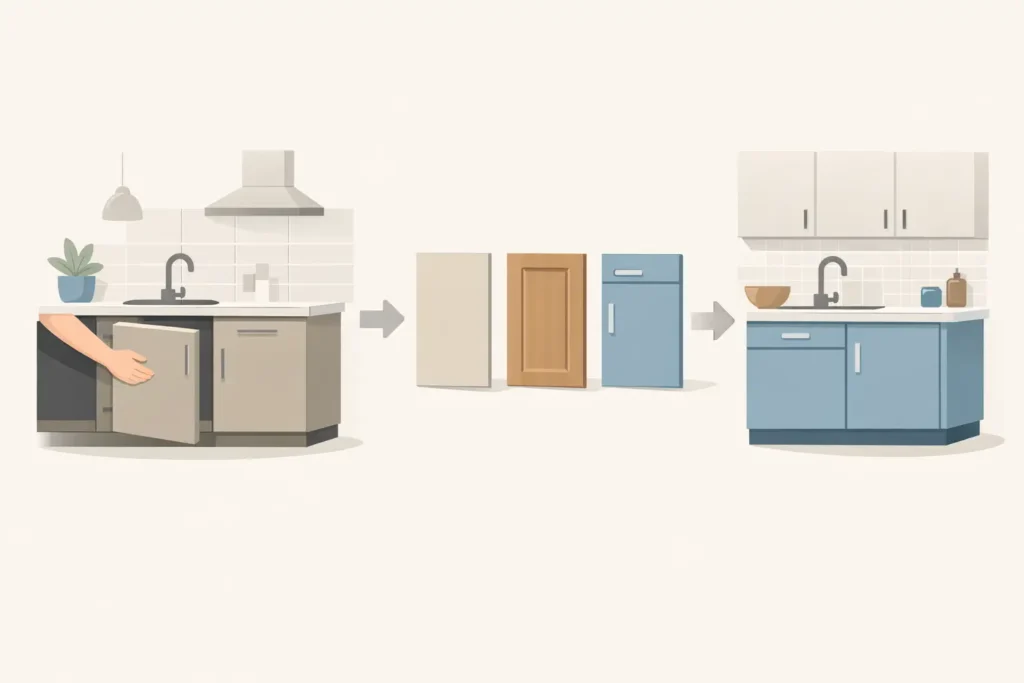
A tired kitchen does not always need ripping out. In many homes, the cabinets are still structurally sound, the layout still works, and the real issue is that the doors, drawer fronts and finishes have simply dated. That is usually where people start asking how replacement kitchen doors work, and whether the result will genuinely feel like a new kitchen rather than a cosmetic patch-up.
The short answer is that replacement doors are fitted to your existing cabinet carcases, provided those units are in good enough condition and suitable for re-use. New doors, drawer fronts, hinges, handles and often end panels or plinths are then made and installed to suit the cabinets already in place. Done properly, it can transform the room with less disruption, lower cost and a shorter programme than a complete refit. But it is not the right answer for every kitchen.
How replacement kitchen doors work in practice
At the centre of the process is one simple principle – keep what is worth keeping, replace what shows the wear. The carcases remain, while visible elements are updated so the kitchen looks and functions better.
That sounds straightforward, but accurate measuring matters. Existing cabinets are rarely as standard as people expect, especially in older properties or in kitchens that have been altered over time. Door sizes, hinge positions, infill panels and filler pieces all need checking carefully. If replacements are made even slightly wrong, lines can look uneven and operation can suffer.
A proper door replacement usually begins with a survey. Each cabinet opening is measured, the condition of hinges is assessed, and the fitter checks whether the existing units are square, secure and level. If the cabinets have swollen from moisture damage, are pulling away from the wall, or were poorly fitted in the first place, replacement doors may not sit correctly without remedial work.
Once sizes and specifications are confirmed, the new doors and drawer fronts are manufactured to match the required style. That could mean a modern slab door, a shaker design, a timber-effect finish or a painted look. Handles can stay if you want to keep them, though many homeowners take the opportunity to change those too.
What stays and what gets replaced
This is where expectations need to be clear. A replacement door project does not usually mean every part of the kitchen is new.
The cabinet boxes normally stay. So do the basic positions of appliances, plumbing and electrics, unless additional work is planned. The worktop may stay as well, though in some kitchens it makes sense to replace it at the same time, especially if the old finish no longer suits the new doors.
What is commonly replaced includes the doors, drawer fronts, hinges, handles, plinths, cornices, pelmets and visible side panels. Sometimes internal upgrades are added too, such as soft-close mechanisms or improved drawer runners, but that depends on the age and compatibility of the original units.
If you want the finished kitchen to look consistent, the details matter. New doors on old cabinets can look excellent, but only if matching panels and trims are used thoughtfully. Leaving worn end panels or scuffed plinths in place can undermine the whole effect.
When replacement doors are a good idea
Replacement doors work best when the kitchen layout already suits the way you live. If your storage is generally in the right places, the appliances are where you want them, and the cabinets are solid, a door replacement can be a sensible investment.
It is especially popular with homeowners who want to refresh the room without the upheaval of a full building project. A complete kitchen renovation often involves plastering, flooring adjustments, electrical work, plumbing changes and longer periods without a functioning kitchen. Replacing doors is usually far less disruptive.
It can also make financial sense. You are not paying to remove and replace every cabinet, and you may avoid some of the secondary costs that come with a full refit. That said, the saving depends on what else needs doing. If the worktops, sink, tiling and appliance housing all need changing too, the balance can shift.
For landlords, property owners preparing a home for sale, or families who like their kitchen layout but want a fresher look, it can be a practical middle ground between minor cosmetic updates and starting again.
When a full new kitchen is the better option
This is the part many articles skip. Sometimes replacement doors are not the right solution, even if they seem cheaper at first glance.
If the cabinet carcases are damaged, badly fitted or poor quality, new doors can only do so much. The same applies if the layout frustrates you every day. If you need more drawer storage, better appliance integration, improved workflow or extra tall housing, changing the doors alone will not fix those issues.
Older kitchens can be particularly mixed. One section may be sound while another has sagging units, non-standard internals or makeshift repairs. In that case, a piecemeal update can become less efficient than replacing the kitchen properly.
There is also the question of proportions. New, high-quality doors fitted onto very dated cabinet arrangements can still leave the room feeling old-fashioned if the design itself belongs to another era. It depends on whether you are solving a finish problem or a planning problem.
Measuring, manufacturing and fitting
If you are wondering how replacement kitchen doors work from order to installation, the important point is that this is not just an off-the-shelf purchase. Even where doors come in common sizes, the best results depend on careful coordination between measuring, manufacture and fitting.
First, each unit is recorded in detail. Widths and heights are obvious, but hinge drill positions, opening directions and overlay requirements are just as important. Drawer fronts need equal care, especially where there are stacked drawers or integrated appliances nearby.
Then the new components are produced in the chosen finish and style. A bespoke approach is particularly helpful if the kitchen includes unusual sizes, reduced-depth units, curved sections or older cabinets that do not match standard retail dimensions.
Installation usually involves removing the old doors and fronts, preparing the cabinets, fitting new hinges where needed, then aligning every door so the gaps are even and the movement is smooth. This part is more skilled than it may appear. Poor alignment is one of the quickest ways to make a refreshed kitchen look second-rate.
The finish matters as much as the doors
Homeowners often focus on the door style, but the finish has a major effect on longevity and day-to-day satisfaction. Gloss, matt, woodgrain, painted and textured surfaces all behave differently in light and under regular use.
A busy family kitchen may benefit from a finish that is forgiving of fingerprints and easier to clean. A darker matt tone can look striking, but in some rooms it may reduce the sense of light. Pale painted shaker doors remain popular because they suit both traditional and contemporary homes, though they need to be selected carefully so they do not feel bland.
This is one reason a showroom visit or home consultation can be valuable. Samples viewed in isolation rarely tell the full story. The surrounding floor, worktop, wall colour and natural light all influence the result.
Can replacement doors improve functionality?
Sometimes, yes. Not by changing the basic footprint of the kitchen, but by improving the way parts of it operate.
New hinges can give you soft-close action where you did not have it before. Replacement drawer fronts can refresh a bank of drawers that are mechanically sound but visually tired. Updated handles can make cupboards easier to use, particularly for households wanting something more practical and comfortable in the hand.
But there are limits. If the problem is awkward corner storage, insufficient worktop area or a poor relationship between sink, hob and fridge, those are layout issues. Doors alone will not solve them.
Choosing the right supplier
With replacement doors, details make the difference between a quick facelift and a kitchen that feels properly renewed. This is why it helps to work with a company that can assess the existing kitchen honestly rather than simply sell doors by size.
An experienced fitted furniture specialist should be able to tell you whether your carcases are worth keeping, whether matching panels and trims are needed, and whether your budget would be better directed towards a more complete redesign. That kind of advice is often more valuable than the door catalogue itself.
For homeowners in Poole, Bournemouth and the surrounding Dorset area, this is also where local manufacturing and installation experience can be reassuring. A company such as Hale & Murray can measure, make and fit with accountability at each stage, rather than relying on a chain of separate suppliers.
The best replacement door projects are the ones that start with a realistic appraisal. If the bones of the kitchen are good, replacing the doors can be a smart, tidy and cost-effective way to bring the room up to date. If those bones are not right, it is better to know that before you spend money dressing them up. A good kitchen should not just look better when the work is finished – it should feel better to use every day.