A kitchen is often at its busiest just after breakfast and again at the end of the day, when steam, splashes, fingerprints and spills all have a chance to settle. Knowing how to look after your kitchen units means dealing with that everyday use little and often, rather than waiting until marks become difficult to remove or hinges begin to suffer.
Well-made fitted furniture is built for real family life, but no finish benefits from being left wet, greasy or exposed to harsh products. A few sensible habits will keep cabinet doors, drawers, worktops and internal fittings looking good and working properly for far longer.
Start with gentle, regular cleaning
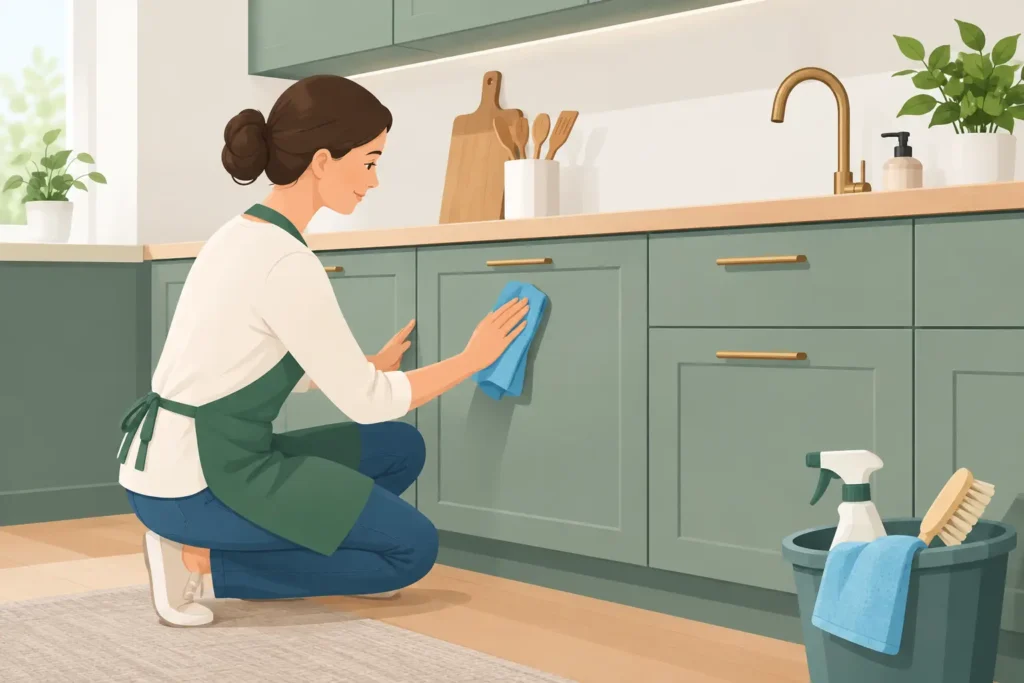
For most kitchen doors and cabinet fronts, a soft microfibre cloth dampened with warm water and a small amount of mild washing-up liquid is enough. Wipe the surface, then dry it with a separate clean cloth. Drying is not an unnecessary extra step: it prevents water sitting around handles, door edges and joints, where it can gradually affect the finish.
Clean handles and areas around them regularly. These are the parts that collect the most natural oils from hands, particularly on pale painted doors and matt finishes. A quick wipe once a week is generally more effective than an occasional deep clean using stronger products.
Avoid soaking the cloth. Kitchen units are designed to cope with normal cooking conditions, not prolonged exposure to moisture. Water running down a cabinet front or gathering along an edge should be wiped away promptly.
Products best left out of the cupboard
Abrasive creams, scouring pads, bleach, oven cleaner and solvent-based sprays can damage many kitchen finishes. They may leave scratches, dull a sheen, discolour painted surfaces or weaken protective coatings. This is especially true of lacquered, vinyl-wrapped, wood veneer and matt doors.
Steam cleaners are another common cause of damage. The combination of high heat and moisture can force steam into joints, edges and behind door fronts. Even a quality kitchen can be affected if steam is directed repeatedly at the same areas.
If you are unsure about a product, test it first on a discreet section of the unit or follow the care advice supplied with your kitchen. The correct method can vary according to whether your doors are painted timber, solid wood, laminate, veneer or another specialist finish.
How to look after your kitchen units around heat and water
The areas nearest the sink, dishwasher, kettle and hob deserve the most attention. These are the places where kitchen units work hardest and where small problems can become noticeable most quickly.
After washing up, wipe splashes from the sink cabinet door and surrounding panels. Check underneath the sink every few weeks too. A slow drip from a trap, tap connection or appliance hose may go unnoticed until it has affected the cabinet base or created an unpleasant smell.
Dishwashers release warm, humid air when opened. Allow the steam to disperse before fully opening nearby drawers or doors, and wipe away any condensation that settles on adjacent surfaces. If you have a dishwasher positioned beneath a worktop, make sure its protective steam strip remains in place and is not damaged.
Kettles, slow cookers, air fryers and coffee machines also produce concentrated heat and steam. Avoid operating them directly beneath wall units where possible, and pull them forwards from under the cabinets before use. This simple adjustment helps protect the underside of units and keeps moisture away from vulnerable edges.
A good extractor is equally valuable. Use it whenever you cook, not just when frying. It reduces airborne grease and moisture, which would otherwise settle on cabinet fronts, cornices, shelves and the tops of tall units.
Give doors, drawers and hinges a simple check
Kitchen doors should open smoothly, sit evenly and close without being forced. Drawers should run cleanly and should not feel loose, overloaded or difficult to close. If something changes, deal with it early. A minor hinge adjustment is straightforward; a door that is repeatedly pulled out of line can put unnecessary strain on the fitting.
Do not hang heavy bags, tea towels or children’s school items from door handles. It is tempting, particularly in a busy household, but handles and hinges are not intended to carry that extra weight. Similarly, avoid slamming drawers shut, even if they have a soft-close mechanism.
Every few months, inspect hinge screws and handle fixings. If a screw has loosened, tighten it carefully by hand rather than overtightening it with a power tool. Hinges may occasionally need adjustment as a home settles or as doors experience regular use. If you are not confident making those changes, ask a kitchen professional to take a look rather than experimenting with several adjustment screws at once.
Keep storage practical, not overloaded
A well-organised kitchen is kinder to its fittings. Store heavier pans and small appliances in lower drawers or base units, spreading weight evenly where possible. Do not overload pull-out larders or internal wirework beyond their intended capacity, as runners and fittings can become strained over time.
Wipe up spills inside cupboards as soon as you spot them, particularly cooking oil, sauces and cleaning products. Consider using washable liners under bottles in the sink unit and in cupboards that hold oils or household cleaners. Liners are useful, but they should be removed occasionally so the cabinet base can be checked and cleaned.
Care for timber, painted and matt finishes with extra attention
Natural timber and wood veneers bring warmth and character to a kitchen, but their appearance can change gradually with light exposure. This is normal. Try not to leave objects in exactly the same position for years, particularly on open shelves or areas exposed to strong sunlight, as this can create uneven colour variation.
For painted doors, use only mild cleaning methods and deal with splashes promptly. Dark sauces, turmeric, red wine and strongly coloured spices can stain if left in place. Small chips may happen in an active kitchen, especially around handles and lower edges. Touch-up options can sometimes be available, although the right approach depends on the original finish and age of the kitchen.
Matt doors reward a gentle approach. Scrubbing a stubborn mark can create a polished patch that is more visible than the original stain. Instead, use a soft cloth, mild solution and light pressure, repeating the process if needed.
Do not forget the worktops and ventilation
Worktops need their own care routine because material makes a real difference. Laminate worktops should be wiped dry around joins and cut-outs. Solid wood usually needs periodic oiling to maintain its protective surface. Natural stone and some composite materials may require specialist cleaners or resealing at intervals. Always use trivets for hot pans and chopping boards for food preparation unless your worktop manufacturer specifically advises otherwise.
Ventilation has a direct effect on the longevity of both units and worktops. Keep extractor filters clean, open a window when practical and do not allow persistent condensation to build up during cooking. In colder months, this matters even more in kitchens with limited natural ventilation.
Act promptly when something is not right
A swollen panel, a lifting edge, a persistent damp smell or a door that suddenly catches are all worth investigating. The cause may be as simple as a loose hinge or a small plumbing leak, but early action gives you the best chance of preventing wider damage.
For older kitchens, a tired door or worn worktop does not always mean replacing the entire room. In many cases, replacement doors, drawer fronts or worktops can refresh the space while retaining sound cabinet carcasses. As a long-established local manufacturer, Hale & Murray can also assess whether a repair, adjustment or tailored replacement is the most sensible route for your kitchen.
The best care routine is the one that fits naturally into daily life: wipe moisture away, use mild products, keep heat and steam under control, and pay attention when a fitting starts to feel different. Those small actions protect the craftsmanship you use every day and help your kitchen remain a comfortable, dependable place to gather.