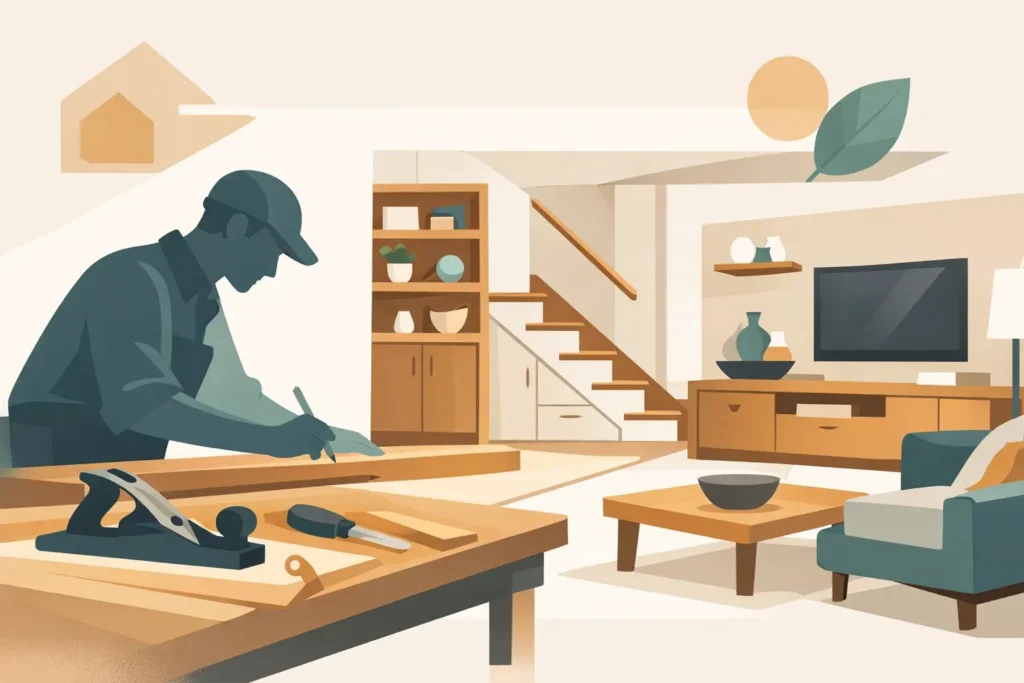
A room can have plenty of floor space and still feel difficult to live in. An awkward alcove, a sloping ceiling, a boiler cupboard or a poorly planned kitchen layout can leave homeowners making do with storage that never quite works. The top benefits of bespoke joinery come from designing around those realities, rather than asking your home to fit a standard range of cabinets.
For homeowners in Poole, Bournemouth and across Dorset, custom-made fitted furniture can turn underused space into a practical part of everyday life. It also brings a level of choice, finish and long-term reassurance that is hard to achieve with off-the-shelf units alone.
Bespoke joinery makes every inch work harder
Standard furniture is made to standard dimensions. That can be convenient, but it often leaves unusable gaps at the sides of wardrobes, above kitchen cabinets or beneath stairs. Those gaps collect dust while valuable storage space is lost.
Bespoke joinery is measured and made for the room itself. A fitted wardrobe can follow the full height of a wall, work around a chimney breast or sit neatly beneath a pitched roof. A home office can be built into a recess without overwhelming the room. In a lounge, made-to-measure media furniture can conceal cables, house equipment and provide closed storage without relying on several separate pieces of furniture.
This matters most in homes where space is at a premium, but it is just as valuable in larger properties. A well-planned room feels calmer when storage has a clear place and furniture sits naturally within the architecture.
The top benefits of bespoke joinery start with better design
Custom manufacture is only as useful as the thinking behind it. The best fitted interiors begin with an honest conversation about how the room is used: who cooks, where children leave school bags, how much hanging space is really needed, or whether a spare bedroom also has to function as a working area.
That discussion allows a designer to consider details that are easily missed when buying from a display. In a kitchen, it might mean placing drawers where preparation happens, including a larder that suits the weekly shop, or making room for recycling. In a bedroom, it may mean combining long hanging, shelving and drawers behind doors that complement the rest of the room.
There is no single ideal layout. A busy family may prioritise hard-wearing surfaces and generous concealed storage, while downsizers may want easier access, fewer deep cupboards and a lighter visual feel. Bespoke joinery gives the design enough flexibility to reflect those differences.
A finish that belongs in the home
Made-to-measure does not mean every project must be ornate or traditional. It simply means the proportions, materials, door style, handles and internal arrangement can be selected to suit the property and the owner.
A period home may call for painted cabinetry with considered detailing, while a contemporary extension could suit cleaner lines and a more understated palette. The aim is not to follow a passing trend. It is to create furniture that looks settled in its setting and remains enjoyable to use after the initial renovation is complete.
Quality is built into the parts you cannot always see
A fitted interior is used constantly. Kitchen drawers are opened every day, wardrobe doors are pulled repeatedly and bathroom cabinetry has to cope with humidity. The long-term value of bespoke joinery therefore depends on more than its appearance on installation day.
With furniture made in an in-house workshop, the people producing it can work from the agreed drawings and site measurements rather than relying on a fixed factory range. This creates greater control over sizing, construction and finishing. It also makes it possible to account for real-world details, such as uneven walls, unusual ceiling lines and existing services.
Materials and hardware should be chosen for the task. A family kitchen needs different considerations from a decorative display cabinet, and a bathroom requires appropriate materials for a moisture-rich environment. Good advice should explain those choices plainly, including where a particular finish needs more care or where a durable alternative would be more sensible.
Bespoke is not automatically the right answer for every budget. A standard unit can be a sensible choice for a straightforward utility room or a short-term update. However, when a room is central to daily life or difficult to furnish well, investing in properly designed and manufactured joinery can avoid the cost and frustration of replacing compromises later.
One accountable team can reduce disruption
A fitted furniture project often involves more than cabinetry. Kitchen and bathroom work may require building alterations, plumbing, electrical changes, plastering, tiling or new flooring. When these elements are poorly coordinated, small delays can quickly become inconvenient.
A full-service specialist can manage the sequence from survey and design through manufacture and installation, coordinating the necessary trades around the agreed plan. That does not mean renovation work is without disruption – a kitchen refit, for example, will always affect normal routines for a time. It does mean there is a clearer line of responsibility and someone who understands how each stage affects the next.
This is particularly reassuring where furniture has to fit around appliances, pipework or structural features. Accurate site checks and careful communication before manufacturing begin help reduce surprises when installation day arrives.
Support does not end when the design is agreed
Home improvements are significant decisions, and customers should be able to ask practical questions before committing. A showroom visit can help with comparing finishes, door styles, worktops and storage ideas in person, while a home visit gives the designer the context that plans alone cannot show.
The ability to provide replacement doors and worktops can also be valuable later on. A homeowner may wish to refresh the look of a room without taking on a complete refit, or need a matching element after an appliance change. It is a useful advantage of working with a local company that understands fitted furniture beyond a single transaction.
Bespoke storage improves how a home feels day to day
The strongest argument for custom joinery is usually not a dramatic before-and-after photograph. It is the quieter improvement that comes afterwards: less clutter on worktops, a bedroom that is easier to keep tidy, a desk that can be closed away at the end of the working day, or a bathroom with a proper home for towels and toiletries.
Purpose-built storage lets homeowners decide what should be on display and what should be hidden. Open shelving can add character in the right place, but closed cabinetry is often more practical for the items used every day. A balanced design can include both, avoiding a room that feels either overly sparse or permanently busy.
For those working from home, this can be especially worthwhile. A made-to-measure office does not have to occupy an entire room. It can be designed within an alcove, along one wall of a guest room or as part of a multifunctional living space, with cable management and storage considered from the outset.
It can add lasting appeal to a property
Well-designed fitted furniture is a long-term improvement rather than a loose furnishing to be moved from room to room. It can make a house more functional for its current owners and more appealing to future buyers, particularly in kitchens, bedrooms and home-working spaces where useful storage is highly valued.
That said, property value should not be the only reason to choose bespoke joinery. Tastes vary, and no renovation can guarantee a financial return. The more dependable benefit is that the home works better while you live in it. Choosing a timeless layout, sensible storage and durable materials is usually a stronger strategy than designing solely around resale.
Choosing the right joinery partner
The finished result depends on the people behind it. Look for a company willing to understand the room before proposing a solution, explain costs and timescales clearly, and take responsibility for the detail. Established local experience, recognised trade accreditations and independent customer feedback can all provide useful reassurance, but communication during the design stage is equally revealing.
Ask where the furniture is made, who will manage installation, what is included in the quotation and how alterations or unexpected site issues are handled. If you are a capable DIY buyer or a trade customer, it is also worth discussing whether a supply-only route is available and what information you will need for fitting.
Since 1969, Hale & Murray has approached fitted interiors as a practical partnership: listening carefully, manufacturing locally and seeing the work through properly. A free design consultation is a good opportunity to bring measurements, photographs and the everyday frustrations you want the room to solve. The best starting point is not a catalogue page, but an honest conversation about how you want your home to work.