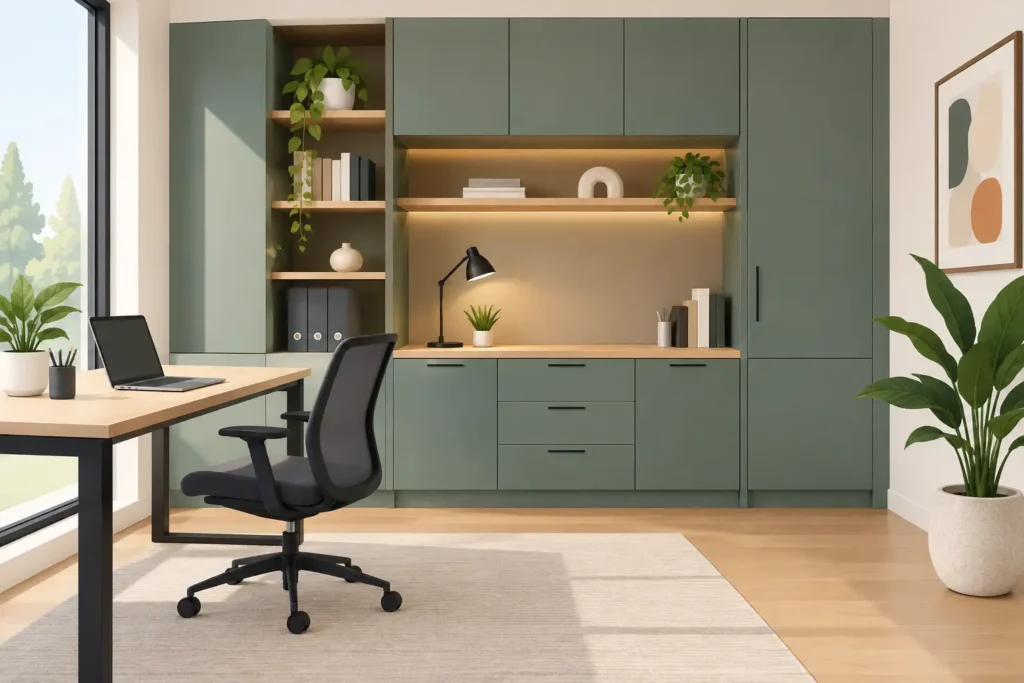
A home office rarely fails because the desk is too small. More often, it fails because paperwork spreads, cables gather dust, printers have nowhere sensible to live and the room has to work twice as hard as expected. The best top home office cabinet ideas start with the way you actually use the space, then build storage around it.
For a dedicated study, that may mean a full wall of fitted cabinetry. In a guest room or open-plan living area, it could be a compact desk that disappears behind doors at the end of the day. The right answer depends on the room, the equipment you use and how much you want work to be visible when the laptop is closed.
Start with the job your cabinets need to do
Before choosing finishes or handles, make a realistic list of what needs storing. A home office may need room for files, a printer, books, chargers, stationery, paperwork that cannot be left out, and technology that needs ventilation. If children use the desk for homework too, the storage needs change again.
Think about what you reach for daily, weekly and only occasionally. Items used every day deserve easy-access drawers or open shelving at desk height. Archive files, spare paper and less attractive equipment can sit in taller cupboards or lower cabinets. This simple distinction stops a beautiful office from becoming inconvenient after the first busy week.
A fitted design also makes better use of awkward corners, alcoves, sloping ceilings and the narrow spaces beside a chimney breast. Freestanding furniture can be useful for a temporary arrangement, but it often leaves wasted gaps and creates a collection of mismatched storage rather than one organised workspace.
Top home office cabinet ideas for every kind of room
1. Full-height cabinets around a central desk
A desk framed by tall cabinets is one of the most effective arrangements for a serious working space. The desk becomes the visual centre, while cupboards on either side provide generous concealed storage. Bridging units above can hold reference books, boxed files or display pieces without reducing the working area below.
This approach suits a spare bedroom, garden room or dedicated study, particularly where the ceiling height can be used to its full potential. Consider a mix of open and closed sections. Open shelves prevent the cabinetry from feeling too heavy, while doors keep practical clutter out of sight.
The trade-off is scale. In a smaller room, tall cabinetry in a dark finish may feel imposing. Pale painted doors, warm wood textures and a carefully planned lighting scheme can make a substantial fitted wall feel calm rather than crowded.
2. A built-in desk within an alcove
Alcoves are often too shallow for standard office furniture yet ideal for a made-to-measure desk and cabinetry. A worktop can run wall to wall, with drawer units below and shelves or cupboards above. Every millimetre has a purpose, including the awkward space where off-the-shelf pieces leave a gap.
For a room that must remain welcoming, choose cabinet doors that match existing lounge or bedroom furniture. When the office storage feels part of the interior rather than an add-on, the room retains its original character. This is particularly useful in Dorset homes where a study may need to share space with a sitting room, bedroom or family area.
3. A concealed home office behind folding or pocket doors
Not everyone wants to look at work after working hours. A compact workstation behind doors gives you a proper desk, power points, shelving and storage, then lets you close it away. Folding doors work well where there is room for them to open, while pocket doors are a neat option if the cabinetry is designed to accommodate them.
This is a strong choice for occasional home working, household administration or a study corner in an open-plan kitchen-living space. Allow enough depth for a comfortable chair position and check that doors can close without needing to clear the whole desk each evening. A shallow workspace may be elegant, but it needs to be genuinely usable.
4. Low cabinets with a floating desk surface
Where preserving light and an open feel matters most, low-level cabinetry can provide ample storage without covering the walls. A desk surface can appear to float above drawer units, leaving the wall clear for artwork, a noticeboard or a window view.
This layout works well in rooms with large windows, lower ceilings or attractive period features. Deep drawers are especially useful here, as they can hold files, cables and stationery more efficiently than several small cupboards. Include one lockable drawer if documents or devices need to be kept secure.
5. A library-style wall for books, files and display
For clients whose work involves books, samples, portfolios or reference material, a library-inspired office can be both practical and characterful. Combine adjustable shelves with a run of base cabinets and a dedicated desk. Glass-fronted sections can protect books while allowing favourite objects to remain visible.
The key is restraint. Too many open shelves can create visual noise, especially on video calls. Closed storage below eye level gives you a place to hide less presentable essentials, while a smaller number of open sections adds personality without demanding constant tidying.
6. Printer, charging and cable cupboards
The least glamorous details often make the biggest difference. A printer cupboard with a pull-out shelf keeps equipment accessible but out of view. A charging drawer can house mobile phones, tablets and leads in one place, reducing the familiar tangle that develops around a desk.
Cabinets designed for technology need sensible ventilation and access to sockets. Allow for cable routes from the beginning, rather than drilling through finished furniture later. It is also worth planning for the equipment you may own in a few years, not only what sits on the desk now.
Choose cabinet interiors as carefully as the doors
A smart exterior is only half the job. Well-planned cabinet interiors make the office easier to maintain, especially when several people use it. Deep file drawers, adjustable shelves, pull-out trays and internal dividers can all earn their place when selected for a clear reason.
Drawers are generally better than deep cupboards for smaller office supplies because you can see the contents at a glance. Cupboards are useful for larger items such as printer paper, folders and boxed equipment. If you keep confidential paperwork at home, consider a lockable section integrated into the overall design rather than relying on a standalone filing cabinet.
Do not underestimate the value of a dedicated place for the everyday items that cause most clutter: post, notebooks, headphones, chargers and stationery. When each has a home, clearing the desk takes minutes rather than becoming a weekend task.
Make the cabinetry feel at home in the room
A home office should support concentration, but it should still feel like part of your home. Colour and finish matter. Soft painted cabinetry can make a study feel settled and traditional, while timber-effect finishes bring warmth to a contemporary scheme. Matt surfaces are often forgiving in busy family spaces, as they show fewer fingerprints than high-gloss doors.
Handle choice changes the character too. Discreet handleless detailing suits a modern, pared-back look, while slim bar handles or knobs can echo the style of a period property. If the office is visible from a living area, repeating materials or colours from nearby fitted furniture helps the scheme feel intentional.
Lighting deserves equal attention. Under-shelf lighting can brighten a desk without taking up space, while internal lights make tall cupboards easier to use. Position the desk to minimise screen glare, particularly if it faces a window, and ensure the room has layered lighting for darker winter afternoons.
Why made-to-measure cabinetry is worth considering
Standard office furniture can solve a simple storage problem, but it has limits. It may not fit the room properly, accommodate uneven walls or leave enough space for doors, skirting boards and radiators. More importantly, it is unlikely to reflect the particular way you work.
Bespoke cabinetry allows the desk height, cupboard depth, drawer layout and finish to be tailored to you. It can incorporate a printer shelf, a filing system, a dressing table or a reading nook where the room has more than one purpose. This is not about filling every wall with furniture. It is about making the available space useful, comfortable and easy to live with for years.
At Hale & Murray, a home visit and design consultation can turn a rough idea into a practical plan, with furniture manufactured to suit the room and installed as part of a managed project. Bring measurements if you have them, but also bring the everyday frustrations you want the new office to solve. They are often the best starting point for a cabinet design that earns its place.