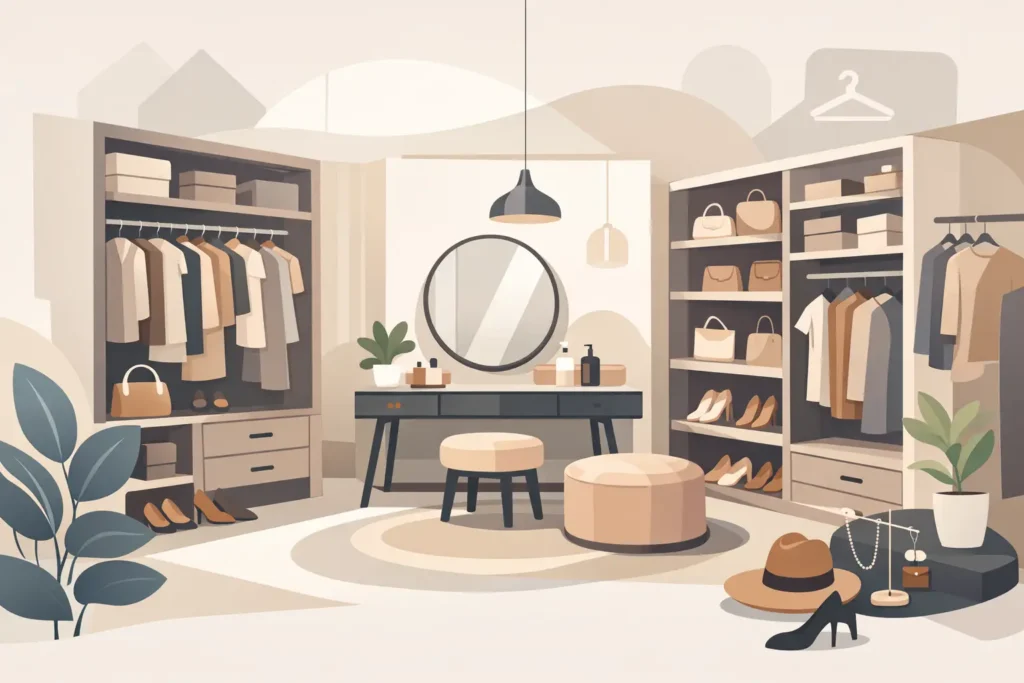
A walk-in wardrobe earns its keep when it does more than store clothes. The best schemes make busy mornings easier, protect what you own, and turn an awkward corner or spare room into a space that feels calm and properly considered. These walk-in wardrobe design ideas are not about chasing trends for the sake of it. They are about getting the layout, storage and finish right so the room works well for years.
For most homeowners, the first question is not style but shape. A generous dressing room gives you freedom, but many walk-in wardrobes in Dorset homes are created from box rooms, loft spaces, alcoves or a section of a main bedroom. That is why good design starts with the room itself – ceiling height, natural light, door swings, sloping walls and how much clear floor space you want to keep. Once those points are set, the practical decisions become much easier.
Walk-in wardrobe design ideas that start with layout
The layout has the biggest effect on how a wardrobe feels to use. A single-wall arrangement suits narrow rooms where circulation matters. It keeps everything visible and avoids making the space feel pinched. A galley layout, with fitted storage on both sides, can be extremely efficient if there is still enough room to move comfortably between them.
An L-shaped design is often the best answer in smaller bedrooms because it uses corners well without feeling overbuilt. In a larger dressing room, a U-shaped arrangement gives the most storage and allows better zoning, but it only works if you still have enough breathing space in the centre. Cramming units into every wall may look impressive on plan, yet in daily use it can feel heavy and inconvenient.
This is where bespoke design makes a real difference. Standard furniture is built around fixed sizes. A made-to-measure scheme can follow the exact line of the room, use difficult corners, and allow for radiators, sockets and uneven walls without wasted gaps.
Open or closed storage?
Open wardrobes look light and accessible. You can see outfits at a glance, which helps if you like a tidy, boutique-style feel. The trade-off is that everything stays on show. Dust builds more quickly, and everyday clutter is far more noticeable.
Closed cabinetry gives a calmer appearance, especially if the wardrobe sits within the bedroom rather than a separate dressing room. It also protects fabrics better and can make the overall room feel more ordered. Many homeowners land somewhere in the middle – doors for bulk storage and seasonal items, with open sections for favourite pieces, bags or frequently used shelving.
Design around what you actually own
A walk-in wardrobe works best when the storage reflects real habits, not a showroom display. Long hanging for dresses and coats needs very different proportions from shirts, jackets or folded knitwear. Shoe storage should suit the number and type of pairs you own, rather than relying on one generic shelf height.
Drawers are often where the design either succeeds or falls short. Deep drawers are useful for bulkier items, but shallow drawers with internal dividers are usually better for smaller clothing, accessories and jewellery because everything stays visible. Pull-out trays, belt racks and tie storage can be worthwhile, though only if they fit your routine. Clever fittings are useful when they solve a problem. They are less helpful when they simply add cost.
If two people will share the wardrobe, build in clear personal zones from the start. That might mean separate hanging sections, dedicated drawer banks or mirrored arrangements on either side of the room. Shared storage sounds simple until one side ends up carrying most of the load.
Make space for awkward items
Most wardrobes are judged by how they handle the difficult pieces: suitcases, hats, boots, occasion wear, laundry baskets or an ironing board. These items tend to get forgotten in the early design stages, then cause frustration later.
Full-height cupboards are useful for less frequently used items, while top-level storage can work well for luggage or out-of-season clothing. If the room has generous ceiling height, this upper space can be very valuable. In lower or sloping rooms, it is better to keep high-level storage selective so the space does not feel oppressive.
Lighting can make or break the room
Good lighting matters just as much as good joinery. A wardrobe with poor lighting is harder to use, no matter how well built it is. You need enough general light to move around comfortably, but also targeted light to see colours clearly and find smaller items.
Warm white lighting usually creates the most flattering and comfortable feel. Cooler light can make a dressing room feel stark. LED strip lighting within shelving, behind hanging rails or inside glazed units can add function without taking up space. Sensor lighting inside cupboards is another practical detail that quickly proves its worth.
Natural light is always a bonus, but it needs managing. Too much direct sun can be unkind to fabrics over time, and mirrors placed badly can create glare. If your wardrobe is near a window, think carefully about where delicate clothing and darker garments are stored.
Mirrors, seating and finishing touches
A full-length mirror is a basic requirement, but the position matters. It should have enough clear space in front of it to step back comfortably, and ideally it should catch good light. Mirrored doors can help bounce light around a smaller room, though they are not for everyone. In some schemes they feel elegant; in others they can make the room feel too reflective and busy.
If space allows, a small bench, stool or upholstered seat adds real convenience. It gives you somewhere to sit when dressing and somewhere to place folded clothing temporarily. In larger rooms, an island can provide extra drawer storage and a natural focal point, but it needs proper clearance all around. In a room that is only just big enough, an island becomes an obstacle very quickly.
Handles, finishes and internal colours also deserve attention. Lighter finishes help a compact wardrobe feel more spacious, while darker timber tones can bring warmth and a more furniture-like feel. Matt finishes often age well because they are understated and easier to live with than very glossy surfaces, which can show marks more readily.
Walk-in wardrobe design ideas for smaller homes
Not every walk-in wardrobe needs a dedicated room. Some of the most successful designs come from rethinking existing space. A stud partition can create a compact dressing area behind the bed. An unused spare room can become a wardrobe and dressing room combined. Loft conversions often offer strong potential, especially when fitted furniture is designed to sit neatly beneath the eaves.
In tighter rooms, sliding doors are sometimes useful, though they are not automatically the best choice. Hinged doors give full access to the interior and can feel more substantial, but they need opening clearance. Sliding doors save swing space, yet only part of the wardrobe is accessible at one time. The right answer depends on the room and how you use it.
A fitted approach is especially valuable where walls are uneven or floor plans are awkward. It allows the storage to work around the architecture rather than fighting it. That often means more usable capacity without making the room feel overfilled.
Plan for the long term, not just move-in day
A wardrobe should still work well five or ten years from now. That means allowing some flexibility. Adjustable shelving, spare drawer capacity and room for changing needs are all sensible. Families grow, routines change, and what works for one stage of life may need adapting later.
It is also worth thinking about maintenance and durability. Quality drawer runners, properly finished interiors and well-made doors are not glamorous decisions, but they shape how the wardrobe performs over time. This is one reason many homeowners choose a bespoke fitted solution rather than modular units – not simply for appearance, but for strength, longevity and a better fit.
At Hale & Murray, we often find that the best results come from balancing ambition with realism. A beautiful walk-in wardrobe should feel considered, but it should also be easy to keep tidy on a normal Wednesday morning. If you are planning one, start with your room, your routine and the items you actually need to store. The smartest design idea is usually the one that makes daily life simpler while still feeling every bit as tailored as the rest of your home.