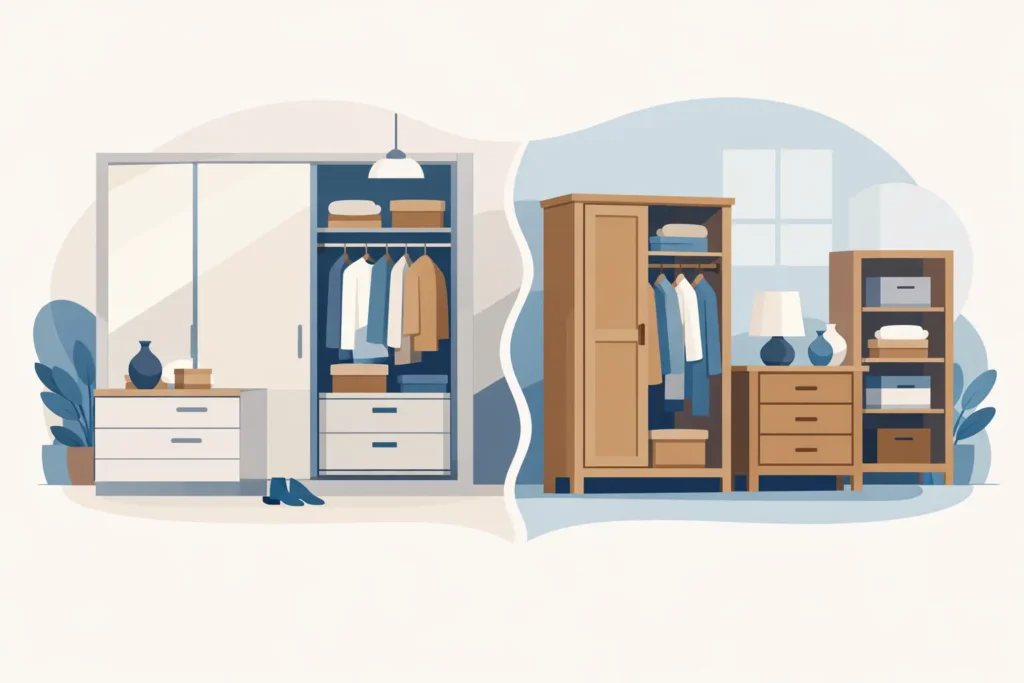
A bedroom can look generous on paper, then awkward the moment real furniture arrives. Sloping ceilings, chimney breasts, narrow alcoves and uneven walls all have a way of turning a simple choice into a bigger one: fitted wardrobes or freestanding storage?
There is no one-size-fits-all answer. The right option depends on how you use the room, how long you plan to stay in the property, and whether you want furniture that adapts to the house or furniture you can take with you. For many homeowners across Poole, Bournemouth and the wider Dorset area, the decision comes down to balancing flexibility against making the very best use of the space available.
Fitted wardrobes or freestanding storage: what changes the decision?
At first glance, this can look like a style choice. In reality, it is usually a practical one. Storage affects how a room feels every day – whether it stays tidy, whether clothes are easy to find, and whether dead space ends up collecting boxes, shoes and things you rarely use.
Freestanding pieces are familiar and straightforward. You can buy them quickly, move them around, and replace them if your taste changes. That suits some rooms perfectly, especially if the layout is simple and the storage needs are modest.
Fitted wardrobes are different. They are designed around the room itself, which means they can follow the full height of the ceiling, work around awkward features and create a cleaner, more integrated finish. In homes where every inch matters, that difference is often more noticeable than people expect.
When freestanding storage makes good sense
Freestanding storage is not the lesser choice by default. In the right setting, it can be the sensible one.
If you are furnishing a guest bedroom, a rental property or a space likely to change use in the next few years, loose furniture gives you flexibility. You are not committing the room to one layout, and you can move pieces elsewhere if your needs change. That can be useful for growing families, temporary home office setups or homes where a spare room has to work hard in different ways.
There is also the question of budget. Freestanding wardrobes, chests and drawers usually involve a lower initial outlay than bespoke fitted furniture. If the goal is to add storage quickly without broader room alterations, that may be the right route.
Style can be another reason. Some interiors suit individual pieces with more character and contrast. A painted chest, a timber wardrobe and open shelving can create a softer, more collected look than wall-to-wall fitted cabinetry.
That said, freestanding furniture has limitations. It rarely uses the full height of the room, so the space above often becomes wasted or untidy. Standard sizes also leave gaps at the sides and top, which can make a room feel less finished. In smaller bedrooms, those lost inches matter more than people think.
Why fitted wardrobes often work better in real homes
The biggest advantage of fitted furniture is not simply that it looks smart. It is that it solves the room you actually have, rather than the room a standard product assumes you have.
Older properties and many modern homes alike can present awkward dimensions. Alcoves are rarely identical, ceilings may slope, and corners are not always true. A fitted wardrobe can be designed around those details so the storage feels part of the architecture rather than an object placed against it.
This tends to improve both capacity and appearance. Full-height cabinetry creates more usable storage for seasonal clothing, bedding and less frequently used items. Internal layouts can also be planned around your routine, with the right mix of hanging space, shelving, drawers and shoe storage instead of a generic arrangement that may not suit what you own.
For smaller bedrooms, fitted furniture can be especially worthwhile. A made-to-measure design can reduce visual clutter, improve circulation and make the room feel calmer. Sliding doors may help where there is limited clearance, while integrated bedside units or dressing areas can bring several functions together without the room feeling crowded.
The cost question – and the value behind it
Price matters, and it should. Bespoke fitted furniture is usually a higher investment than buying freestanding pieces off the shelf. But the comparison is not always straightforward.
With freestanding storage, the lower upfront cost can be appealing, yet you may end up compromising on fit, capacity or quality. If the furniture does not suit the room well, you can still be left with unused corners, clutter elsewhere, or the need for additional pieces later on.
With fitted wardrobes, more of the budget goes into design, manufacture and installation. You are paying for a solution tailored to your room and to the way you live. That tends to make more sense when the bedroom is your main one, when the property is a long-term home, or when the room has features that standard furniture cannot handle well.
It is also worth considering longevity. Well-made fitted furniture should not feel temporary. When designed properly and built from quality materials, it becomes part of the home rather than something you expect to replace after a few years.
Fitted wardrobes or freestanding storage for awkward rooms
This is often where the answer becomes clearer. If a room has alcoves, eaves, chimney breasts or uneven walls, freestanding furniture usually leaves wasted pockets of space. You may gain some storage, but not all the storage the room could offer.
Fitted wardrobes are far better suited to these conditions because the design can be shaped around the obstacles. An alcove can become a full-height hanging section. Space under a sloping ceiling can be used for drawers or shelving. A chimney breast can be framed so the room looks balanced rather than pieced together.
That is not just about practicality. It also affects how settled a room feels. Furniture that fits properly can make difficult layouts look calmer and more intentional.
Style, finish and how the room feels
Appearance matters because storage is not just functional. In most bedrooms, it is one of the largest visual elements in the room.
Freestanding furniture can introduce contrast, texture and a more relaxed feel. It can work well in period homes, eclectic schemes or rooms where you want each piece to stand on its own.
Fitted wardrobes tend to create a more unified finish. Doors, panels and interiors can be chosen to suit the property and your taste, whether that means something classic and understated or cleaner, more contemporary lines. Because everything is made to measure, proportions can be controlled more carefully, which often gives the room a neater appearance.
This is where working with an experienced local specialist makes a difference. A well-planned fitted design should never feel heavy-handed. It should suit the room, the property and the people using it.
Think beyond the wardrobe itself
The best storage decisions are rarely about hanging rails alone. They are about daily routine.
Do you share the room and need clearly divided storage? Do you need more drawer space than hanging? Are shoes, bags or folded knitwear currently spilling into other rooms? Would integrated lighting, a dressing table or bedside storage improve how the space works?
These questions often reveal whether freestanding furniture will do the job or whether a tailored layout would make life easier. In many homes, the appeal of fitted furniture is not simply that it stores more, but that it stores better.
For homeowners planning a wider bedroom update, fitted furniture can also help bring the scheme together. Finishes, proportions and layout can all be considered at the same time, rather than trying to make separate pieces work around one another.
Which option is right for you?
If you value flexibility, need a quicker solution or are furnishing a room with changing demands, freestanding storage may be the practical choice. It offers freedom and can work very well in straightforward spaces.
If you want to maximise every inch, create a cleaner finish and invest in storage tailored to your home, fitted wardrobes are often the stronger long-term option. That is particularly true in principal bedrooms, smaller rooms and properties with awkward architectural features.
At Hale & Murray, we often find that homeowners know a room is not working, but are not yet sure why. Once the space is measured properly and the layout is considered in detail, the best answer usually becomes far clearer.
A good storage decision should make the room easier to live with every single day. If you are weighing up fitted against freestanding, start with the room you have, not the furniture you have seen elsewhere. That is usually where the right answer begins.